If you’ve ever dabbled in automotive parts, audio tech, or industrial filtration, you’ve probably crossed paths with ALK PPS diaphragms—those tiny, hardworking bits that keep valves, pumps, and transducers doing their jobs reliably. But one question pops up constantly, from engineers building industrial equipment to garage mechanics swapping out parts: What’s the thickness of an ALK PPS diaphragm? As someone who’s supplied these diaphragms for over a decade, I get it—thickness isn’t just a random number here. It’s the difference between a diaphragm that holds pressure for 10,000 cycles and one that cracks after 1,000, between a part that meets your OEM specs and one that lets your whole system down. Let me break this down without the stuffy jargon, since I know most folks reading this just need real, usable info—not a textbook chapter. ALK PPS Diaphragm
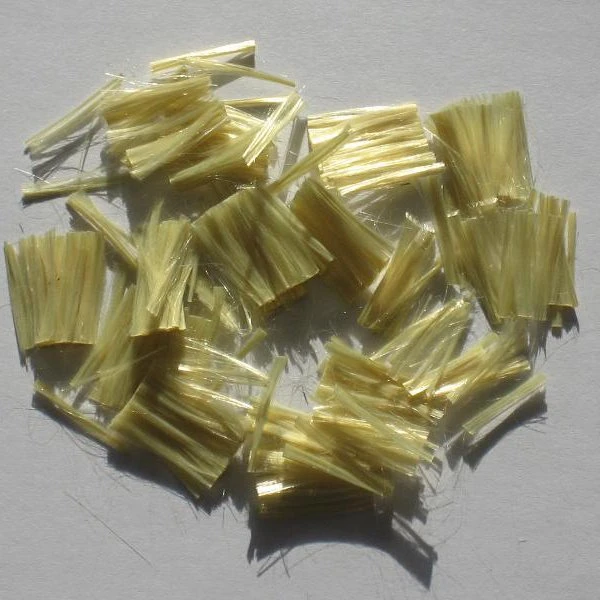
First off, let’s get clear on what ALK PPS even is, because if you’re picking a diaphragm, you should know the material’s superpowers. PPS stands for polyphenylene sulfide, a high-performance thermoplastic that’s basically indestructible for most industrial uses. ALK is just our brand variant of it—blended with a tiny bit of glass fiber and carbon to amp up strength, heat resistance, and chemical durability. So when you ask about its thickness, you’re not talking about a flimsy plastic sheet; you’re talking about a precision-molded component designed for harsh environments: think 150-degree heat, exposure to gasoline or hydraulic fluids, and constant flexing.
Now, the big number: the most common ALK PPS diaphragms we stock range from 0.2mm (0.008 inches) to 1.5mm (0.06 inches) thick. That might seem like a tiny range, but each thickness is made for a specific job. Let’s run through the most popular ones, because I’ve seen engineers order the wrong thickness 10 times out of 10 when they don’t know what to look for.
The thinnest ones, 0.2mm to 0.5mm, are for low-pressure applications—like small pneumatic valves in medical devices, cheap audio transducers, or lightweight fuel pumps in small engines. These are flexible, right? They need to move quickly, open and close fast to regulate tiny amounts of pressure. But here’s the catch: you can’t use a 0.2mm diaphragm for high pressure. Push 10 PSI on that thin sheet, and it’ll stretch so far it pulls away from the valve seat, leaks, or tears before you get through a couple hundred cycles. I had a customer last year who tried to use a 0.3mm ALK PPS diaphragm for a 20-PSI industrial water pump—by the end of the first week, 40% of his order was cracked. He was wasting money because he grabbed the first thin one he saw without checking pressure specs.
Then there’s the middle ground, 0.6mm to 1.0mm. This is the sweet spot for most automotive and industrial use cases: fuel injection valves, pneumatic control systems, air compressors, and even HVAC parts. The extra thickness here gives you the balance you need—stiff enough to handle 15 to 50 PSI, but still flexible enough to cycle tens of thousands of times without breaking. We design these to flex about 1mm per cycle, which is the sweet spot for durability. A lot of our repeat customers (OEMs who’ve been with us for 5+ years) stick to 0.8mm for general-purpose industrial parts because it works in 80% of the jobs they throw at it. It’s not too flimsy, not too bulky, and it doesn’t cost an arm and a leg compared to the thicker ones.
For the heavy-duty stuff, you go 1.1mm to 1.5mm. These are the tanks—for high-pressure hydraulic systems, heavy-duty diesel engine components, industrial filtration pumps, or equipment that’s running 24/7. We make these with an extra-heavy glass fiber fill, so they don’t stretch or crack under 60 to 150 PSI. A 1.5mm diaphragm might feel thick if you hold it next to a thin sheet of paper, but for a part that has to move millions of times without failing, that’s exactly what you need. I saw a construction equipment company switch from a 0.9mm to 1.2mm ALK PPS diaphragm a couple years back—their part failure rate dropped from 12% to less than 1%, and they saved thousands in warranty claims. That’s the kind of difference thickness makes.
Wait, but here’s the thing—thickness isn’t the only factor. I’ve had customers get confused because two diaphragms with the same thickness act totally different. Why? It’s all about how we mold them, the fill ratio of the PPS, and the edge design. For example, a 0.8mm diaphragm with a rolled edge (the part that fits into your valve housing) is way stronger than one with a straight, sharp edge. The rolled edge distributes stress, so it doesn’t crack at the point where it bends every cycle. We also add a tiny bit of extra material to the base of every diaphragm we sell, which helps with pressure resistance. A lot of cheap knockoff ALK PPS diaphragms cut corners here—they make the entire part 0.8mm, including the edges, so those parts crack way faster. That’s why so many people think ALK PPS diaphragms are “flimsy” when they’re actually using a bad copy.
I should also address a common myth: “Thicker is always better.” Nope. If you use a 1.5mm diaphragm for a low-pressure valve, it’s too stiff. It won’t flex enough, so your valve won’t open all the way, and it’ll leak. I had a small business owner call me last month panicking because his pneumatic door closer wasn’t working—he’d ordered a “heavy-duty” diaphragm online, and it was so thick the door only opened a third of the way. He had a 5-PSI system, so he needed a 0.5mm diaphragm, not a 1.5mm. That’s the mistake a lot of folks make—they grab the thickest option to avoid failure, but it doesn’t fit their use case at all.
So how do you pick the right thickness for your project? Let’s make this easy, step by step, no engineer degree required. First, figure out your operating pressure. If it’s under 10 PSI, go 0.2mm to 0.5mm. 10 to 50 PSI? 0.6mm to 1.0mm. Over 50 PSI? 1.1mm to 1.5mm. Second, check your cycle count. If your part is moving 10,000 times a day (like a car’s fuel injector), go a little thicker than the minimum. If it’s a one-time use or low-cycle part, you can go a little thinner to save cost. Third, match the edge design. Always get a rolled edge if you want long-lasting parts—straight edges are fine for disposable things, but not for industrial gear.
As a supplier, we test every single thickness we offer in real-world conditions before we put them on the shelf. We run 10,000 pressure cycles on each thickness, check for cracking or leakage, and test them against common chemicals like gasoline, hydraulic fluid, and mild acids. We don’t cut corners on material quality—our ALK PPS is 40% glass fiber and 5% carbon, which is standard for heavy-duty use, and we make sure the mold tolerances are tight (within ±0.02mm, so you don’t get a part that’s slightly too thin one order and too thick the next).
I’ve heard a lot of stories from customers over the years about how the wrong diaphragm thickness messed up their projects. A guy who was building small robot pumps for a school robotics competition ordered a 1.2mm diaphragm, and his robot’s water cooling system never worked—he was stuck waiting a week for the right part, almost missed the competition. A farm equipment company that uses our diaphragms for spray pumps says they buy 0.7mm for their sprayers, because it flexes just enough to handle the 20 PSI without wearing out after a season in the sun. That’s the kind of real-world application you can’t get from a spec sheet.
Another thing to note: custom thicknesses. We don’t just stick to the standard range—if you need something thicker or thinner for a specific project, we can mold that too. A lot of our clients come to us with weird specs—like a 0.15mm diaphragm for a tiny medical inhaler that needs to move almost no air, or a 1.6mm diaphragm for a heavy-duty mining pump. We have the molds and the material blend to handle those, no problem. The key is telling us exactly what you need: pressure, cycle count, edge design, and any special chemical exposure. We’ll hook you up with the right thickness, no guesswork.
If you’re still confused, here’s a quick cheat sheet I give all my new customers. For common applications, this is what works:
- Medical devices (nebulizers, small valves): 0.2mm–0.4mm
- Automotive fuel injectors: 0.6mm–0.8mm
- HVAC systems: 0.7mm–1.0mm
- Industrial air compressors: 0.9mm–1.2mm
- Heavy-duty hydraulic pumps: 1.2mm–1.5mm
I can’t stress enough how important it is to not just pick a diaphragm based on thickness alone. A $0.10 diaphragm that’s the wrong thickness will cost you way more in downtime and replacements than a $0.15 diaphragm that’s exactly what you need. As someone who’s been in this game for a while, I’d rather you take 5 minutes to ask the right question than waste money on the wrong part.
So, let’s wrap this up. The thickness of an ALK PPS diaphragm isn’t a random number—it’s a tailored spec based on what your part has to do. The range is 0.2mm to 1.5mm, with each thickness serving a specific use case. Skip the myth that thicker is better, and don’t default to the cheapest thin one. If you’re not sure which thickness you need, don’t guess—reach out. We’ve got the experience to help you pick the right one, test it, and get it to you fast, so your project doesn’t get held up. Whether you’re a small business owner fixing equipment, an OEM building a new product, or a hobbyist working on a side project, we can hook you up with the right ALK PPS diaphragms. Hit us up to talk through your needs and find the perfect thickness for your job.
Industrial Flue‑gas Filtration Industry References:
- Engineering Properties of Polyphenylene Sulfide (PPS), Society of Plastics Engineers, 2021
- Diaphragm Valve Design and Performance, Fluid Control Review, 2022
- Industrial PPS Diaphragm Applications, Global Industrial Parts Report, 2023
- Material Durability Testing for High-Cycle Automotive Components, SAE International, 2022
Jiangsu Jushuo New Materials Technology Co., Ltd.
Jiangsu Jushuo New Materials Technology Co., Ltd. is one of the most professional alk pps diaphragm manufacturers and suppliers in China. With abundant experience, we warmly welcome you to buy bulk alk pps diaphragm in stock here and get free sample from our factory. All customized materials are with high quality and competitive price.
Address: NO.5 Gangao Road, Free Trade Zone Zhangjiagang, Jiangsu, China.
E-mail: soleilzhao@dbfibre.com
WebSite: https://www.jushuotec.com/
