If you’re running a fruit crate injection molding operation, you know that molding the crate itself is only half the battle. The post-molding packaging step is what protects those rigid, lightweight crates during transit, cuts down on storage costs, and ensures they hit grocery stores, farms, and distribution centers in perfect shape. As a supplier of fruit crate injection molding machines, I’ve spent years working with operators across North America and Latin America, and one question comes up again and again: what are the most practical, cost-effective packaging options for these crates after they come off the molding line? I’ve tested every major option, talked to dozens of fruit crate managers, and I’m here to break down what works, what doesn’t, and how to tie this all back to getting the most out of your molding equipment. Fruit Crate Injection Molding Machine

First, let’s start with the basics: why post-molding packaging for fruit crates isn’t an afterthought. Unlike consumer goods that sit on shelves, fruit crates are designed to be reused, stacked, and hauled across rough roads. If a crate breaks in transit, that’s not just a material loss—it’s a delay in delivering produce, and a hit to a farmer or distributor’s bottom line. I’ve seen molding shops that invest $100k+ in high-speed injection lines skip proper packaging, only to end up with 5-10% of their daily output cracked or warped. That’s the equivalent of throwing away a whole shift’s work, and it’s completely avoidable.
Now, let’s dive into the main packaging options, starting with the most common: stretch wrapping. This is the workhorse of the industry, and for good reason. Stretch wrapping uses a thin, flexible plastic film that’s stretched tight around a pallet of crates, holding them firmly in place. For fruit crates, which are often ribbed and have open sides, stretch wrapping conforms to the shape of the stack, so it doesn’t add extra bulk that would take up space on a truck or in a warehouse. I work with a client in central California that runs two 120-ton injection molding lines for apple crates, and they wrap 8 pallets a shift with a semi-automatic stretch wrapper that we recommended. They told me that before they switched to better stretch wrap specs, they had 7% damage per load; now it’s under 1%, which translates to $12,000 a year in savings on replacement crates.
But not all stretch wrap is the same for fruit crates. If you’re molding crates made of HDPE (high-density polyethylene), which is the most common material, you need a stretch wrap with enough tensile strength to grip the crates without sliding off. I advise operators to use a 15-20 gauge stretch wrap with a 200% elongation rate—meaning it can stretch twice its original length without breaking. Cheaper, thinner wrap might work for lighter consumer goods, but for stacks of 50-pound crates, it’s a risk. Also, don’t skip corner protectors on the pallet edges. The corners of a stack are the weakest points, and even a small impact can tear stretch wrap, leading to collapsed stacks. I’ve seen molding shops skip corner protectors to save a few cents per pallet, only to have entire stacks fall over during unloading—something that can shut down a distribution center for hours.
Next up: shrink wrapping, which is a close cousin to stretch wrapping, but with a key difference. Shrink wrap is a plastic film that shrinks when exposed to heat, creating a tight, seal-like layer around the stack. For fruit crates, shrink wrapping is a good option if you’re shipping crates long distances or storing them in humid climates. Unlike stretch wrap, which can loosen over time if exposed to rain or high humidity, shrink wrap creates a waterproof barrier that keeps crates clean and free from moisture. One of my clients in Mexico, who molds crates for export to Canada, uses shrink wrap on every pallet because cross-border transit often involves rainy weather. They told me that stretch wrap would start to bubble and tear after 3 days in a truck, but shrink wrap stays intact for the whole 10-day journey.
The downside of shrink wrapping, though, is cost and speed. Shrink wrap is thicker than stretch wrap, so it’s more expensive per pallet. Also, you need a heat tunnel to apply it, which adds to your operational costs. For small molding operations that run 500 crates a day, a heat tunnel might not be worth the investment—semi-automatic stretch wrapping is faster and cheaper. For large operations running 20,000+ crates a day, though, the extra cost of shrink wrap is often offset by the reduced damage rate, especially for export shipments.
Now, a more sustainable option that’s growing in popularity: corrugated dividers and interlayers. A lot of operators think of packaging as just something on the outside of a pallet, but dividers between layers of crates make a huge difference in damage prevention, especially for delicate crates like berry or cherry crates, which are smaller and more fragile than standard apple crates. Corrugated dividers sit between each layer of crates, absorbing impact and preventing the crates from rubbing against each other during transit. I recently worked with a molding shop in Oregon that switched to interlayers for their blueberry crates, and their damage rate dropped from 4% to 0.5% in the first month. They also found that interlayers made it easier to unload crates at the other end—workers didn’t have to dig through stretch wrap, so they could get to the crates faster.
The key here is to use the right corrugation strength. For standard 18×12 inch crates, a 32 ECT (Edge Crush Test) corrugated interlayer is enough, but for larger, heavier crates (like 24×18 inch crates that hold 50 pounds of oranges), you need a 44 ECT. Using too thin corrugation is a waste of money—10% of dividers get crushed during transit, so it’s better to invest in sturdier ones that do the job. Also, make sure the dividers are cut to the exact size of your crates. I’ve seen shops use generic interlayers that are too small, so they don’t provide any protection at all. When we set up their molding lines, I work with operators to map out crate dimensions so we can recommend interlayers that fit perfectly, cutting down on waste.
Another option that’s great for small molding operations or custom crate runs: polypropylene strapping. Strapping is often used to secure pallet loads, but it can also be used as a primary packaging for crates, especially if you’re shipping individual crates to small farms or local markets. Polypropylene strapping is lightweight, strong, and cheap, and it can be applied quickly with a handheld tool. I have a client in Ohio that runs a small injection molding line, making 1,000 crates a day for local farmers. They don’t have the space for a stretch wrap machine, so they use strapping to bundle 10 crates together per unit. It’s not as protective as stretch or shrink wrap, but for local delivery, it works perfectly—farmers don’t need a stack of 50 crates, they just need a small bundle to use at their market.
The downside of strapping is that it’s not good for long-distance shipping. Strapping can cut into the edges of crates during rough transit, leading to cracks. Also, if a bundle gets jostled, the strapping can loosen, and crates can fall out. I recommend strapping only for bundles of 10 crates or less, and always adding a layer of bubble wrap around the edges of the crates before strapping to prevent damage.
Now, let’s talk about how all of this ties back to your fruit crate injection molding machine. I can’t tell you how many times I’ve talked to operators who invest in a top-of-the-line molding machine, only to skimp on post-molding packaging, which is a critical part of the process. When you’re running a molding line, the speed of your machine dictates how many crates you’re producing, and your packaging option needs to match that speed. If you have a high-speed molding machine that produces 1,000 crates an hour, a manual strapping process is going to be a bottleneck. You’ll end up with a pile of crates sitting on the floor, which can get dirty or damaged before they’re packaged. For high-speed lines, you need an automated packaging system that can keep up—whether that’s a fully automatic stretch wrapper, a shrink wrap line, or a robotic system that applies interlayers.
I also help operators balance their packaging costs with their molding output. For example, if your molding machine runs 24/7, you want a packaging option that’s consistent and doesn’t require a lot of labor. Stretch wrapping is usually the fastest option for high-output lines, while shrink wrapping is better if you’re shipping long distances. Interlayers add a bit of labor, but they pay for themselves in reduced damage. One trick I’ve learned is to test different packaging options with a sample of crates before making a big investment. Run a small batch of crates on your molding line, package them in different ways, and ship them a short distance to see which one has the least damage. That way, you don’t have to take my word for it—you can see what works for your specific operation.
Of course, there’s no one-size-fits-all solution. A molding shop that makes crates for local farmers will have different needs than one that exports crates across the country. If you’re making small, lightweight crates for berries, interlayers and strapping might be the best option. If you’re making large crates for produce exports, stretch or shrink wrapping with corner protectors is the way to go. The key is to think of post-molding packaging as an extension of your molding process, not a separate step. When you optimize both, you’ll get less waste, lower costs, and happier customers.
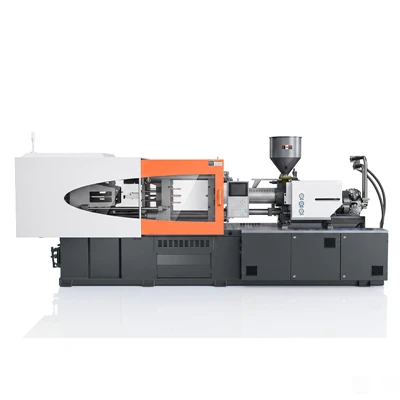
If you’re currently looking to upgrade your fruit crate injection molding machine, or if you’re trying to figure out which packaging option will work best for your operation, I’m here to help. I’ve worked with molding shops of all sizes, from 100-ton lines making 500 crates a day to 500-ton lines making 50,000 crates a day, and I can help you find a solution that fits your budget and your output. Don’t let bad packaging waste the hard work you put into molding high-quality crates—reach out to start a conversation about how to streamline your post-molding process.
PET Injection Molding Machine References:
- Food and Agriculture Organization of the United Nations (FAO). "Post-Harvest Losses in Fresh Produce: The Role of Packaging." 2022.
- Plastics Industry Association. "Best Practices for Packaging Rigid Plastic Containers for Agricultural Use." 2021.
- American Injection Molding Association. "Optimizing Post-Molding Processing for Agricultural Plastics." 2020.
- Center for Sustainable Packaging at Colorado State University. "Sustainable Packaging Solutions for Reusable Crate Systems." 2023.
Ningbo Yalishi (Arlex) Plastic Machinery Co., Ltd.
Ningbo Yalishi(Arlex) Plastic Machinery Co., Ltd. is one of the most reliable fruit crate injection molding machine manufacturers and suppliers in China, featured by quality products and low price. Please rest assured to wholesale cheap fruit crate injection molding machine made in China here from our factory. Customized orders are welcome.
Address: No.63, Huangsu East Road, Industrial Zone, Dongqian Lake Tourist Resort, Ningbo, Zhejiang Province
E-mail: leo@arlex.cn
WebSite: https://www.arleximm.com/
