Alright, let’s cut to the chase—if you’re a baker, confectionery owner, or anyone who’s ever dropped a bunch of cash on a cream filling machine, you’ve definitely asked this: “How long is this thing actually gonna last?” As a cream filling machine supplier, I get it—you don’t want to shell out for a piece of gear that’ll conk out on you mid-rush, like 10 minutes before a big holiday order. No one needs that kind of stress. Let’s break this down without all the boring jargon, keep it real, and call out what actually determines a machine’s lifespan—plus, what you can do to make yours stick around longer. Cream Filling Machine

First off, let’s ground this in real data, not just guesswork. I’ve been selling these things for over a decade, so I’ve seen every scenario: a machine that’s still humming after 15 years, another that died in 3 because of total neglect. The average, for a mid-tier industrial cream filling machine (the kind most small to medium bakeries or snack brands actually use) is between 8 and 12 years. Wait, before you yell at me— that’s not a one-size-fits-all number. If you’re splurging on a heavy-duty, commercial-grade model for a huge operation that runs 24/7? You’re looking at 10 to 15 years, maybe even longer if you take care of it. If you grab a cheap, entry-level model off Amazon or a no-name supplier to fill a small batch of cupcakes once a week? That might only last 3 to 5 years. Yeah, that’s a big range, so let’s unpack why.
The biggest factor that makes or breaks a machine’s lifespan? How it’s used. Let’s be honest—if you’re running your machine nonstop, 12 hours a day, 6 days a week, pumping out cream-filled donuts for a regional chain, that’s way different than a tiny bakery that uses theirs 2 hours a day, only 4 days a week. The components—stainless steel parts, gears, motors—wear out faster when you’re cranking them nonstop. I had a client a couple years back who ran his machine 24/7 during holiday season (7 days straight) for 3 years straight. He skipped all the recommended maintenance because he “didn’t have time” and before year 4, his motor burned out, and the gearbox seized up. Cost him almost half the machine’s price to fix, and he missed a $50k order. Ouch. Compare that to another client, a small cookie bakery, who uses his machine 3 hours a day, 5 days a week. He does a full deep clean every night, changes the seals when they get a little stiff, and lubricates the gears monthly. His machine is now 11 years old, and he’s still using it to fill 2,000 cookies a day. That’s night and day.
Next up, build quality. This is where the old adage “you get what you pay for” hits hard. I’ve had people come to me after buying a $2,000 entry-level machine from a random overseas supplier, asking why it’s already leaking cream and the nozzle is clogged every other use. Those machines are made with cheap aluminum parts, flimsy plastic gears, and seals that break down after a few months. A mid-tier machine from a reputable supplier (cough, like mine) is built with food-grade stainless steel for all parts that touch cream, heavy-duty copper motors, and BPA-free seals that are designed to handle repeated cleaning and consistent pressure. A good mid-tier machine will last 8-10 years on average, while a top-of-the-line, custom-built model for high-volume operations can go 15+ years—even with regular use. I’ve seen one of my early 2008 models still in use at a small pastry shop in Chicago. The owner has replaced a few seals and a motor once, but it’s still going strong.
Maintenance is the secret sauce. Look, I don’t care how fancy your machine is—if you don’t take care of it, it’s gonna die early. And I’m not talking about hiring a technician to come in every month (though for high-volume operations, that’s smart). I’m talking about the basic stuff you can do in 10 minutes after your shift ends. Let’s list the non-negotiables, the stuff I walk every customer through when they take delivery: First, deep clean every single part that touches cream, right after you’re done using it. Cream is dairy, so it’s gonna go rancid if you leave it caked in the machine, and that can corrode parts or clog valves. Second, lubricate the moving parts—gears, tracks, nozzle mechanisms—with the food-grade lubricant we include with every machine. Don’t use regular oil, that’s a no-no for food equipment. Third, inspect seals and gaskets every 2-3 months. These are small, cheap parts, but if they crack or get stiff, you’ll end up with leaking cream or uneven filling. Fourth, don’t overload the machine. Every machine has a max pressure setting—if you crank it up way higher than recommended to get more filling done, you’re gonna stress the motor and gears, cutting their lifespan in half. I had a client who tried to run his machine at double the recommended pressure, and within 2 years, the motor was shot. The replacement motor cost him $1,500, which is more than he would’ve paid for proper maintenance in that time.
Wait, also—what kind of cream are you using? That’s a weird one, but it matters a lot. Thick, heavy creams, like pastry cream or buttercream, are way more viscous than light whipped cream or vanilla custard. If you’re running a super thick cream through a machine that’s designed for light stuff, you’re putting way more strain on the pump and the nozzle, which wears them out faster. A good supplier will help you match your machine to the type of cream you’re using—we even offer custom nozzle sizes and pump settings for different consistencies. I once had a customer who bought a general-purpose machine to fill ganache (which is super thick) and wondered why his pump burned out in 18 months. He should’ve gotten a high-viscosity pump, which would’ve cost a little more upfront but saved him from that headache.
Is there anything that can shorten a machine’s lifespan even if you take care of it? Yeah, like unexpected mishaps—dropping a heavy tool on it, spilling water or cleaning solutions on the electrical components (which can cause shorts), or running it with missing parts (like a broken guard on the nozzle). Those are accidents, not inherent wear, but they’re preventable if you’re careful. On the flip side, there are ways to extend it beyond the average. For example, keeping a spare set of seals and a basic maintenance kit on hand means you don’t have to wait for parts if something breaks, and you can fix it in minutes instead of letting the problem get worse. We sell those kits super cheap, by the way—definitely recommend them.
Now, let’s talk about the difference between lifespan and “end of life.” A lot of people think when a machine stops working, it’s done forever. But that’s not always the case. I’ve had customers call me with a machine that’s 10 years old, saying it’s not filling evenly, and we just have to replace a $20 valve or adjust the pressure settings. The only time you should even think about replacing your machine is when the cost of repairs is more than 50% of the price of a new one, or when parts are no longer made for it (that’s a big one—cheap no-name machines often stop having parts available after 3 or 4 years, so you can’t fix them even if you want to). That’s why buying from a reputable supplier matters—we keep parts in stock for all our machines for at least 15 years, so if something breaks down the line, you don’t have to toss the whole thing.
Let’s wrap this up with a quick reality check. The average 8-12 years? That’s assuming you buy a mid-tier machine from a reliable supplier, use it as intended, do basic maintenance, and don’t run it into the ground. If you skimp on build quality, skip maintenance, and abuse your machine? You’re looking at half that, or worse. If you invest in a good machine and take care of it? You’ll easily hit 10 years, and maybe even go longer.
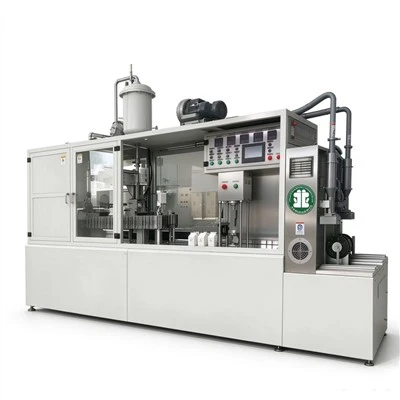
At the end of the day, your cream filling machine is a workhorse for your business. You don’t want it to be a headache—you want it to be something that’s consistent, reliable, and doesn’t make you lose sleep during busy seasons. If you’re in the market for a new machine, or you’re trying to figure out if your current one is nearing the end, hit us up. We can help you figure out what kind of machine fits your production needs, give you a personalized maintenance plan to keep it running for years, and answer any questions you have about lifespan or repairs. No pushy sales stuff, just straight talk about keeping your business running smoothly.
Filling Machine Granule References:
- Food and Drug Administration (FDA). (2021). Design, Construction, and Maintenance of Food Equipment. U.S. Department of Health and Human Services.
- National Confectioners Association (NCA). (2022). Industrial Equipment Maintenance Best Practices for Small Batch Snack Producers. NCA Industry Guidelines.
- International Society of Beverage and Food Protection (ISFP). (2020). Viscosity Impact on Food Processing Equipment Component Lifespan. ISFP Technical Report.
- Machinery Labs. (2023). Industrial Filling Equipment Lifespan Analysis: 10-Year Industry Benchmark Study. Machinery Labs Engineering Journal.
Shenyang Beiya Beverage Machinery Co., Ltd.
With abundant experience, we are one of the most professional cream filling machine manufacturers and suppliers in China. If you’re going to buy customized cream filling machine made in China, welcome to get quotation from our factory. For price consultation, contact us.
Address: No.2-1, Tongling Street, Yuhong District, Shenyang City, Liaoning Province, China
E-mail: market@sybeiya.com
WebSite: https://www.chinafilling.com/
