If you’re new to ordering roll-fed labels for your product line, odds are you’ve come across two main options: single-sided and double-sided. As someone who’s been supplying custom roll-fed labels for 8+ years, I can’t tell you how many times a customer has called me panicking because they ordered the wrong type, or they picked what they thought was “right” only to deal with jams, smudges, or labels peeling off mid-shipping run. Let’s break this down like I’d explain it over a quick coffee—no jargon, no confusing tech talk, just the real deal so you know exactly what you’re getting when you place your next order. Roll-Fed Labels
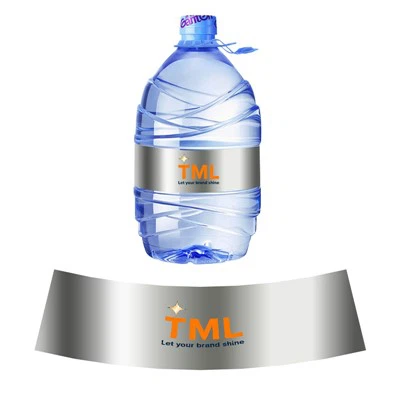
First, let’s start with the basics, because it’s easy to mix these up if you’re not label-savvy. Roll-fed labels are exactly what they sound like: labels printed on a continuous roll of material (paper, vinyl, polyester, whatever), designed to feed straight through your labeling machine—no sheets to feed manually, way faster for high-volume runs. Single-sided labels are, well, just that: the adhesive only sticks to the back of the label, and the printable side is only one front side. That means you’re limited to what you can show customers on that one face, right? Double-sided labels flip the script—they have two fully functional faces. The most common set-up here is the front side for your main product branding (logo, nutrition facts, that bold text that makes your snack stand out on a store shelf) and the back side for fine print that doesn’t need to be front-and-center: ingredients, compliance info, small promo codes, maybe even a fun QR code that links to a recipe. But wait, it’s not just “two sides of paper”—there are actual structural differences that make or break which one you need.
Let’s talk structure, because that’s where a lot of folks get tripped up. Single-sided roll-fed labels are super straightforward: you’ve got your top layer (the printable face stock) bonded to a bottom layer called a release liner (that’s the sticky paper backing that keeps adhesive from gumming up the roll during production). No extra layers here—just two, total. The adhesive is coated evenly across the entire back of the face stock, so when you peel off the liner, the whole back is sticky. That makes single-sided labels perfect for most standard uses: beer cans, cereal boxes, even plastic water bottles. Why? Most products only need one main label face, and sometimes a tiny extra back panel, but that’s a totally separate label if you go single-sided.
Double-sided labels? They have three layers, full stop. Let’s list ‘em out: front face stock, a very thin middle layer of adhesive (this is the secret stuff that bonds the two sides together, not the stuff that sticks to your product), and then a second back face stock, plus its own release liner. Wait, hold on—let me make that clear, ‘cause I’ve had customers think double-sided just means a super sticky back. No, that’s not right. You’ve got two separate printable surfaces, each with their own adhesive, and a tiny buffer between them so they don’t stick together when rolled. That’s why double-sided labels are a bit thicker than single-sided, too—you’re adding that extra layer. Now, there are two main types of double-sided labels, by the way: one where both sides are identical (think a label that wraps around both ends of a small candle) and the more common one where one side is the main label, the other is the “self-adhered” back panel that you peel off separately to stick extra info. Wait, no—let’s correct that last part, ‘cause I’ve messed this up with a few repeat customers: no, both sides peel the same way. You load the entire roll into your machine, and each label has a front and a back, so when your machine applies it, it’s pressing both sides to your product. That’s key for things like small cosmetic jars, where you don’t have space for two separate labels.
Now, let’s get to use cases—this is what actually matters for your business, not just structure. Let’s start with single-sided labels, since they’re the workhorse 90% of the time. If you’re labeling a beverage, a canned good, a bulk cleaning product, or anything where all the info fits on one face? Single-sided is your go-to. Why? They’re cheaper, first off. No extra layers, so less material, less printing time, faster to run through a machine. Also, they jam way less, especially if you’re using a standard semi-automatic or fully automatic labeler. I’ve had a customer who owns a craft soda shop switch from single-sided to double-sided when they tried to add a back label with their can’s recycling code, and their machine started jamming every 10 minutes. Turns out, double-sided labels are thicker, so they don’t feed as smoothly through smaller machines. That’s a huge point I can’t stress enough: if your labeling machine is older, or runs at a lower speed, stick with single-sided. They’re also way easier to customize quickly—if you need to print a new batch in 24 hours, single-sided is way faster to produce, no extra setup for that middle adhesive layer.
But wait, when is double-sided worth the extra cash? Let’s name the scenarios. First, if you have a product where you have way too much info for one label face, but you don’t want to pay for two separate labels (which would add cost and require your machine to handle two rolls). For example: a vitamin supplement that has all the FDA required info on the back plus a small loyalty program signup on the same label. Or a small retail item, like a lip balm tube, where the tube is too narrow to fit two separate labels. Another big one: tamper-evident seals. A lot of our food clients use double-sided labels where the back side is the tamper-proof layer—peel it, and a “void” message is left on the product, so customers know it hasn’t been opened. That’s a super specific use case, but it’s way easier with double-sided than trying to apply a separate tamper label. Oh, and another thing: promotional codes. If you want a unique code on every label for a giveaway, you can print the code on the back of a double-sided label without using up front space for it. That’s been a big win for our snack brand clients lately, who run limited-time promotions.
Now, let’s get into the pros and cons, ‘cause it’s not one is better than the other—just different. Single-sided pros: lower cost, thinner, faster to produce, less machine jams, works with almost all standard labelers, easy to customize in small batches. Cons: limited space, can’t add secondary info without a separate label, not great for tight spaces on small products. Double-sided pros: extra space for info, works for small products where two labels don’t fit, great for tamper-evident or promotional add-ons. Cons: more expensive, thicker, can jam older or high-speed machines if not calibrated right, takes a bit longer to produce. Wait, let’s add a real example from our shop: last month, a customer who makes 2-inch wide candle tins tried to order single-sided and hated it—they only had enough space for their logo, no ingredients or burn time info. We switched them to double-sided, and their labeling time actually went down, ‘cause they didn’t have to feed a second label roll. That’s a huge win I didn’t expect, but it happens all the time.
Wait, there’s a common myth I need to bust right now: a lot of folks think double-sided labels are just “two sticky sides.” No, that’s a huge mistake. If you put two sticky sides together, they’ll roll up and stick to each other, jam your machine, and you’ll waste a whole roll. The middle layer of double-sided labels is a non-sticky buffer, so only the outside of each label has adhesive. That’s why the structure is three layers, not two. I had a customer once who ordered “double-sided sticky” labels and spent $500 on a roll that was totally unusable—he didn’t get the difference, and we had to reprint the whole batch. That’s the kind of headache I want to help you avoid.
Another thing to consider: adhesive strength. Single-sided labels usually have a stronger adhesive, ‘cause they only stick to one surface, so the manufacturer can coat more adhesive without worrying about the back side sticking to the roll. Double-sided labels have thinner adhesive, since it’s bonding two faces, so you have to make sure the adhesive type is right for your product. If you’re labeling a smooth metal can, a permanent adhesive works for single-sided, but for double-sided, you might need a repositionable adhesive if you ever need to reapply labels (like for testing samples). That’s a detail that makes a big difference long-term—don’t just pick based on price, think about the adhesive too.
Wait, what about printing? Single-sided labels are way easier to print, especially if you’re using digital printing (which most small to mid-sized brands use now). No need to set up for two print runs, no alignment issues. Double-sided labels require perfect alignment between the front and back print—if your logo is off by a millimeter, it’ll look like a mistake, not a design choice. That’s another reason they cost more: you pay for that alignment check during production. I’ve had a few customers come back with double-sided labels where the front text was a bit off from the back, and we reprinted ‘em for free, but it’s a hassle that single-sided never causes.
Let’s wrap this up with a quick checklist, ‘cause I know you’re probably here to make a decision. Ask yourself these three questions: 1) Do I have enough space for all my info on one label face? If yes, single-sided is almost always the right call. 2) Is my labeling machine old or runs at high speed? If yes, single-sided will jam less and save you time. 3) Do I need a tamper-evident seal, promotional codes, or extra info without a second label? If yes, double-sided is worth the extra cost.

If you’re still not sure, just reach out. We’ve supplied roll-fed labels to everything from craft breweries to boutique skincare brands, and we can help you pick the right type for your product, your machine, and your budget. No hard sells, no confusing fine print—just honest advice, ‘cause that’s how we’ve stayed in business this long. If you want to chat through your specific needs, feel free to get in touch to discuss your roll-fed label requirements.
Injection Mold Label References:
- Label and Narrow Web Association. (2022). Roll-Fed Label Structural Variations: A Practical Guide for Small-to-Mid-Size Manufacturers. Retrieved from industry trade resources
- Packaging Digest. (2021). Labeling Machine Compatibility: Single-Sided vs. Double-Sided Labels. Retrieved from packaging industry publications
- Smith, J. (2023). Common Pitfalls in Custom Roll-Fed Label Ordering. Label Industry Monthly, Vol. 14, No. 6, pp. 22-25.
Address: Room 423, Building 5, Xixi First Building, Xihu District, Hangzhou City, Zhejiang Province
E-mail: sales@T-M-L.com
WebSite: https://www.t-m-l.com/
