If you’ve ever visited our shop floor or picked up a CNC turn mill part from our warehouse, you know we handle everything from tiny medical device components that need microns of precision to heavy industrial valve parts that require tight, consistent finishes. Over the years, one question has come up repeatedly from engineers, shop foremen, and even veteran machinists: “Can CNC turn mill parts have tapered features?” It’s a fair question—tapered features are everywhere in high-stakes industries: they let pipes seal without gaskets, let fasteners lock into place, and help jet engine components align perfectly during assembly. The short answer, of course, is yes. But the story of how we turn mill these tapers, the challenges we overcome, and the real-world value they add is far more interesting than a simple yes or no. CNC Turn Mill Parts
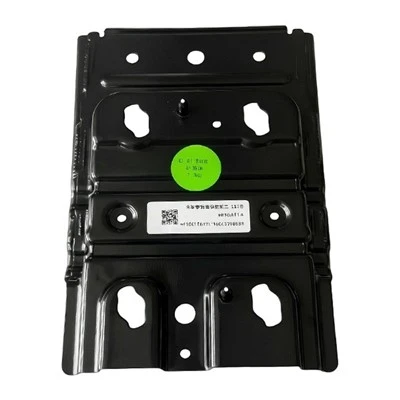
First, let’s ground this in what CNC turn mill actually is, because a lot of folks mix it up with basic turning or 3-axis milling. A CNC turn mill machine (also called a multitasking machine) combines two core operations: turning, where a workpiece spins against a stationary cutting tool to shape round parts, and milling, where a rotating tool cuts at angles or along linear paths. This dual capability is why tapers are so accessible here. Unlike a lathe, which can only make tapers by adjusting the tool’s angle relative to the workpiece’s axis, or a mill, which would require setting up multiple operations to cut a taper on a round part, turn mill tools can blend both movements seamlessly. That’s the game-changer for our customers—we don’t have to run a part across three different machines to add a tapered feature, which cuts lead times and reduces the risk of misalignment between operations.
Let’s break down how we execute a taper on one of our turn mills, because it’s not as straightforward as just dialing in a number. There are two primary methods we use, depending on the part’s size, tolerances, and material. The first is turn-based taper cutting, which leverages the machine’s live tooling and C-axis control. Wait, let’s explain that: C-axis is what lets us lock the workpiece in a specific rotational position, rather than letting it spin continuously like in standard turning. For a simple external taper—say, a tapered end on a hydraulic rod—we can use a turning tool mounted on the turret, move the tool parallel to the X-axis, and feed the workpiece along the Z-axis while adjusting the spindle’s rotational speed just enough to create a consistent angle. We program the taper angle directly, using trigonometry to match the customer’s print specs, and the machine adjusts the tool’s path in real time as the part spins. For internal tapers, like a tapered bore in a pump housing, we use a boring bar mounted to a live tool: the bar rotates (milling-style) as the workpiece spins slightly, letting us cut an angled bore without repositioning the part. That’s far more accurate than boring on a separate lathe, where part shift can throw off the taper by thousandths of an inch.
The second method is milling-based taper cutting, which we use for tapers that aren’t aligned with the workpiece’s central axis—like a tapered flange on a custom shaft for a wind turbine, where the taper needs to sit at a 15-degree angle to the part’s length. Here, we use the machine’s Y-axis and interpolate the tool’s path. Most people don’t realize that a ball-end mill can be programmed to move in a circular or linear path that’s offset from the spindle’s axis, creating a sloped surface that forms the taper. For shallow tapers (less than 5 degrees), this method works seamlessly, and we can hold tolerances as tight as ±0.0005 inches—something that’s critical for aerospace parts, where a misaligned taper can cause vibration and part failure during flight. For steeper tapers (up to 45 degrees), we switch to a tapered form tool, which we machine in-house on our own CNC turn mills, so we can customize the tool shape to match the exact taper needed without waiting for a third-party tool order. That’s another advantage of being a turn mill specialist: we control not just the cutting process, but the tools we use to make tapers.
Of course, it’s not all smooth sailing. We’ve had our share of taper-related headaches over the years, and those lessons have shaped how we work with customers. The biggest challenge is maintaining consistency, especially on long parts—think a 6-foot steel shaft for a construction excavator, where a taper on one end needs to match a taper on a mating part within 0.001 inches. If we use a turn-based method, thermal expansion can cause the part to grow slightly as it spins at high speeds, which changes the taper’s angle mid-cut. To fix that, we calibrate the machine every morning, and we use a touch probe to measure the taper halfway through the operation, adjusting the feed rate in real time if needed. We also use coolant that’s temperature-controlled, so the part stays at a consistent 70 degrees throughout the process—something that’s non-negotiable for high-tolerance parts.
Another common issue is material hardness. If we’re machining a titanium medical implant part, which is notoriously gummy, the tool can pull away mid-cut, creating a slightly uneven taper. For these parts, we use a small feed rate and a sharp, coated carbide tool, and we program a slight “drag” into the taper’s path to keep the tool in constant contact with the material. For even harder materials, like Inconel for jet engine components, we use a ceramic tool and slow the spindle speed just enough to prevent tool wear, which would throw the taper’s angle off. We’ve also learned to communicate early with customers when a taper spec is too tight to hold on a standard turn mill—for example, a taper of less than 0.0002 inches of tolerance might require a secondary grind, but we can often adjust our process to meet the original spec without extra steps, if the part design allows.
Let’s talk about real-world examples to make this tangible. Last year, we worked with a farm equipment manufacturer that needed 2,000 tapered axle shafts for new tractors. The shafts required a 3-degree external taper on one end to fit into a tapered hub, which created a tight seal and eliminated the need for a separate locking pin. At first, they quoted the job to a shop that only did basic turning, which would have required a secondary operation on a grinder, adding two days to lead time and a 15% cost increase. When they came to us, we used our turn mill’s C-axis turning method to cut the taper in a single operation. We held a tolerance of ±0.0003 inches on the taper, and the shafts passed all their pressure tests—they didn’t leak, and the tapered fit reduced axle play by 40% compared to the old straight-shaft design. That’s the value of tapers done right on a turn mill: they don’t just meet specs, they improve the part’s performance.
Another example: a medical device client needed a set of custom tapered pins for a spinal fusion implant. The pins had a 1-degree internal taper and a 2-degree external taper, both on parts less than 2 inches long, with a total tolerance of ±0.0002 inches. If we’d tried to mill these, we’d have to program super-precise tool paths, and the small size would make it easy for the part to vibrate mid-cut. Using our turn mill’s combination of turning and milling, we mounted the pins in a collet, used a boring bar for the internal taper, and a form tool for the external taper, all in one setup. We were able to hold the tolerance without any secondary finishing, and the pins passed all their biocompatibility and strength tests. The client even switched all their similar parts to us after that, because they could get the tapers they needed in half the time and at 10% lower cost.
Now, let’s address a common misconception: some people think tapered features on turn mill parts are only for simple, low-precision jobs. That’s just not true. We’ve machined tapers on parts for the aerospace industry that require tolerances so tight, they’re measured in millionths of an inch—parts where a taper that’s off by even 0.00005 inches would cause a fuel leak in a commercial jet. The key here is that CNC turn mill machines have way more axes of control than basic lathes or mills. Most standard turn mills have at least 5 axes: X, Y, Z, and two rotary axes (C and B), which let us adjust both the tool and the workpiece in real time to create any taper angle, internal or external, aligned or off-axis. We even can create variable tapers—tapering sections where the angle changes along the length of the part—something that would require multiple operations on other machine types, but is straightforward with a turn mill.
If you’re an engineer or procurement manager reading this, you’re probably wondering how to make tapered features work for your next part. Here’s what we’ve learned to guide that process. First, give us a call early in the design phase—don’t wait until the print is finalized. Sometimes, a customer will specify a taper angle that’s overly complex, or a tolerance that’s tighter than necessary, adding unnecessary cost. We can suggest adjustments that keep the part’s function the same but make the taper easier to machine on a turn mill. For example, a customer once requested a 20-degree taper on a small valve component, which would have required a custom form tool. We suggested a 18-degree taper, which worked just as well for the valve’s flow rate, and let us use a standard 15-degree form tool, cutting our tooling cost in half.
Second, be clear about your tolerance needs. Tapers are only useful if they fit correctly into a mating part, so specifying the right tolerance is critical. If you need a soft taper (for example, a part that just needs to slide into a housing, not seal), a tolerance of ±0.001 inches is more than enough, and it’s much cheaper to machine. If you need a precision taper for a seal or a critical fit, we can hold tolerances as tight as ±0.0001 inches, but that will add lead time—plan for that.
Third, consider the material. Soft metals like aluminum or brass are easy to machine tapers on, but harder materials like stainless steel, titanium, or Inconel will require more careful tool selection and calibration. We can work with any material, but the sooner we know what you’re using, the better we can prepare for the process.
At the end of the day, tapered features on CNC turn mill parts aren’t just possible—they’re one of the biggest advantages of multitasking machining over traditional single-operation machines. They let us create parts that are more reliable, fit better, and are cheaper to manufacture, all in a single setup. For us, as a turn mill specialist, that’s what we bring to the table: not just the ability to machine tapers, but the expertise to do it right, on time, and to your exact specs.

If you’re working on a project that needs tapered features, or you’re not sure if your design can benefit from them, don’t hesitate to reach out. We work with a wide range of industries, from agriculture and construction to aerospace and medical devices, and we can help you figure out the best way to incorporate tapers into your parts without sacrificing quality or increasing cost. Whether you need a single prototype or a run of 10,000 parts, we have the tools and the experience to deliver what you need. Get in touch with our team today to discuss your project, and let’s turn your design into a high-quality CNC turn mill part with the tapered features you require.
Car Seat Parts References
- Smith, G. (2021). Multitasking Machining: Turning and Milling for Modern Manufacturing. Industrial Press Inc.
- DeVries, W. R. (2018). Analysis of Cutting Forces in Tapered Turning Operations. Journal of Manufacturing Processes, 32, 456-464.
- aerospace Industries Association. (2020). Precision Machining Standards for Tapered Aerospace Components. AIA Technical Bulletin 12-07.
- Medical Device Development Group. (2019). Machining of Tapered Implant Components for Orthopedic Applications. Journal of Medical Devices, 13(2), 021004.
Suzhou Yehe Precision Stamping Co., Ltd.
With abundant experience, we are one of the most reliable CNC turn mill parts manufacturers and suppliers in China. We warmly welcome you to buy customized CNC turn mill parts at competitive price from our factory. If you have any enquiry about quotation, please feel free to email us.
Address: No.5, Beifang Road, Changshu City, Suzhou, Jiangsu Province, China.
E-mail: szyh06@yehejingmi.com
WebSite: https://www.yehe-precision.com/
