If you’ve ever visited a plastic extrusion shop or seen the ridged, lightweight PP sheets used for packaging, construction formwork, or even reusable crates, you know how tightly every step of the process has to line up to get a usable product. As a supplier of PP hollow sheet machines, I get dozens of questions a week from new operators and small business owners who are building their first production line, and one of the most common is: “Do I really need a cooling system for my PP hollow sheet machine?” It’s a fair question, especially when you’re shopping for equipment and trying to cut costs wherever you can. Cutting corners on a cooling system might seem like a small way to save upfront, but it’s a decision that can derail production quality, speed, and even the long-term lifespan of your machine. Let’s break this down with the kind of real-world perspective I’ve picked up over 12 years working with these machines, not just textbook theory. PP Hollow Sheet Machine

First, let’s start with what happens inside a PP hollow sheet machine. The core of the machine is the extruder, where you feed virgin or recycled polypropylene pellets, along with any additives, into a heated barrel. The barrel uses electric heaters to melt the PP into a uniform, viscous melt—think warm honey, not runny water—and a rotating screw mixes it evenly to eliminate hot spots. That melted PP is then pushed through a specially designed die, which has a series of parallel pins or gaps that form the hollow, cellular structure of the sheet as it exits.
Here’s the catch: that melt leaving the die is almost 200°C (392°F), sometimes even higher if you’re using recycled PP, which tends to need extra heat to break down residual contaminants. At that temperature, the PP is still soft, stretchy, and structurally unstable. If you try to pull that hot, soft sheet off the die without cooling it, it will deform instantly. The tiny hollow chambers will collapse, the sheet will wave and warp, and you’ll end up with a product that’s too uneven to use for anything except maybe a doorstop. That’s not just a quality issue—it’s a production stopper. I’ve seen a new operator skip the cooling system on their first run, and by the time they realized their mistake, they had 50 pounds of deformed PP stuck to the calibration rollers, costing them three hours of downtime and hundreds of dollars in wasted material.
Now, not all cooling systems are the same, and there are a few different types that operators use, depending on their production needs. Let’s talk through the main ones, because choosing the right cooling system isn’t just about “needing it”—it’s about matching it to your output. The first and most common is calibration cooling, which is a long, water-jacketed box right after the die. This box holds a constant, precise temperature (usually between 20°C and 40°C, depending on the PP grade) that hardens the outer surfaces of the sheet just enough to lock in the hollow structure before it hits the pulling rollers. For most small to medium production lines (outputs of 500kg to 2,000kg per hour), this is non-negotiable. Without it, the sheet won’t maintain its flatness, and any attempt to pull it will stretch the thin outer walls so much that the hollow cells burst.
Then there’s rollers cooling, which are a series of cooled metal rollers that the sheet wraps around as it travels from the calibration box to the cutting unit. These rollers are usually chilled with water or glycol, and they take the sheet’s temperature down a bit more, making it rigid enough to be handled without damage. For higher output lines (over 2,000kg per hour), you might also add air cooling stations after the rollers, which blow controlled, temperature-stabilized air onto the sheet to speed up cooling and prevent warping as the sheet gets thinner or wider. I once worked with a customer who tried to run 2,500kg of hollow sheet per hour with only a calibration cooling box—their sheet was so soft when it hit the rollers that it would stick to the metal, causing jams that shut down production every 20 minutes. Adding a set of chilled rollers fixed that problem overnight, and their uptime jumped to 98% almost immediately.
But let’s get to the cost question, because that’s what drives most operators’ hesitation. A basic cooling system for a PP hollow sheet machine costs anywhere from $2,500 to $8,000, depending on the size of the machine and the type of cooling you need. That might seem like a big expense when you’re already budgeting for the extruder, die, and pull rollers. But let’s do the math on what happens if you skip it. First, you’ll have 10-20% more material waste, because deformed sheets can’t be used. For a line producing 1,000kg of sheet per day, that’s 100-200kg of wasted PP every day, which at current recycled PP prices is about $300-$600 per day. That’s $9,000-$18,000 a month in wasted material—way more than the cost of a cooling system, even for a year of operation.
Then there’s downtime. When a sheet deforms or jams because it hasn’t cooled properly, you’re not just wasting material—you’re losing production time. A typical production line runs 16 hours a day, 22 days a month. If you’re shutting down for 2 hours a day to fix jams, that’s 44 hours a month of lost production. For a line selling its sheet at $1.20 per kg, that’s 44 hours x 1,000kg/hour x $1.20 = $52,800 in lost revenue per month. That’s a number that hits a lot harder than the upfront cost of a cooling system.
Also, it’s not just the immediate production that suffers—skipping a cooling system can damage the machine over time. The hot, soft PP that’s not properly cooled can stick to the calibration rollers and the pull rollers, leaving a residue that’s hard to remove. If that residue builds up, it can scratch the rollers, leading to uneven sheet surfaces that require more rework. Even worse, the uncooled melt can generate extra heat inside the extruder and die, raising the overall operating temperature of the machine beyond its designed limits. Over time, that can wear out the extruder screws, die components, and even the motor, leading to expensive repairs or a premature machine replacement. I’ve had three customers come to me in the last five years because they skipped a cooling system, and all of them ended up paying for major repairs that cost more than the cooling system they tried to avoid in the first place.
Wait, but is there any scenario where you could run a PP hollow sheet machine without a cooling system? I get that question a lot, and the short answer is: almost never. The only exception is if you’re running a very low-output, small-scale test line—like 100kg or less per hour—using a very low-melt PP grade. Even then, it’s a risky setup. I had a customer a few years ago who ran a small test line without cooling, and while he got a usable sheet for a few months, the constant heat caused his die pins to warp, and he had to replace them 18 months early. A $500 cooling system would have extended the die’s lifespan by another three years. For any commercial production line—whether you’re making sheets for packaging, construction, or agriculture—a cooling system is not optional. It’s a core component of the machine, just like the extruder or the die.
Let’s also talk about the hidden benefits of a good cooling system that a lot of operators miss. A properly calibrated cooling system lets you adjust the sheet’s thickness and stiffness more precisely. If you want a thinner sheet for packaging or a thicker sheet for construction formwork, the cooling temperature lets you tweak how fast the PP sets, which changes the final product’s rigidity. Without cooling, you’re stuck with the exact thickness and stiffness that the die produces, with no room to adjust. That limits your product range, which is a big problem if you want to take on different clients or expand your business.
Another hidden benefit is energy efficiency. A good cooling system runs at a consistent temperature, so it doesn’t waste energy trying to overcool or undercool the sheet. If you don’t have a cooling system, you often end up running the extruder at a lower speed to give the sheet time to cool on its own, which means you’re producing less output per hour, even as you’re wasting more energy on reworking bad sheets. For example, a customer of mine who ran a line without cooling was only producing 600kg per hour, even though his machine was rated for 1,200kg per hour. Adding a cooling system let him double his output, while using the same amount of energy—so his energy cost per kg of sheet dropped by almost 50%. That’s a huge efficiency gain that adds up fast.
I’ve seen too many operators make the mistake of cutting corners on cooling, and I want to help you avoid that. When you’re shopping for a PP hollow sheet machine, make sure the cooling system is included in the quote, not an afterthought. If a supplier tries to sell you a machine without a cooling system, that’s a red flag—either they’re inexperienced, or they’re cutting corners on quality to offer a lower price. A reputable supplier will design the machine around the cooling system, making sure the calibration box, rollers, and temperature controls are all matched to the machine’s output.
If you’re already running a machine without a cooling system, don’t panic. Adding one later is a straightforward upgrade, and the return on investment is almost immediate. We’ve retrofitted dozens of existing lines with cooling systems, and almost all of our customers report that their waste drops, their uptime increases, and their profit per kg of sheet goes up by 15-20% within the first three months.
At the end of the day, a PP hollow sheet machine is only as good as its ability to turn melted PP into a consistent, usable sheet. The cooling system is the part that turns that soft, hot melt into a finished product. Skipping it might seem like a way to save money upfront, but it’s a decision that costs you more in waste, downtime, and repairs down the line. As someone who’s been in this industry long enough to see hundreds of lines start up and run for years, I can tell you that the best lines have a reliable cooling system as a core part of their setup, not an afterthought.
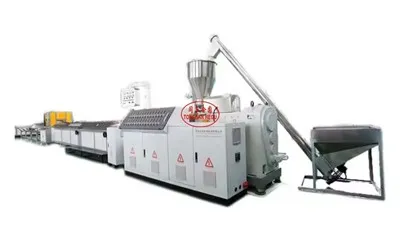
If you’re looking for a PP hollow sheet machine and want to talk through your production needs, or you’re an existing operator who wants to upgrade your cooling system, I’m here to help. We work with operators of all sizes, from small startups to large manufacturing facilities, and we can recommend the right cooling setup for your output and product requirements. Don’t let a missing cooling system derail your production—reach out to us to discuss your needs and get a customized quote.
WPC Door Machine References
- Plastic Extrusion Technology Handbook, 3rd Edition. Hanser Publishers, 2018.
- Journal of Applied Polymer Science, Vol. 125, Issue 3, “Process Parameters Affecting the Mechanical Properties of Polypropylene Hollow Sheets”, 2012.
- Industrial Cooling Systems for Plastic Processing. Manufacturing Engineering Association, 2020.
- Performance and Cost Analysis of PP Hollow Sheet Production Lines. Global Plastics Machinery Report, 2022.
- Maintenance Guidelines for Extrusion Equipment. Plastics Industry Association, 2021.
Qingdao Tongsanhegu Plastic Machinery Manufacturing Co., Ltd.
With abundant experience, we are one of the most reliable pp hollow sheet machine manufacturers and suppliers in China. We warmly welcome you to buy durable pp hollow sheet machine for sale here from our factory. Quality products and reasonable price are available.
Address: West of Xixinzhi Village, Sanlihe District Jiaozhou, Qingdao City, Shandong Province, China
E-mail: info@tongsanhegu.com
WebSite: https://www.tongsanhegumachine.com/
