Hey everyone, it’s Jake here, from the ISO 4144 pipe fittings team you might’ve worked with before. Lately, I’ve been getting nonstop DMs and calls like, “Jake, can I run ISO 4144 fittings in super hot setups? Like, way above what my old piping stuff handled?” This is such a good question—way too many engineers and plant guys brush past this spec because it feels like just another ISO number, but let’s cut through the noise and get real about high-temp use here. ISO 4144 Pipe Fittings
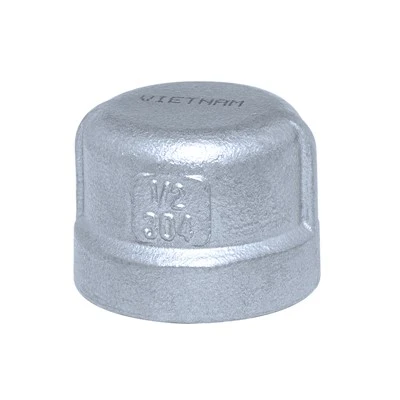
First, let’s do a quick, no-jargon refresh on what ISO 4144 actually is, just to make sure we’re all on the same page. This standard is all about the dimensions for metallic pipe fittings—think elbows, tees, reducers, couplings—for use in pressure piping systems. It covers the nominal sizes, thread specs, wall thickness tolerances, all that stuff that stops leaks before they start. Super common in oil and gas, petrochemical plants, boiler rooms, even food processing lines that run hot liquids. The key here? ISO 4144 doesn’t dictate the material of the fitting itself—it’s just the blueprint for how it’s sized and shaped. That’s the first big aha: the answer to “can it handle high temps” doesn’t start with ISO 4144—it starts with the metal you make the fittings out of.
Now, let’s get to the high-temp grind. What counts as “high temp” for piping? Depends on the application, but we’re talking anything above 150°C (300°F) usually—like steam lines, process heaters, hot water loops for power plants, even some industrial furnace exhaust lines. If your fittings stay below that, plain old carbon steel ISO 4144 stuff works fine, no problem. But when you climb above 200°C (400°F) and especially up near 400°C (750°F) and beyond, that’s when things get tricky with standard materials.
Here’s where most folks go wrong: they grab their go-to carbon steel ISO 4144 fittings because that’s what they used for cold lines, and toss them into a high-temp steam loop, only to get a failure weeks later. Why? Carbon steel has this thing called creep—when it deforms slowly over time under pressure at high temps. Even if the pressure is way below its rated limit at room temp, creep can make the fitting sag, crack at the threads, or separate from the pipe over months. Carbon steel’s upper safe limit for continuous high-temp use is usually around 350°C (660°F) max—push past that, and you’re asking for trouble.
But wait—does that mean ISO 4144 fittings are totally out of the question for really hot stuff? Hell no. It just means you can’t use the cheap carbon steel ones. We make ISO 4144 fittings out of a ton of different alloys, not just carbon steel. Let’s break down the good stuff for high temps, all still built to the ISO 4144 dimension spec so they bolt or thread right with your existing piping.
First up: alloy steel grades, like 12Cr-1Mo, 9Cr-1Mo, even 316 stainless steel. These are game-changers for mid-to-high temp setups. 12Cr-1Mo works great up to like 540°C (1000°F)—super common in boiler feed lines and refinery process units. It’s got better creep resistance than carbon steel, so it holds its shape under heat and pressure for way longer. 9Cr-1Mo steps that up even more—safe up to ~600°C (1110°F), perfect for power plant superheater lines. And 316 stainless? Wait, people sleep on this for high temps, but it’s solid up to ~800°C (1470°F) for short-term use, and continuous up to like 700°C (1290°F) if it’s not exposed to harsh chemicals (like acidic flue gases). We make all three of these grades to exact ISO 4144 specs, so they fit your piping just like the old carbon steel ones, no rework needed.
Then there are the higher-end alloys—like Hastelloy or Inconel—for the really crazy hot stuff, like above 800°C (1470°F), or if you’re dealing with high temps plus corrosive stuff (like sulfur compounds in refinery lines). These are way more expensive, sure, but when we’re talking about a plant shutdown that costs $100k an hour, paying a little more for fittings that last 10 years vs 6 months is a no-brainer. And guess what? We still make these to ISO 4144 dimensions. That’s the big selling point most suppliers won’t tell you: you don’t have to custom-machine fittings if you use these alloys—they slot right into your existing ISO 4144 piping infrastructure.
But here’s the fine print, the stuff that’s not in the spec sheet: ISO 4144 doesn’t test for high-temp performance. It only confirms that the fitting’s size and thread pitch are correct, and that the wall thickness is within tolerance for its nominal size. So if a supplier sells you an “ISO 4144 fitting” made from unknown cast carbon steel, they might’ve cut corners on the alloy’s heat treatment, or the material composition doesn’t meet ASTM specs for high-temp use. That’s why we only source our alloy fittings from mills that have third-party material test reports (MTRs)—you know, the papers that prove the metal’s got the right chromium, molybdenum, whatever, to hold up at high temps. If a supplier can’t hand you an MTR when you ask? Run. That’s how you get a fitting that’s labeled ISO 4144 but will fail in 6 months.
Another big factor I get asked about: pressure rating at high temps. A lot of people look at the ANSI pressure ratings on their fittings and think, “Great, 1500 PSI at room temp, so it’s 1500 PSI at 500°C” — no, that’s not how it works. Pressure ratings drop as temp goes up, for every material. For example, a 2” 9Cr-1Mo ISO 4144 tee might be rated 3000 PSI at 20°C, but at 550°C, that drops to around 1800 PSI. So you can’t just swap in any high-temp alloy fitting without recalculating your pressure-temperature (P-T) rating, using a spec like ASME B31.1 or B31.3 depending on your industry. We don’t just sell you fittings—we’ve got a team that can help you run those numbers, no extra charge, because we’ve seen too many guys skip that step and cause leaks.
Wait, what about thread lubrication? That’s a small thing but makes a huge difference at high temps. If you use regular Teflon tape or graphite paste that’s only rated for low temps, it’ll burn out or break down at 400°C+, leading to thread galling or leaks. For our high-temp ISO 4144 fittings, we always recommend nickel anti-seize compound, rated up to like 1200°C (2190°F). It stays slippery, stops the threads from welding together when they expand from heat, and keeps the seal tight. I’ve seen guys skip this and spend 8 hours trying to break a stuck tee off a pipe, instead of spending $5 on a tube of anti-seize. Don’t be that guy.
Let’s also talk about real-world examples, because numbers are useless without context. Last year, we had a customer in a midwestern power plant who’d been using cheap carbon steel ISO 4144 tees in their superheater lines. After 18 months, they started noticing micro-cracks, pressure drops, and had to shut down the unit early for repairs—cost them like $200k in lost production. They switched to our 9Cr-1Mo ISO 4144 tees, ran those same lines for 3 years with zero issues. Another one: a petrochemical refinery that was running hot sulfur lines at 650°C, used our Hastelloy C-276 ISO 4144 reducers. Before that, their fittings were failing every 9 months; now they’re at 2 years and counting. That’s the difference between matching the right alloy to ISO 4144 dimensions, vs grabbing whatever’s cheapest and calling it a day.
Now, let’s clear up the myths I hear all the time. Myth 1: “ISO 4144 is only for cold, low-temp lines.” No, it’s just a dimensional standard—use high-temp alloys, and it works perfectly. Myth 2: “If it’s ISO 4144, it has to meet all pressure specs for all temps.” Nope, only for room temp. You have to check the material’s rated pressure at your operating temp. Myth 3: “All ISO 4144 high-temp fittings are super expensive.” Sure, the fancy alloys cost more, but they’re not 10x the carbon steel ones—usually 2-3x, which is way cheaper than a plant shutdown.
So, to wrap this up straight: Can ISO 4144 fittings be used for high-temperature applications? The short answer is: Hell yes, but only if you pick the right material grade, confirm the material meets high-temp specs with third-party reports, don’t ignore pressure ratings at elevated temps, and use the right thread lubrication. The standard itself is just the blueprint for how the fitting fits—your material choice is what makes it work (or fail) in hot environments.
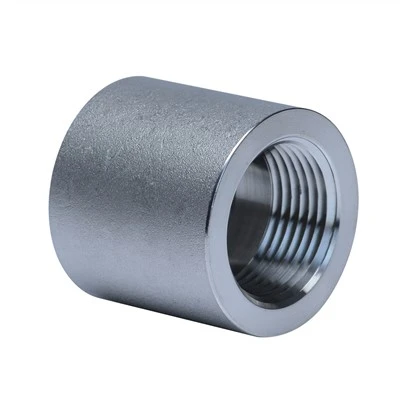
If you’re looking to upgrade your high-temp lines from cheap, short-lived carbon steel, or you just want to double-check that your current ISO 4144 fittings are up to snuff for your operating temps, hit us up. We’ve got all grades, sizes, and the MTRs you need, plus the know-how to help you spec exactly what works for your setup, no guesswork. We’re not here to sell you a one-size-fits-all fitting that’ll let you down—we’re here to make sure your lines stay running, even when the heat is on.
ISO 4144 Pipe Fittings References:
- ISO 4144:2015, Metallic pipe fittings — Dimensions
- ASME B31.1-2023, Power Piping
- ASME B31.3-2023, Process Piping
- ASTM A213/A213M-22, Seamless Ferritic and Austenitic Alloy Steel Boiler, Superheater, and Heat Exchanger Tubes
- NACE MR0175/ISO 15156-1-2020, Petroleum and natural gas industries — Materials for use in H2S-containing environments in oil and gas production — Part 1: General principles for selection of cracking-resistant materials
- API 5L-2021, Pipeline steel pipe
United Brothers Metal Products Co., Ltd.
United Brothers Metal Products Co., Ltd. is one of the most professional iso 4144 pipe fittings manufacturers and suppliers in Vietnam. We are committed to providing high quality customized products with competitive price. Please feel free to buy bulk durable iso 4144 pipe fittings in stock here from our factory. Also, pricelist is available.
Address: Lot 61c2, 99a, 99b Long Giang Industrial Park, Tan Phuoc 3 Commune, Dong Thap Province, Vietnam
E-mail: sales@ubfittings.com
WebSite: https://www.ubvalves.com/
