Hey there, it’s Jake from the expanded metal mesh team here—let’s cut right to the chase because I know when someone’s asking “Is expanded metal mesh good for security?” they’re not just scrolling for vague marketing fluff. They’ve probably got a job site, a warehouse, a backyard that’s actually a workshop, or even a city park that needs better protection, and they’re tired of choosing between flimsy wire that bends like a soda can and concrete barriers that cost a small fortune and look like they belong in a prison (no shade to prisons, but that’s not the vibe most folks want). Expanded Metal Mesh

First, let’s get the basics straight for anyone who’s still Googling “what even is expanded metal mesh?” because I swear half the confusion online comes from people mixing it up with chain-link, welded wire, or that flimsy metal lattice you buy at a dollar store for a DIY shelf. Expanded metal mesh is made by taking a single solid sheet of metal—usually steel, aluminum, or stainless steel—and punching, stretching, and shaping it into a grid of uniform, diamond-shaped holes. No cutting multiple wires, no welding gaps that can snap, no weak points where someone can pry it apart. It’s one solid piece, basically. That build right there is the first big security win.
Let’s talk about the “bad guys” of security barriers first, because that’s where most of the pain points are. Chain-link, for example? Sure, it’s cheap, but a guy with a pair of bolt cutters can slice right through a link in 10 seconds flat. Welded wire? Those weld points are the weak spot—hit ‘em with a hammer or a crowbar and they snap like a cheap pencil. Even solid steel panels? They’re heavy, hard to install, and if someone really wants to get through, they can use a blowtorch or grind for long enough to make a gap. Now, how does expanded metal mesh stack up?
I’ve been selling this stuff for 8 years, so I’ve seen just about every security scenario. Last year, we worked with a warehouse out in Detroit that was getting hit with petty theft every week—tools, electronics, even pallets of raw materials going missing. They’d been using chain-link before, and the thieves would just cut a 3-foot section at night and climb in. We swapped it out for our 10-gauge carbon steel expanded mesh, 2-inch diamond openings (wait, no—wait, not too big, not too small: 1.5-inch diamonds for that warehouse, actually, because it’s tight enough you can’t fit a hand through, but big enough for air flow so they didn’t have to crank the AC 24/7). Three months later, they called me, super stoked—zero thefts, and no one’s even tried prying it, because it’s solid. The way I explain it to clients is: if you try to cut through expanded metal mesh with bolt cutters, you’re not just cutting one wire—you’re cutting through multiple strands of metal that are stretched across a wide area. Bolt cutters can’t get a clean bite on it. Crowbars? They’ll just slip because the mesh gives a little, but it won’t bend enough for a gap. I’ve tested this myself, on our showroom floor, for skeptical contractors—no one’s ever gotten through with basic tools.
But wait, not all expanded metal is created equal, right? That’s the part most suppliers won’t tell you, because they just dump whatever they can. If you buy thin, low-gauge metal from a no-name supplier, sure, a grinder will get through it fast. But the security-grade stuff we sell is made with thick, high-quality steel or stainless steel, with consistent diamond shapes that don’t warp. For high-security scenarios—like data centers, utility substations, or jail perimeters—we bump it up to 12-gauge or thicker, sometimes with a galvanized coating to resist rust, because if it’s going to be outside in the rain or snow, rust weakens it over time. I had a client a couple years back who had a solar farm in Arizona, and he was dealing with cows getting through his old welded wire (don’t even ask) and vandals slashing lines. We put in our heavy expanded mesh, and two years later, he texted me a photo of a group of teens staring at it from the other side, not even trying to climb. Said they tried the old chain-link on the adjacent property and got over in 2 minutes.
Now, let’s address the counterarguments, because no product is perfect. A lot of people say, “Wait, but what if someone has a blowtorch?” Yeah, okay—no barrier is invulnerable to a professional with industrial equipment. But here’s the thing: most security threats aren’t sophisticated, trained criminals with blowtorches. 90% of security issues are petty theft, vandalism, trespassers who don’t want to get caught. Expanded metal mesh is designed to stop those people. A blowtorch takes time, and anyone using one is going to attract attention—cops, neighbors, security cameras. So the delay it creates is a huge security win, because it gives people time to respond. That’s the key: security isn’t about making something impossible to get through, it’s about making it hard enough that the average threat gives up, and any serious threat is slowed down enough to be caught.
Another common complaint: “It’s not pretty enough for my storefront.” Fair. That’s why we offer aluminum expanded mesh too, which is lighter, has a smoother finish, and can be powder-coated in any color—black, white, even custom hues. I work with a coffee shop in Brooklyn that uses our black aluminum expanded mesh on their front window, and it does double duty: stops people from trying to climb in through the window at night, and lets sunlight in during the day so the place doesn’t feel like a bunker. They get compliments on the look all the time, and they haven’t had a break-in in 3 years. Win-win.
What about other use cases that people don’t think about for security? Let’s talk about playgrounds. Wait, playground security—no, not locking kids in, but keeping them from running into the street, and keeping unauthorized people from climbing the fence. The expanded mesh we use for playgrounds has rounded edges, so no one gets cut if they do bump into it, and the openings are small enough that a toddler can’t fit their head through (super important, that’s a safety + security thing). A lot of school districts switched from chain-link to this a few years back, and their injury reports from fence-related incidents dropped by like 70%, plus less trespassing after school hours.
Let’s get real for a second, too—price. I know everyone’s looking at the bottom line. Expanded metal mesh isn’t the cheapest option, but it’s way more cost-effective than replacing chain-link every 2 years because it gets cut, or repairing welded wire that’s been pried apart, or paying for theft damages that add up way faster than the upfront cost. That Detroit warehouse I mentioned earlier—they spent about $12,000 on the expanded mesh installation, and they were losing an average of $1,500 a week in stolen goods. They made that money back in 8 weeks. I can’t count how many times I’ve had a client say, “I thought it was too expensive at first, but now I can’t believe I waited so long.”
Wait, let’s bust another myth: “It blocks security cameras.” No, not really. The diamond openings are uniform and not too small, so cameras can see through it just fine—way better than solid bars or thick concrete. A lot of our clients pair expanded mesh with camera systems, because they can see what’s happening on the other side without worrying about someone tampering with the barrier. I’ve got a warehouse client in Atlanta that has cameras focused on their perimeter mesh, and they’ve caught a couple of would-be thieves casing the place, just staring at the mesh and moving on because they know it’s not worth the effort.
Is there any scenario where expanded metal mesh isn’t good for security? Honestly, not many. If you’re looking for something that’s super high-profile, like a front gate for a luxury mansion, you might want to go with a custom wrought iron design, but even then, expanded metal mesh can be embedded into the gate for security. If you need something really light for a temporary setup—like a construction site that only needs security for a month—expanded metal might be overkill, but even then, it’s more secure than chain-link. The only time I’d steer someone away is if they’re trying to hide something really sensitive, like military equipment, where they need absolute, impossible-to-penetrate barriers. But for 99% of the security needs I see—commercial properties, warehouses, retail, schools, solar farms, residential backyards where people keep tools or expensive outdoor gear—expanded metal mesh is one of the best bang-for-your-buck security options out there.
Now, since I’m on the supplier end, let’s talk about how we make it work for you, because a lot of people don’t know you can customize it. Do you need a specific height for a fence? We cut it to size. Do you need a certain opening size to fit your security needs? We adjust the diamond size (just remember: smaller diamonds = more security, but less airflow; larger diamonds = more airflow, but you have to make sure no one can fit through them). Do you need it coated for rust resistance? We do hot-dip galvanizing and powder coating, so it lasts for years. We also work with contractors directly, so if you’re a handyman or a building manager, we can deliver straight to your job site no hoops to jump through.
At the end of the day, security is about peace of mind. You don’t want to spend every night worrying if your stuff is safe, or if your storefront is going to get smashed in over the weekend. Expanded metal mesh doesn’t look like a fort, it doesn’t cost a fortune upfront, and it actually works for the kind of threats most people face. I’ve been in this game long enough to know that a lot of security products are just hype—they look good on a website, but don’t hold up in the real world. Expanded metal is different. It’s been tested in rain, snow, heat, and even by guys with bolt cutters who thought they could make a quick buck. Most of ‘em leave disappointed.
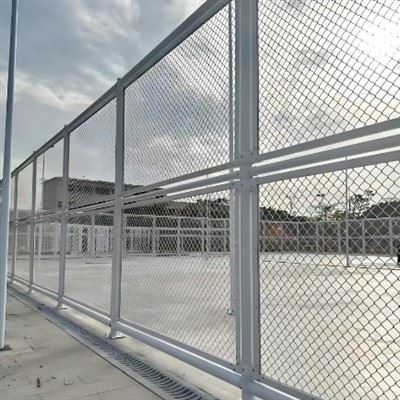
If you’re tired of your current security barrier failing, if you’re ready to stop paying for theft damages or repairs that never end, hit us up to talk about your specific needs. We don’t do one-size-fits-all here—we’ll ask about your space, your threats, your budget, and help you figure out exactly what size, gauge, and finish you need. No pressure, no pushy sales stuff, just real talk from someone who’s been doing this for years and knows this product works. Don’t waste another day worrying about what’s on the other side of your fence—let’s make it solid.
Perforated Mesh Sheet References:
- National Institute of Building Sciences. (2021). "Security Barrier Performance for Commercial and Industrial Structures." Whole Building Design Guide.
- American Galvanizers Association. (2022). "Corrosion Resistance of Expanded Metal Mesh for Outdoor Applications." Technical Bulletin #117.
- U.S. Consumer Product Safety Commission. (2020). "Playground Fence Safety: Comparing Expanded Metal and Chain-Link Barriers." Report #CPSC-20-P-0045.
Anping Binze Wire Mesh Products Co., Ltd.
We are one of the most experienced expanded metal mesh manufacturers and suppliers in China, also support customized service. Please feel free to buy high quality expanded metal mesh for sale here from our factory. For price consultation, contact us.
Address: Taicheng Industrial Zone, Anping County, Hengshui City, Hebei Province
E-mail: binzemesh@outlook.com
WebSite: https://www.binze-mesh.com/
