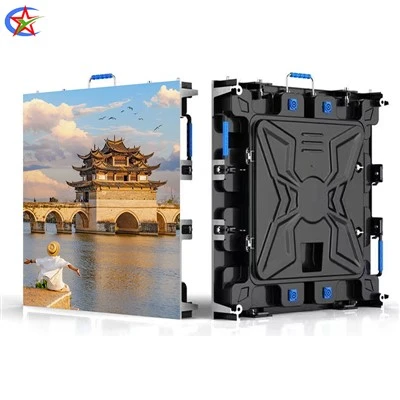
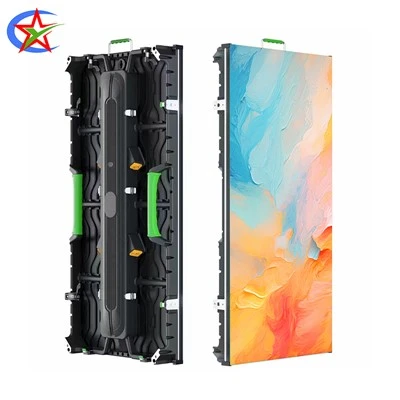
Hey folks, let’s cut to the chase—if you’re here, you’re probably shopping for indoor LED modules, scrolling through specs, and wondering one big thing: “Do these things even emit blue light?” I get it. Blue light talk’s everywhere lately—blame your phone, your laptop, even those overhead lights in your office. But when it comes to indoor LED modules specifically, the info’s all over the place, right? Some sites say “no risk,” others act like every module’s a ticking time bomb for eye strain. As an indoor LED module supplier, I’m not here to sell you a bunch of jargon. I’m here to break this down like I would with a buddy grabbing coffee after a long day of answering the same question. Indoor LED Module
First, let’s get one tiny thing straight: all light, from the sun to your bedroom lamp, is made up of wavelengths. Blue light is just a small slice of that spectrum, roughly between 400 and 500 nanometers (nm)—think the kind of blue you see in a clear summer sky, not that neon blue from a kids’ toy. Now, “blue light” isn’t inherently bad. Your body relies on it to set your circadian rhythm, keep you alert during the day, and even help with mood and memory. The problem? It’s the high-energy, short-wavelength blue light (closer to 400 nm) that’s been linked to issues like digital eye strain, disrupted sleep, and even long-term retinal damage if you’re exposed to too much of it over years. That’s the stuff everyone’s really talking about.
So back to indoor LED modules. Do they emit that bad blue light? The short answer is: sometimes, but it’s not a given. Let’s dive into why. Most indoor LED modules we make use of blue LED chips coated in a phosphor material—this is how we turn that harsh blue light into the white light we actually use for offices, retail stores, homes, gyms, you name it. The phosphor layer converts some of the blue wavelength into longer, warmer ones (red and green) to balance out the spectrum. But here’s the catch: not all phosphor mixes are created equal. A cheap, thin phosphor layer will only absorb some of that short-wavelength blue light, leaving way too much of it peeking through. That’s when you get that harsh, cool white light (think 5000K or higher) that makes your eyes burn after an hour under it, and leaves you staring at your ceiling at 2 a.m. unable to sleep.
Wait, let’s clarify that color temperature thing, because it’s confusing. Kelvin (K) = color temperature. Warm light is 2700K–3000K, like a soft table lamp. Neutral is 3500K–4500K, perfect for offices where you need focus but don’t want that cold hospital feel. Cool is 5000K+, which is like bright daylight on a sunny day. The higher the Kelvin, the more short-wavelength blue light you’re getting. That’s why a 6500K LED module for a factory will pump out way more blue light than a 3000K module for a hotel lobby. But even cool-colored LEDs don’t have to be bad—if we use the right phosphor, we can block most of that harsh blue without dimming the light.
Now, let’s talk about standards, because that’s where the “is it safe?” question gets real. We follow the IEC 62471 standard for photobiological safety of lamps and lamp systems. This standard splits light into risk groups: Exempt (no risk), Group 1 (low risk, safe for general use), Group 2 (moderate risk, only for certain applications), and Group 3 (high risk, never for indoor use). All our indoor LED modules are Group 1 rated. That means even if they have a blue component, the amount is low enough that you won’t get retinal damage from everyday use—no staring at a module for 8 hours straight, obviously, but same as you wouldn’t stare at the sun. I see so many competitors cutting corners to make a cheaper module, skipping proper phosphor mixing, and ending up with Group 2 rated stuff. They’ll tell you “cool white is fine” but miss that it’s only safe for 2 hours a day max. We never do that.
Let’s also bust a common myth here: “Indoor LEDs are way worse than natural sunlight for blue light.” That’s just not true. A quick study from the University of Manchester found that midday summer sunlight has around 100x more short-wavelength blue light than a typical 4000K LED module. Wait, so why do screens feel like they’re blasting blue light? Because you’re super close to them. A phone is 12–18 inches from your face, while a ceiling LED module is 8–10 feet away. That proximity difference is huge. The light hitting your eyes is way less intense from an indoor module than from a screen inches away. Of course, that doesn’t mean you can ignore blue light from modules—especially if you’re installing them in a space where people are sitting within 2 feet, like a retail display or a desk lamp assembly. That’s why we make modules with modified phosphor for close-range applications, cutting that harsh blue even more without making the light look yellow or dim.
Now, let’s talk about what we do at our shop—since I’m the one behind the counter here. When a client comes to us saying they need indoor LED modules for, say, a café, we don’t just send them the cheapest cool white we have. We ask questions: How high are your ceilings? How close will customers be to the lights? Do you want the space to feel cozy (warm) or productive (neutral)? For a café, we’ll recommend 3000K modules with a high CRI (color rendering index—another thing! CRI measures how accurately a light shows colors; higher CRI = truer to natural light). A CRI of 90+ means the light won’t make your latte look weirdly brown or your customers’ skin look washed out, and it also means better phosphor mixing, so less blue peeking through. For a startup office where people are working 10 hour days, we’ll go with 4000K, Group 1 rated, and blue-light filtered options if they mention sleep issues—those have a thin layer that absorbs even more of that bad blue, perfect for spaces where people leave at 7 p.m. and don’t want their bodies thinking it’s still daytime.
I know a lot of you are worried about long-term effects, too. Another thing that comes up: blue light from indoor modules and screen time adds up. If you’re under a module with 10% more short-wavelength blue all day, plus staring at a phone for 2 hours, that’s more cumulative exposure. But here’s the good news: we can make modules with blue light peaks that align less with the wavelengths that trigger circadian disruption. A study from the Lighting Research Center at Rensselaer Polytechnic Institute found that LEDs with a “warm white” spectrum (below 3000K) have almost no impact on melatonin production—aka no messing with your sleep. Neutral LEDs can be tuned to cut that circadian-active blue too, if that’s a priority for your space.
Wait, let’s address the cheap modules you’ll find on Alibaba or Amazon. I’m not gonna bash other suppliers, but I will tell you what I’ve seen. A lot of no-name brands import modules from factories that use low-grade blue chips and minimal phosphor. Their modules might have a Kelvin rating of 5000K, but when you test the blue light output, it’s way over Group 1 limits. We had a client come to us last year who bought a bunch of cheap modules for their gym, and within a month, their front desk staff was complaining of headaches and trouble sleeping. We tested those cheap modules—they were Group 2, meaning they were only safe for short-term use. That’s the kind of stuff we avoid at all costs. We test every batch of modules we get, send samples to independent labs to check blue light levels, and only use phosphor blends that meet all global safety standards.
So, to circle back to the original question: Do indoor LED modules emit blue light? Yes, but not all of it’s the bad kind. The key is how much of that harsh, short-wavelength blue they let through, and whether they’re tested to be safe for long-term indoor use. If you’re looking for modules, don’t just sort by price. Ask for the Kelvin rating, the CRI, and the photobiological safety rating. A good supplier won’t hide that info—they’ll send it right over with the spec sheet.
Now, if you’re in the market for indoor LED modules and you’re not sure what to get—whether it’s for a retail store, office, home, gym, whatever—hit us up. We don’t do high-pressure sales. We’ll walk you through the options, explain what makes sense for your space, and even send free samples if you want to test the light for yourself. No weird fine print, no hidden fees, just straight talk about blue light, modules, and what works for your needs.
At the end of the day, lighting shouldn’t be a mystery. You should be able to pick a light that looks good, works for your space, and doesn’t leave you worrying about your eyes at night. That’s why we do what we do—make modules that are affordable, safe, and actually do what you need them to do, not just check a box for “LED” technology.
Before you go, quick note: If you spot a module that says “zero blue light” online, run. There’s no such thing. All white light has some blue component. The goal is to make sure that component is within safe limits, not eliminate it entirely. That’s a marketing line, not a real technical fact. We’ll never lie to you about that.
When you’re ready to talk specs, test samples, or just ask a random question about blue light and indoor LEDs, reach out. We’re here to help, not push a sale.
Indoor LED Module References
IEC 62471:2006, Photobiological safety of lamps and lamp systems. International Electrotechnical Commission, Geneva.
University of Manchester, “Blue light exposure from LED lighting vs natural sunlight,” 2021.
Lighting Research Center, Rensselaer Polytechnic Institute, “Circadian Effects of White Light Spectra,” 2022.
Journal of Occupational and Environmental Hygiene, “Digital Eye Strain: The Role of Blue Light from LED Lighting,” 2020.
Shenzhen Starcolor Optoelectronics Co., Ltd.
As one of the most professional indoor led module manufacturers and suppliers in China, we’re featured by quality products and good price. Please rest assured to wholesale discount indoor led module in stock here from our factory. Customized orders are welcome.
Address: 2nd floor, Building A, Hongjingda Industrial Park, Shiyan town, Bao’an District, Shenzhen
E-mail: starcolorled@outlook.com
WebSite: https://www.starcolordisplay.com/
