Hey there, if you’ve ever stood in front of a stack of transmission parts in your shop or warehouse—maybe a clutch disc, input shaft, or even a tiny bearing—wondered, “How old is this thing, really?” you’re not alone. As a transmission parts supplier who’s been in this game for over a decade, I get this question all the time from mechanics, auto shops, and even DIYers ordering parts online. Most people think dating a part is just checking a stamp on it, but honestly? It’s way more nuanced than that. A part might look brand new but have been sitting in a warehouse for 10 years, or it might have a weird stamp that makes you second-guess the date. Today I’m breaking down exactly how to figure out the age of a transmission part, no fancy lab gear required. Transmission Parts
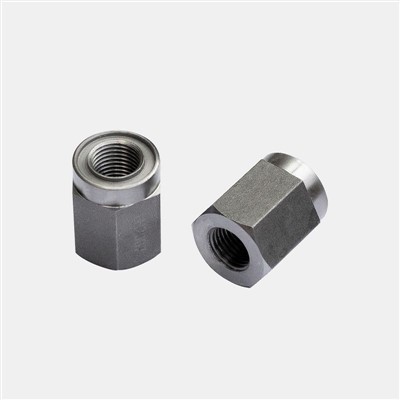
First off, let’s start with the basics: what counts as a “transmission part” here? We’re talking everything from internal components (gears, synchronizers, valve bodies) to wear items (clutches, gaskets, seals). Each type has its own dating clues, but there are some universal checks that work across the board. Let’s dive in, step by step, like I’m walking you through my own inventory room—you’d catch me grabbing a part off the shelf, turning it over, and pointing out little details you might miss.
The first stop is always the part marking. Most OEM transmission parts and reputable aftermarket parts have some kind of stamped, engraved, or printed marking with a date code. But here’s the thing: date codes aren’t standardized across every manufacturer. I’ve seen Ford codes that use a letter for the month (A=January, B=February, up to L=December) plus two numbers for the year—like B2 would be February 2012, or B2 could be February 2022? Wait no, wait—some manufacturers use the last two digits of the year, but others use full digits. GM used to do it with a circle around a number, where the number inside was the year. For example, a circle with a “5” would be 2005, right? But wait, older GM parts from the 90s might use a different code, like a letter plus a number—“K3” is 1993. Aftermarket suppliers, well, they’re all over the map. Some will put a month and year on a sticker, others will tuck a code into the part number. Oh, and don’t ignore minor parts like bolts or snap rings—those might have a tiny code on them, too. I once had a customer bring in a valve body that looked like it was from 2018, but the internal snap rings had a code that said 2009, so we knew the whole assembly had been sitting since then. Pro tip: if the marking is faded or scratched, don’t guess—cross-reference it with the manufacturer’s service manual. Most of them post code charts online for free, and as a parts supplier, I keep a cheat sheet of common codes printed in my office for quick checks.
Next up is packaging and documentation. This is a big one that a lot of people skip. When a transmission part is shipped from the factory or a warehouse, it comes in packaging with a lot of info on it. For brand-new OEM parts, the box will have a lot number, production date, and sometimes a “best by” date—especially for wear items like clutches and seals, which can dry out if they sit too long. Aftermarket parts usually have a label with their own production date, too. If you’re buying used parts or pulling from a salvage yard, look for the original packaging—even a crumpled box with a stamp on it is better than nothing. Also, if the part came with a warranty slip or invoice, that’s a hard date right there. I’ve had customers tell me they bought a clutch from me in 2019, then tried to return it in 2023 because it failed, and the invoice proves exactly when it was sold. But wait—what if you don’t have the packaging? That’s where physical condition comes in.
Physical condition is a dead giveaway, but you have to know what to look for. Let’s start with surface rust or corrosion. Transmission parts are usually made of steel, aluminum, or cast iron. If a steel part has surface rust in weird patches, not just where it’s rubbed against something, that’s a sign it’s been sitting exposed to moisture for a while. A part that’s less than a year old will have a smooth, uniform finish—no flaking, no rust spots. Seals and gaskets, though? Those are super sensitive to age. A rubber seal that’s more than 5 years old, even if it’s never been installed, will start to crack or turn brittle. I’ve seen seals that look brand new on the outside but crumble when you touch them because they’ve been in a damp warehouse for 7 years. Clutch friction discs? If the material is chalky or flaking, that’s old. Gear teeth, on the other hand—if they’re sharp and unmarked, that’s a good sign, but if they have tiny scratches from being moved around in a box, that might mean it’s been handled a lot, which could add up to age. Also, paint or finish on aftermarket parts: if it’s faded or chipped more than normal, it’s probably been sitting somewhere with sunlight or extreme temps, which speeds up aging. Hey, I’ve got parts in my warehouse that are 3 years old and look newer than some parts I see online that are listed as “new”—because we keep our storage climate-controlled. That’s a game-changer for preserving parts.
Then there’s lot numbers and batch information. Every manufacturer batches production runs, so parts from the same batch will have the same lot number. If you have multiple parts that need to be compatible—like a set of synchronizers for a specific transmission model—matching lot numbers can tell you they were made around the same time. But lot numbers can also be used to check age: if you can cross-reference a lot number with a manufacturer’s records, you’ll get the exact production date. For example, I once had a customer who needed a replacement input shaft for a 2008 Ford F-150 transmission. They brought in their old shaft, which had a lot number of F08A. I looked up Ford’s lot code chart and found that F08A was produced in March 2008, so I knew their old shaft was original to the truck. That saved them a ton of time trying to figure out if aftermarket parts would work. Also, when parts are stored in a warehouse, they might have warehouse labels with a “received date” or “stock date” stenciled on them. That’s not the production date, but it’s still useful if you’re trying to figure out how long it’s been sitting before it got to you.
Wait, let’s talk about the gray areas. Because it’s never black and white. For example, remanufactured transmission parts. Reman parts are taken apart, cleaned, replaced with worn components, and tested—so their “age” is tricky. A reman part might have a production date of 2021, but the core it was built from is from 2015. How do you tell? The remanufacturer will stamp their own code on it, usually with the reman date. I always tell customers to check for the reman mark—most reputable suppliers add their own date stamp after the original part number. If you’re buying used parts from a salvage yard, you have to be extra careful. A used part was installed in a running vehicle, so its age is the age of the vehicle, but that doesn’t mean the part itself is old. A 10-year-old vehicle might have had the transmission replaced with a 2-year-old used part, so the part’s age is way younger than the vehicle’s. That’s a common mistake I see DIYers make—they assume a part pulled from a 10-year-old car is 10 years old, but that’s not the case.
Another thing: modern vs. old parts. Transmission technology changes, so newer parts might have different markings or physical traits. For example, parts made after 2010 often have barcodes or QR codes on them that link to their production records. That’s a huge help—you can scan the code with your phone and get the exact date it was made, where it was shipped, etc. But older parts, pre-2000, might have hand-stamped codes that are hard to read. I still run into parts from the 80s that have tiny, half-obliterated numbers, so I cross-reference the part number with old OEM catalogs to guess the age. Sometimes you just have to go by the model year of the transmission it’s meant for—if it’s a part for a 1995 Chevy Silverado transmission, it’s probably from the mid-90s, unless it’s a replacement.
And let’s not forget storage conditions. This is something most people don’t consider, but it’s a big one. A part that’s stored in a cool, dry, climate-controlled warehouse will look and act like new for 10+ years, while the exact same part stored in a damp garage or a hot, dusty barn will start deteriorating in 2 years. I once had a customer bring in a clutch they’d stored in their basement for 8 years—when I checked it, it was barely worn, no cracks, no rust. But another customer had a clutch that was only 3 years old, stored in their outdoor shed, and it was already brittle. So if you’re buying parts from someone, ask them about their storage conditions. If I ship a part to a customer, I always include info on how I stored it, because that affects its lifespan.
Now, let’s talk about common mistakes people make. First, assuming that a part with no date stamp is old. I’ve had customers throw out parts because they couldn’t find a stamp, only to later find the stamp was on the underside of the part, hidden. Always check every surface—inside bores, behind flanges, under gaskets. Second, mixing up production date with sale date. A part might be produced in 2020, but sold in 2023, so its age as a part is 3 years, not 0. Third, ignoring wear items. Seals, gaskets, clutches—these are the parts that go bad with age, even if they’re never used. A lot of mechanics will install an old seal “because it looks new” and it leaks a month later, just because the seal was 7 years old.
As a transmission parts supplier, I work with this stuff every single day, so I’ve picked up a few hacks over the years. For example, I keep a folder on my computer with all the common OEM date codes from Ford, GM, Chrysler, and Honda. I also test parts myself when I get a new batch—pull a seal, bend it a little, see if it cracks, to check its age. And when I sell parts to a customer, I always tell them to reach out if they’re not sure about a date code. No question is dumb when it comes to transmission parts—if you mess up, you’re looking at a big repair bill down the line.
At the end of the day, determining a transmission part’s age isn’t rocket science, but it does take a little attention to detail. Start with the markings—stamps, stickers, codes—then check the packaging, then the physical condition, especially for rubber and metal parts. If you’re stuck, don’t guess—reach out to someone who knows parts, like a reputable supplier or mechanic. That’s why we’re here, right? We don’t just sell parts—we help you figure out which part is right, including its age, so you don’t waste money on something that’s already past its prime.
If you’re working on a transmission project and need help dating a part, or you’re just trying to source a reliable part for your build, don’t hesitate to connect. We can walk you through checking codes, verifying storage info, or anything else you need to get your project done right. Don’t let an old or misdated part throw off your repair—reach out, and we’ll make sure you get exactly what you need.
Precision Disc Parts Machining References:
- Automotive Parts Manufacturers Association. (2022). Date Coding Standards for Transmission Components. Retrieved from industry technical documentation.
- GM Service Technical Manual. (1998). Part Identification and Dating Guide for Light Duty Transmissions.
- Ford Motor Company. (2010). OEM Part Code Cross-Reference Manual for Powertrain Components.
- Rubber Manufacturers Association. (2019). Shelf Life Guidelines for Rubber Seals and Gaskets in Automotive Applications.
Taizhou Liuhuan Machinery Co., Ltd.
As one of the most professional transmission parts manufacturers and suppliers in China, we’re featured by quality products and good service. Please rest assured to buy customized transmission parts made in China here from our factory. For quotation, contact us now.
Address: Xinyuan Industrial Zone, Damaiyu Street, Yuhuan City, Zhejiang Province,China
E-mail: tzlhmachining@gmail.com
WebSite: https://www.tzlhmachining.com/
