If you’ve ever walked past a textile mill or stood in a fabric store running your fingers over a dyed cloth that’s vibrant, even, and free of streaks, there’s a good chance a rubber roller played a quiet, critical role in getting it there. As a third-generation rubber roller supplier who’s spent 18 years troubleshooting roller issues for dye houses across the Southeast, I’ve learned that most people outside of our industry don’t think about these little, often overlooked parts—until something goes wrong. A bad roller, a mismatched compound, or poor maintenance can turn a perfectly good dye run into hundreds of yards of scrap fabric, costing operators time, money, and their sanity. Today, I want to break down exactly how rubber rollers impact the dyeing process, why the wrong choice here matters more than you’d guess, and how our team works to make sure your dye runs are as consistent as possible. Rubber Roller

First, let’s ground this in what dyeing actually looks like on a production floor, because the rubber roller’s job starts long before the dye ever touches the fabric. Most continuous dyeing processes—like pad dyeing, which is the most common for large-batch cotton, polyester, and blended fabrics—rely on a sequence of rollers to handle fabric at every step. When fabric enters the dye range, the first stop is usually a set of nip rollers, also called pad rollers. These rollers press the fabric tight against a rotating drum, forcing the dye liquor (the mixture of dye, water, and chemical assistants) to soak evenly into every fiber, not just pool on the surface. If the rubber here is too hard, it won’t distribute pressure evenly across the entire width of the fabric. I’ve seen 10-foot-wide fabrics come out of the nip with three-inch-wide streaks where the roller’s core sat slightly off-center, even when the operator set the pressure gauges correctly. If the rubber is too soft, it compresses too much under pressure, leading to inconsistent liquor uptake—thin sections fade after washing, thick sections bleed dye onto adjacent fabric during the curing step.
It’s not just hardness, though. The rubber compound itself has to be compatible with the dyes and chemicals used in the process. I still remember a client who ran reactive dye (the most common for cotton) in a batch dye range for years, switching from our standard EPDM roller to a lower-cost silicone roller to save money. Within two weeks, they started noticing that their indigo-dyed denim was coming out with uneven, splotchy color, and the roller was developing small cracks and peeling after just 400 production runs. Reactive dyes use caustic soda and salt as assistants, and silicone is inherently porous to some of these small chemical molecules. Over time, the chemicals seeped into the rubber, breaking down its molecular structure and making it less able to hold consistent pressure. EPDM, on the other hand, is formulated to resist both caustics and salt solutions— that’s why we specify it for 70% of dyeing applications. That client switched back to our EPDM rollers, and their defect rate dropped from 12% to less than 2% in a month.
Next, think about release, which is a make-or-break step for dye fixation. After the pad rollers apply the dye liquor, fabric moves to pre-dryer rollers before curing. These rollers have to keep the fabric flat, free of snags, and prevent dye from transferring from the wet fabric onto the roller itself. If the rubber is too tacky or has a rough surface, wet dye will stick, and the next section of fabric will pull that dye off, creating dark stains or cross-contamination. I worked with a technical dye house last year that specialized in multi-color printed fabrics—they had constant issues with white sections of their prints turning pink, even though their printing screens were perfectly calibrated. When we inspected their pre-dryer rollers, we found they’d never been lapped (a process of polishing the rubber’s surface to a fine, smooth finish) after installation. The roller’s micro-roughness caught tiny dye particles from wet fabric, and over 10 hours of production, that built up enough to smudge onto the next roll. We lapped the surfaces, adjusted their weekly maintenance schedule, and they haven’t had a cross-contamination issue since.
Heat resistance is another factor most operators don’t plan for. Curing step temperatures for dyes can range from 250°F for reactive dyes to 400°F for disperse dyes used on polyester. If the rubber roller can’t handle consistent heat without expanding or deforming, pressure drops mid-run, leading to uneven drying and dye fixation. Natural rubber, for example, starts to soften and lose shape at temperatures above 200°F, which makes it useless for curing zone rollers. We formulated our high-temperature HNBR compound specifically for these applications—it retains 95% of its hardness at 350°F, so pressure stays consistent even after 12-hour production runs. I’ve had clients tell me they switched to HNBR rollers for their curing zones and cut roller change-outs from every 2 weeks to every 10 weeks, because the rubber doesn’t deform under heat.
Wait, let’s talk about pressure distribution, because that’s where a lot of “secret” roller performance comes in. It’s not just the surface of the rubber—it’s the core and the bond between the core and the rubber. A lot of cheap roller suppliers use a thin rubber layer (only 1/8 of an inch) on a steel core, with a poor adhesive that lets the rubber separate over time. When that happens, you get “flat spots” on the roller, which create pressure spikes where the separated section hits the fabric. Last year, a young mill manager called me in a panic—they’d spent $5,000 on a batch of fabric that was supposed to be for a major clothing brand, and the dye was so streaky the brand was going to reject it. We tested their rollers and found that two of their pad rollers had rubber peeling 2 inches from the core, creating a dead spot every 5 feet on the 150-yard roll of fabric. We removed and replaced those rollers in 4 hours, and they were able to rerun the batch at 90% yield. That’s the cost of cutting corners on roller quality—it’s not just the roller itself, it’s the value of the fabric, the time of the operators, and the relationship with your customer.
Another often-overlooked variable: lubrication and maintenance of the roller. Even the best rubber compound will fail fast if it’s not cleaned regularly. Dye liquor has residual salts, pigments, and chemicals that can dry into the rubber’s surface, creating tiny cracks over time that trap dye and cause uneven pressure. I’ve created a simple maintenance checklist for all our dye roller clients: wipe rollers down with a neutral pH solution after every 20 production runs, deep-clean with a mild abrasive (like pumice) every 100 runs, and inspect for cracks or flat spots at the start of each shift. One mill that followed this schedule cut their roller costs by 30% in a year, because they weren’t replacing rollers prematurely due to chemical buildup.
Let’s get practical for a second—how do you choose the right rubber roller for your specific dye process? It’s not a one-size-fits-all answer. For pad rollers in reactive dyeing, we recommend 60 Shore A EPDM, with a ½-inch rubber layer and a high-strength adhesive bond. For pre-dryer rollers, 50 Shore A EPDM is ideal—softer than pad rollers, so it doesn’t snag fabric, but still smooth enough to prevent dye transfer. For curing zones with disperse dyes, our HNBR compound at 70 Shore A is the way to go, because it withstands high heat and maintains pressure consistency. If you’re working with specialty dyes, like acid dyes for nylon, we have a custom nitrile compound that resists acid degradation. The key is to partner with a supplier who actually works with dye processes, not just rubber for general use. A lot of hardware stores sell “generic rubber rollers” for small dye projects, but those won’t stand up to 10-foot-wide fabrics, 24-hour production runs, or harsh chemical environments.
I’ve seen too many operators write off roller issues as “operator error” or “bad dye lot,” and only realize months later that the root cause was a cheap, mismatched rubber roller. Last year, I visited a mill that had been having uneven dye uptake for six months, and their quality team had adjusted pressure gauges, changed dye suppliers, and retrained operators—nothing worked. When we tested their rollers, we found they were using 40 Shore A rubber for pad rollers—way too soft to apply consistent pressure across 12 feet of fabric. By switching to 60 Shore A EPDM, their liquor uptake became within 2% uniformity across the entire width, a benchmark most dye houses aim for. That small change didn’t require new equipment, new dyes, or new training—just the right roller for the job.
At the end of the day, rubber rollers are a small part of the dye process, but their impact is huge. They control how much dye is absorbed, prevent cross-contamination, maintain pressure consistency across thousands of yards of fabric, and withstand harsh chemicals and heat. As a supplier who’s been in this business for decades, I don’t just sell rollers—I work with clients to solve specific problems. If you’re dealing with streaky dye runs, high defect rates, frequent roller replacements, or cross-contamination issues, I encourage you to reach out to us for a consultation. We can assess your current process, recommend the right rubber compound, Shore hardness, and maintenance schedule, and help you cut costs while improving your product quality.
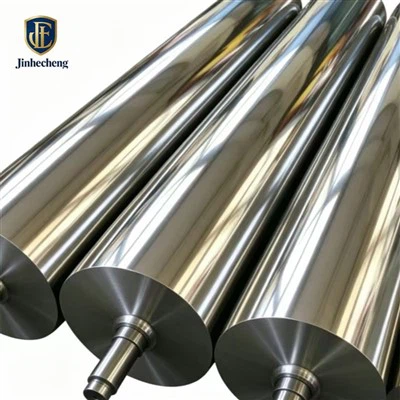
Chrome Plated Rollers References
- Textile Dyeing and Finishing: Principles and Practice, 2nd Edition, Society of Dyers and Colourists.
- Rubber Compatibility Handbook, ASTM International.
- Continuous Dyeing Technology for Woven Fabrics, Journal of Textile Engineering, 2021.
- Maintenance Guidelines for Industrial Rubber Rolls, Rubber Division, American Chemical Society.
Qingdao Jinhecheng Machinery Co., Ltd.
Qingdao Jinhecheng Machinery Co., Ltd. is one of the most professional rubber roller manufacturers and suppliers in China, featured by quality products and low price. Please rest assured to buy discount rubber roller made in China here from our factory. Customized orders are welcome.
Address: Aishan Industrial Park, Yanghe Town, Jiaozhou, Qingdao City, Shandong Province
E-mail: alice@jhcroller.com
WebSite: https://www.jhcroller.com/
