Hey there, fire safety folks! If you’ve ever been deep in the weeds of testing fire alarm systems, you’ve probably heard the term “Universal Fire Tester” thrown around a ton. And if you’ve been shopping for one lately, you’ve definitely come across two main types: analog and digital. As someone who’s been supplying these bad boys to fire techs, facility managers, and even big commercial building teams for years, I get how confusing this can feel at first. Like, why does it matter which one you pick? Can’t you just grab either and call it a day? Spoiler: Nope. Picking the wrong one could slow you down, cost you extra time, or even miss a tiny issue that ends up causing a headache later. Let’s break this down like we’re chatting over coffee (no boring jargon, promise) so you know exactly what separates analog and digital Universal Fire Testers. Universal Fire Tester
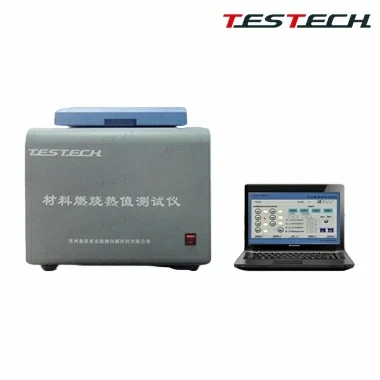
First, let’s start with the basics of what a Universal Fire Tester actually does, just to make sure we’re all on the same page. These tools aren’t some random fire extinguisher tester—they’re specialized devices that mimic the signals real fire alarm sensors send to your control panel. Think of them as a “test trigger” for things like smoke detectors, heat sensors, and pull stations. When you’re maintaining a building’s fire system, you need to verify that every sensor works, the control panel picks up the signal, and it triggers the alarm correctly. A Universal Fire Tester lets you do that without actually setting off a real fire or draining your smoke detectors. Makes sense, right? No one wants to accidentally evacuate a 10-story office building during a 2PM test.
Now, analog vs. digital. Let’s start with the analog version, since it’s been around longer—like, it’s the OG of fire testers. Think of analog devices as your favorite flip phone: it does one thing, but it does it reliably, even if it’s not super flashy. An analog Universal Fire Tester works by sending a single, fixed signal to the fire alarm control panel (FACP). Like, it only sends one strength of voltage or current—say, a steady 12 volts—every single time you use it. Its whole job is just to say, “Hey FACP, I’m a working sensor, sound the alarm.” It doesn’t give you any extra info beyond that. You press a button, send the signal, and if the alarm goes off, you check the box that it works. If it doesn’t? You know there’s a problem, but you have no clue why. Is the sensor broken? Is the wiring loose? Did the FACP not get the signal at all? Analog testers can’t tell you. They just give you a pass/fail result.
Don’t get me wrong, analog testers aren’t useless. For small, old buildings with basic fire systems—think a single-story retail space with one FACP and 10 smoke detectors—they work totally fine. They’re cheap, super easy to use, and you don’t have to be a fire tech wizard to figure them out. I’ve had a lot of part-time maintenance guys pick up an analog tester for their local church or small office, and they swear by it. It’s like a hammer—everyone knows how to use it, it gets the job done for simple tasks. But here’s the thing: analog testers are stuck in the past. Most newer commercial and residential buildings (especially ones built after 2010) use addressable fire alarm systems, not the old non-addressable ones. That’s where the digital Universal Fire Tester comes in, and that’s the game-changer.
Digital testers, as the name suggests, send digital signals instead of fixed analog ones. Digital signals are like the text messages of the fire tester world—they carry way more info than just “I’m working.” When you hook a digital tester up to an addressable FACP, it doesn’t just send a generic “alarm me” signal. It sends specific data: like, which sensor it’s mimicking, its exact signal strength, even things like battery life if it’s a wireless sensor. Wait, hold on—let’s circle back to addressable systems for a sec, because that’s why digital testers are non-negotiable now. Non-addressable systems (the ones analog testers work with) basically treat every sensor as the same. If there’s a fire, all sensors trigger at once, and the FACP just sounds the alarm without telling you where it’s coming from. Addressable systems are way smarter: each sensor has a unique ID number. If a sensor goes off, the FACP not only sounds the alarm, it tells you exactly where that sensor is—like “Sensor 47 on the 3rd floor west hallway, near the break room.” That’s a huge safety win, right? Instead of searching every floor of a 12-floor building during an alarm, you can head straight to the spot the FACP names.
So here’s the big difference: an analog tester can’t communicate with an addressable FACP because it only sends that one fixed signal. If you plug an analog tester into an addressable system, the FACP won’t recognize it. It’ll think it’s a broken sensor, or it’ll ignore the signal entirely, or it might even throw a random error code. I’ve seen this happen so many times—someone buys an old analog tester because it’s cheaper, goes to test a new office building, and spends an extra two hours troubleshooting because their tool isn’t talking to the system. Digital testers? They’re built to work with both addressable and non-addressable systems, and they can send all that extra data the FACP needs. That means when you test Sensor 12 on the 5th floor, the FACP will not only trigger the alarm, it’ll confirm that Sensor 12 is working correctly, and even let you check its sensitivity. Wait, sensitivity! That’s another big one. Smoke detectors and heat sensors have a sensitivity range—like, a smoke detector might be set to trigger when it detects a certain concentration of smoke particles. Analog testers can only mimic a fixed level, so you can’t test if the sensor will trigger at a lower (or more realistic) smoke level. Digital testers let you adjust the signal strength to match real-world conditions. So if you want to test if the sensor will trigger when there’s a small amount of smoke (like from a toaster oven, which is a common false alarm cause), a digital tester lets you tweak that signal, while an analog one can’t. It only does one fixed level, so you can’t spot issues with sensitivity that might lead to false alarms or missed fires.
Now, let’s talk about real-world use cases, because that’s what matters most. Let’s say you’re a fire tech who manages 15 commercial buildings in downtown Chicago. Half of them are old, 20+ year-old non-addressable systems, and the other half are new addressable systems for restaurants, retail, and offices. What tester do you need? If you grab an analog one, it’ll work for the old buildings, but you’ll have to buy a whole separate tool for the new ones. That’s extra cost, extra time carrying two tools in your truck, extra hassle. A digital tester does both. On the flip side, if you’re a small business owner with a 1,000 sq ft retail shop built in 1998 with a basic non-addressable system, do you need a $500 digital tester when a $150 analog one works perfectly? No, that’s just throwing money away. But wait—don’t sleep on long-term value. I’ve had customers who bought cheap analog testers a few years back for small jobs, then grew their business and started working with larger buildings. Now they have to upgrade their tester, which is a hassle. A good digital tester is an investment that grows with you. It’s also way easier to document test results, which is a huge part of fire safety compliance. Most cities and states require you to keep detailed records of every fire system test, including which sensors worked, when, and any issues found. Analog testers make you write all that down by hand, which means more time after each test filling out paperwork, more chance of human error. Digital testers save the test results directly to a memory card or sync to a phone app, so you can generate a compliant report in 30 seconds, no extra writing. That’s a massive time-saver for fire techs who have 20 tests to do in a day.
Wait, let’s address some common myths I hear all the time, because that’s where the confusion comes in. First myth: “Analog is more reliable than digital.” No way. Analog testers are simpler, so fewer parts can break, but digital testers have gotten super durable these days. We test every one of our digital testers to drop tests, water exposure (because fire techs work in basements, parking garages, all kinds of messy environments), and they last just as long as analog ones, if not longer. Second myth: “Digital is too complicated to use.” Nah, modern digital testers have big, backlit screens and one-button navigation—most new fire techs pick them up in 10 minutes. If you’re used to flip phones, yeah, analog is simpler, but that’s the trade-off. Third myth: “I only need one tester for all my jobs.” If your jobs mix old and new buildings, that’s not true. Analog won’t work on addressable systems, period. I’ve had a customer come to me last year who spent $200 on an analog tester, tried to test a new apartment building, and had to call me in to fix the problem because his tester didn’t send the right signal. That cost him more in service fees than just buying a digital tester would have.
Another big point: wireless fire systems. More and more buildings are going wireless now—no wiring between sensors and FACP, just battery-powered sensors that communicate via radio signals. Analog testers are wired, so they can’t work with wireless systems at all. You need a digital tester that can mimic wireless signals to test those battery sensors, check their battery life, and make sure they’re sending consistent signals. That’s a whole other layer of functionality analog can’t touch. I’ve seen fire techs panic when they get a call to test a new office with wireless sensors, and their old analog tester is useless. Digital testers handle that seamlessly.
Now, let’s get practical about picking the right one. First, figure out what systems you’re testing. If it’s only small, old non-addressable systems, analog works, and it’s cheaper. But if you test any addressable, wireless, or larger commercial systems, digital is non-negotiable. Second, think about growth. If you’re a small business owner now but plan to take on bigger jobs down the line, spring for the digital tester. It’s an investment that doesn’t become obsolete as fast. Third, check the features you actually need. Some digital testers have extra stuff like barcode scanners to pull up sensor specs, or apps that sync with your work order software—stuff you might not need right now, but could be useful later. Don’t pay for features you’ll never use, but don’t skimp on the core functionality of working with all system types.
Wait, let’s circle back to being a supplier, because I want to be real with you. I’ve seen too many suppliers push the most expensive tester, regardless of your needs. That’s not how we roll. If you tell me you only test 2 small churches with basic non-addressable systems, I’ll recommend the analog one that fits your budget. If you’re a fire tech who works on 10+ downtown buildings a week, I’ll point you to the digital tester that saves you hours of paperwork and troubleshooting. We don’t do one-size-fits-all here, because that’s not helpful for you. I also see a lot of cheap no-name testers online, both analog and digital, that break after a few uses. We only sell testers from reputable brands that are calibrated, compliant with fire safety standards, and come with a warranty. A $50 analog tester off Amazon might seem like a steal, but if it’s not calibrated, it might send a wrong signal, leading you to think a sensor is broken when it’s actually fine—or vice versa. That’s a safety risk, plain and simple.
Let’s wrap this up, so you don’t have to stay up late Googling. The core difference boils down to this: analog Universal Fire Testers send a fixed, single signal and only give pass/fail results, good for small, old non-addressable systems. Digital Universal Fire Testers send customizable data-rich digital signals, work with addressable, wireless, and larger systems, give detailed feedback, save test results, and grow with your needs. Now, I know this can still feel overwhelming if you’re not super familiar with fire system tech. That’s why we’re here—we don’t just sell testers, we help you pick the right one for your specific jobs, no pressure, no jargon, no hidden fees. If you’ve got questions about which tester fits your workflow, need a quote, or want to ask about calibration and maintenance, reach out to our team anytime. We work with small business owners, large fire tech companies, property managers, everyone in between—we’ve got you covered.
At the end of the day, fire safety isn’t something to cut corners on. Using the right tool for the job makes your testing faster, more accurate, and compliant, which is what keeps buildings and people safe. Whether you go analog or digital, just make sure it works for your current and future needs. And if you need help sorting through it all, we’re here to make it easy.
New Energy Battery Flammability Tester References:
- National Fire Protection Association. (2022). NFPA 72: National Fire Alarm and Signaling Code. National Fire Protection Association.
- Fire Protection Research Foundation. (2021). Addressable vs. Non-Addressable Fire Alarm System Performance and Maintenance. Fire Protection Research Foundation.
- International Code Council. (2023). International Fire Code (IFC). International Code Council.
- Johnson, R. (2020). Modern Fire Safety Tools: A Guide to Universal Fire Testers. Fire Tech Journal.
TESTech Instrument (Suzhou) Technologies
TESTech Instrument (Suzhou) Technologies is one of the most reliable universal fire tester manufacturers and suppliers in China. If you’re going to wholesale durable universal fire tester, welcome to get quotation from our factory. For price consultation, contact us.
Address: 8/F, R&D and Production Workshop No. 5, Jiangsu Guoqian Technology Innovation Industrial Park, 168 Lüliangshan Road, Huqiu District, Suzhou, Jiangsu Province, China
E-mail: molly@testech.com.cn
WebSite: https://www.testechfiretest.com/
