If you’ve ever stood on a production floor at 2 a.m., watching a line stutter because a part slipped mid-process, a robot arm fumbled a delicate component, or a machine stopped to reposition for the hundredth time that shift, you already know the hidden drag on efficiency even small, seemingly trivial failures can cause. As a gripping systems supplier, I’ve spent 12 years working alongside manufacturers in automotive, electronics, food and beverage, and medical device sectors—and I’ve seen firsthand how the right gripping solutions turn those costly, frustrating stops into smooth, sustained output. Let’s break down exactly how these systems don’t just “hold parts”—they redefine what efficient production looks like. Gripping Systems
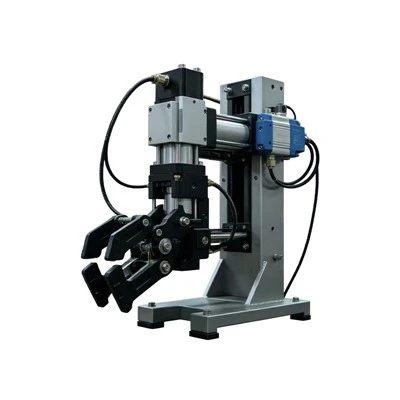
First, let’s set the baseline: conventional workholding, the clamps and manually adjusted grips many manufacturers rely on, was designed for rigid, low-volume runs. If you’re running 500 identical metal housings a month, a standard vise might work. But when orders shift to 50,000 units, or the mix changes daily, those static, one-size-fits-all tools become a bottleneck. Think about changeover time: the minutes, even hours, spent swapping clamps, adjusting alignment, and calibrating for a new part. A 2022 study from the American Society of Mechanical Engineers (ASME) found that for mid-sized batch manufacturers, changeover downtime accounts for 18% of total production time—and 62% of those manufacturers said outdated workholding was the single largest contributor to that downtime. That’s where modern gripping systems shine.
Take modular, adaptive gripping technology, a core offering my team engineers every day. Unlike static clamps, adaptive grips use flexible, shape-matching fingers or soft pneumatic/electric actuators that conform to irregular part geometries without sacrificing hold strength. Last year, a medical device client of ours was struggling with a line that assembled insulin pen components: small, cylindrical plastic caps with tiny, molded ridges that standard grippers kept slipping on, causing a 12% defect rate and 10+ unplanned stops weekly. We installed a set of modular adaptive grippers paired with a vision inspection trigger: the gripper’s sensors detect a part’s exact shape on the fly, adjust grip pressure and finger position in 0.2 seconds, and release only when the component is correctly seated. Within three months, that line’s defect rate dropped to 0.8%, unplanned stops fell to one every two weeks, and overall throughput climbed 17%—all without reconfiguring the line’s core hardware, something that would have cost $40,000+ if they’d gone with a custom solution. The key here isn’t just grip strength—it’s flexibility. For manufacturers juggling mixed part runs (the norm now, as consumer demand for customized products rises), adaptive systems eliminate the need for multiple dedicated grippers, cutting changeover time from hours to minutes.
Next, precision and repeatability: two metrics that make or cycle time, the measure of how quickly a line can produce a finished part. A conventional clamp might hold a part, but it can vary by 0.5mm to 1mm between cycles—enough to throw off downstream processes like CNC machining, welding, or assembly. For high-tolerance parts, that means scrap, rework, and delays. Electric gripping systems, which we design with closed-loop position sensors, eliminate that variability. One automotive client that produces brake calipers for electric vehicles (EVs) shared with us earlier this year that their old hydraulic grips had a repeatability error of ±0.3mm, leading to a 9% scrap rate on critical caliper assemblies. We replaced their hydraulic system with electric grippers calibrated for 0.05mm repeatability, paired with load monitoring that adjusts grip force in real time to account for part weight variations (a common issue with EV components, which range from lightweight aluminum to heavy cast iron). The result? Scrap rates dropped to 1.2%, and their average cycle time per caliper fell by 2.1 seconds. That might sound small, but over a 24-hour shift, that adds up to an extra 1,500 calipers produced without additional labor or overtime. For EV manufacturers already racing to scale production, that kind of incremental gain is transformative.
I also can’t talk about efficiency without touching on ergonomics and worker safety—two often-overlooked factors that directly impact productivity. A production line with frequent manual part handling isn’t just slower; it’s more prone to worker fatigue and musculoskeletal disorders (MSDs), which lead to unplanned absences and, in some cases, OSHA violations that shut down lines temporarily. A food packaging client we work with, for example, had a team of workers manually placing small, fragile cookie boxes into shipping trays 8 hours a day. Over 18 months, three workers developed wrist MSDs, leading to two line shutdowns for safety retraining and a 7% turnover rate on that shift. We installed custom vacuum grippers calibrated for the thin cardboard boxes: the grippers pick up 10 boxes at a time, place them with consistent pressure, and reduce manual handling by 95%. Not only did that cut worker injuries by 100% in six months, but the line’s throughput jumped 22% because workers were no longer slowed by fatigue-related mistakes. It’s a win-win: gripping systems don’t just automate tasks—they protect your most valuable asset: your workforce.
Another area where gripping systems drive efficiency is energy use. Many older hydraulic gripping systems waste energy continuously, even when not actively gripping a part—hydraulic pumps run 24/7 to maintain pressure, regardless of whether a line is in operation. Modern electric and pneumatic gripping systems, by contrast, use energy only when a grip is needed, and many have idle modes that cut power consumption by 70% or more during downtime. A metal stamping client switched to our energy-efficient electric grippers last year and reported a 28% drop in monthly utility costs for their production line, plus a 5% reduction in peak demand charges, which is a big cost for manufacturing facilities in areas with time-of-use electricity pricing. For manufacturers operating on thin margins, that kind of operational savings is just as important as increased throughput.
Now, let’s address a common misconception: some operators think “better grip means more efficiency,” but that’s not true—too much grip force can damage delicate parts, leading to scrap, while too little causes slippage and defects. Modern gripping systems solve this with intelligent force control: sensors measure the exact force needed for each part, adjust automatically, and alert operators if a part is outside spec before it enters downstream processes. A consumer electronics client that assembles smartphone camera modules used to have a problem where overly strong grippers would scratch the camera lenses, ruining finished devices. We installed vision-guided grippers that use high-resolution cameras to identify lens surfaces, then apply only the minimum force needed to hold the part (about 1.5 newtons, compared to 6 newtons with their old system). Lens damage fell by 98%, and rework costs dropped by $12,000 in the first quarter of installation. This is a key point: the best gripping systems aren’t just strong—they’re smart, integrating with line control systems and sensors to eliminate avoidable waste.
I should also mention scalability, because many manufacturers invest in equipment that works today but becomes obsolete as production grows. Modular gripping systems are designed to scale with your line: add a new gripper, adjust programming, integrate with new robotics or vision tools, without rebuilding your entire workholding setup. One startup that produces wearable fitness trackers started with a small line using basic grippers, but as demand grew, they needed to double their throughput in 12 months. Instead of installing a entirely new line, they expanded their modular gripping system by adding 10 adaptive grippers and updating their line’s control software. The total cost was 40% less than a full line replacement, and they were up and running in six weeks, avoiding a projected $250,000 in lost sales during the transition.
Of course, no solution is perfect, but the mistake many manufacturers make is waiting for a major breakdown to upgrade their gripping systems. The most efficient lines I’ve worked with invest in regular audits and incremental upgrades, not just reactive fixes. ASME data shows that manufacturers that perform quarterly workholding audits see an average of 12% higher annual throughput than those that only upgrade when there’s a crisis. That’s why we offer on-site assessments for our clients: we walk their line, identify bottlenecks, test grip performance, and recommend custom solutions tailored to their specific parts and production goals, not a one-size-fits-all kit.
At the end of the day, production efficiency isn’t just about machines running faster—it’s about eliminating waste in every form: downtime, scrap, labor costs, energy use, and lost sales from missed deadlines. Gripping systems are the unsung heroes of that process, because they’re the first point of contact between a line and the parts that make your product. If you’re currently dealing with unplanned stops, high defect rates, or slow changeovers because your workholding is holding your production back, don’t wait for a breakdown to make a change. Reach out to discuss your line’s specific challenges and explore how a customized gripping solution can boost your throughput, cut costs, and make your production floor more reliable.
Spray Painting Conveyor Systems References
American Society of Mechanical Engineers. (2022). "Workholding Downtime and Efficiency in Mid-Size Batch Manufacturing." Journal of Manufacturing Science and Engineering.
Occupational Safety and Health Administration (OSHA). (2021). "Musculoskeletal Disorders in Manufacturing: Preventing Workplace Injuries." U.S. Department of Labor.
International Society of Automation. (2023). "Intelligent Gripping Systems for Flexible Production Lines." ISA Transactions.
Wanyuan Yuanwei Automation Equipment Co., Ltd.
With abundant experience, we are one of the most professional gripping systems manufacturers and suppliers in China. Please feel free to wholesale high quality gripping systems for sale here from our factory. Good service and punctual delivery are available.
Address: No.392, Wanbai Road, Baisha Town, Wanyuan City, Dazhou City, Sichuan Province
E-mail: wanyuanyuanwei@outlook.com
WebSite: https://www.yuanweiautomation.com/
