If you’re working in industries like manufacturing, automotive repair, or even woodworking, you’ve probably relied on pneumatic quick couplings (QCs) more times than you can count. Those little devices that snap together to connect air hoses, tools, and compressors make swapping out gear fast—no fumbling with thread wrenches or threading connections mid-task. But here’s a question that’s always popped up when my customers reach out: “Do these couplings even come with a warranty?” As a supplier who’s been in this game for over a decade, I get why that matters. A pneumatic QC is a small part, but when it fails mid-job, it can shut down a whole assembly line, ruin a project, or even cause injury. So let’s break this down straight—no jargon, no fine-print loopholes, just real talk about warranties for quick couplings. Pneumatic Quick Couplings
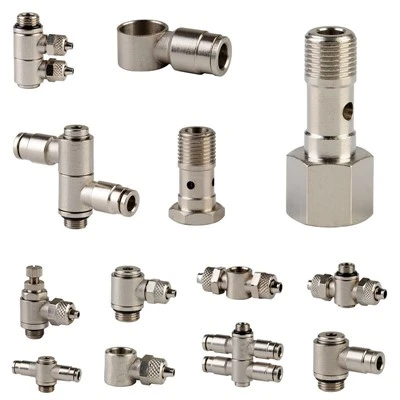
First, let’s get clear: not all quick couplings are made the same, and that means warranties aren’t one-size-fits-all. I’ve seen customers cheap out on a no-name QC from a random online marketplace, only to have it crack after 50 uses or leak air so bad their air compressor runs nonstop. Those knockoff parts usually don’t come with any warranty at all—if they do, it’s 30 days max, and you’re stuck paying for return shipping because the “manufacturer” is a random overseas seller with no US address to reach. But when you’re buying from a reputable supplier (like, you know, the guy supplying actual test data and material specs with every order), the warranty is tied to how the couplings are built, tested, and how you use them.
Wait, let’s talk about what goes into a QC’s build because that directly affects the warranty. Most quality QCs are made from either brass, steel, or aluminum. Brass is popular for its corrosion resistance, steel for heavy-duty high-pressure jobs, and aluminum for being lightweight but durable. But it’s not just the material—how the internal valves are machined, how the locking mechanism is designed, and even the finish on the exterior matter. For example, my team does 100% testing on every QC before it leaves our warehouse: we pressurize them to 150 PSI (way above the standard 100 PSI most tools use) to check for leaks, test the locking mechanism 1,000 times to make sure it doesn’t slip loose, and run corrosion tests on brass couplings to mimic years of use in damp environments like car wash bays. That level of testing lets us stand behind our warranty because we know the product can handle real-world use.
Now, what does the warranty actually cover? This is where I see a lot of confusion, so let’s spell it out. Our warranty covers defects in material and workmanship—meaning if a coupling breaks because of a faulty part (like a weak brass casting that cracks under pressure) or a bad assembly (a valve that’s misaligned so it leaks air), we’ll replace it for free, no questions asked (as long as you follow usage guidelines, obviously). But it doesn’t cover abuse—like if you use a 1/4-inch QC designed for small air tools on a 1-inch compressor line that’s rated for 300 PSI, or if you drop it from a 10-foot height onto concrete over and over. That’s user error, not a factory defect, and that’s standard across the industry—no supplier is going to cover someone misusing a part.
We also have a warranty window—for our standard QCs, it’s 12 months from the date of delivery, and for heavy-duty industrial QCs (the ones used on construction sites or assembly lines that run 24/7), it’s 18 months. Why the difference? Because the heavy-duty ones are built for more cycles and higher pressure, so we can stand behind them longer. I’ve had a customer who used our heavy-duty couplings on a automotive assembly line for 14 months, and one started leaking—we sent a replacement no hassle, no return required. That’s the kind of warranty you want, not the kind where you have to fight for a refund.
But wait, some people might say, “Why pay more for a QC with a warranty when I can get a cheap one for half the price?” Let’s do the math here. A $1 cheap coupling might fail after 10 uses, so you’re buying 10 of them a month—costing you $10 total. A $3 quality coupling with a 12-month warranty might last 1,000 uses, so that’s $3 for a year of use, and if it breaks, we replace it for free. Plus, the downtime when your cheap QC fails? A manufacturing line shutting down for an hour costs thousands of dollars in lost production. That’s the real cost of skipping a warranty. I’ve seen a small woodworking shop lose $2,000 in a single day because a cheap QC failed and ruined a batch of custom furniture parts. The shop owner later switched to our QCs, and he hasn’t had a single production halt since.
Now, what about special cases? What if you’re using a coupling for food and beverage applications, where you need NSF-certified parts? Or for chemical processing, where corrosion resistance is non-negotiable? Our QCs for those specific industries have extended warranties—24 months for NSF-certified ones, because they’re made from food-grade materials that are tested even more strictly. We also offer custom QCs for companies that need specific sizes or pressure ratings, and those come with a warranty tailored to their use case. For example, a chemical plant that uses our custom stainless steel couplings has a 18-month warranty, since their use is continuous and corrosive.
I should also mention how to make a warranty claim if something goes wrong. It’s simple—no complicated forms to fill out, no hoops to jump through. If you have a QC that’s defective, just send us a photo of the part, tell us where and how you used it, and we’ll send a replacement right away. No need to ship the old one back (that’s a hassle we take off your plate). We track every order, so we can check the delivery date, and if it’s within the warranty window, we don’t make you prove anything else. That’s the kind of service we pride ourselves on—we’re not just selling parts, we’re solving problems for our customers.
But let’s be real—there are some things a warranty can’t fix. It can’t save you from choosing the wrong size coupling, or using it for a job it’s not designed for. For example, if you use a QC meant for low-pressure air tools to connect a hydraulic line (that’s a whole different pressure and fluid type), it’s going to fail, and that’s not covered. We always tell customers to check the pressure rating of their compressor or tool, and match it to the QC’s rating—we even have a team that can help you pick the right one if you’re not sure. That’s part of being a good supplier, not just selling a part and leaving you to figure it out.
Wait, I’ve had customers ask me before, “Do you offer any warranty for bulk orders?” Absolutely—bulk orders (100+ couplings) get the same warranty, and we even offer a bulk discount on top. We work with a lot of small businesses and big corporations alike, and the warranty doesn’t change based on how many you buy. The only time a warranty is void is if you alter the QC—like drilling a hole in it, or modifying the internal valve to make it fit a non-matching hose. That’s tampering, and it’s not covered, which makes sense.
Let me share a quick story to make this real. A customer who owns a fleet of 20 mobile tire service trucks reached out a few years ago. He was using cheap couplings that were failing every 2 months, and he was going through 50 of them a month. He was frustrated because downtime on his trucks meant he was missing appointments and losing money. We suggested our heavy-duty steel QCs with the 18-month warranty. He tried a set, and 18 months later, he texted me a photo of the still-working couplings, saying he’d only replaced 2 in that time, and he saved over $10,000 in replacement parts and downtime. That’s exactly why we stand by our warranty—we’ve seen it fix problems for people, not just be a line on a product page.
So to circle back to the original question: Do pneumatic quick couplings come with a warranty? The answer is—if you buy from a reputable supplier, yes, and it’s actually worth the investment. A warranty isn’t just a “nice perk”; it’s a guarantee that the part you’re using won’t let you down when you need it most. Cheap QCs with no warranty might seem like a deal at first, but they end up costing you more in the long run. The warranty from a trusted supplier covers the parts, the hassle, and most importantly, peace of mind that your air setup is going to work when you need it.
If you’re tired of dealing with QCs that fail mid-job, or you’re not sure what kind of warranty your current supplier offers, reach out to our team. We can help you pick the right coupling for your application, explain the warranty in detail, and make sure you get the support you need for as long as your couplings are in use. Don’t let a faulty QC ruin your next project—let us hook you up with a reliable product and a warranty that actually backs it up.
Agricultural Hydraulic Quick Couplings References:
- Pneumatic and Hydraulic Quick Couplings: Selection, Application, and Maintenance. Fluid Power Journal, 2022.
- ASTM Standard F1508-18, Standard Specification for Pneumatic Quick-Connect Couplings. American Society for Testing and Materials, 2018.
- Warranty Best Practices for Industrial Component Suppliers. Industrial Supply Magazine, 2023.
Cixi Poolke Hydraulic Pneumatic Co., Ltd.
Cixi Poolke Hydraulic Pneumatic Co., Ltd. is one of the most professional pneumatic quick couplings manufacturers and suppliers in China, also supports customized service. Please feel free to wholesale the newest pneumatic quick couplings made in China here from our factory. Quality products and reasonable price are available.
Address: #88 Zhengtong Road, Kandun Industrial Park315303, Cixi, Zhejiang, China
E-mail: contact@poolke.com
WebSite: https://www.poolkecouplings.com/
