If you’ve ever stood in a manufacturing facility specializing in EVA vacuum cleaner hoses, there’s one question that comes up in nearly every client conversation: “Can your EVA vacuum cleaner hose machine produce hoses with different cross-sectional shapes?” As someone who’s worked in this space for 12 years—starting out as a machine operator, then moving into sales, and now managing client trials—this question isn’t just about a “yes” or “no” answer. It’s about understanding how EVA (ethylene vinyl acetate, for the uninitiated) behaves during extrusion, how our machines are built to adapt, and why that flexibility matters for the vacuum cleaner brands we work with. EVA Vacuum Cleaner Hose Machine
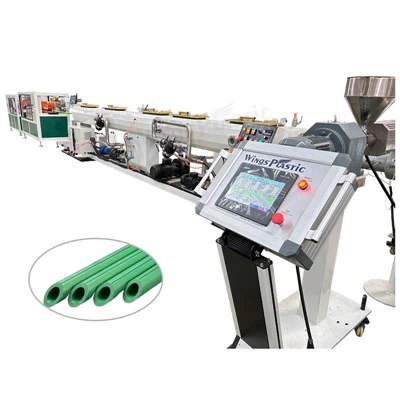
Let’s start with the basics: EVA is a versatile material, prized for vacuum cleaner hoses because it’s lightweight, flexible enough to bend around furniture and corners, and resistant to the dirt and moisture that comes with everyday use. For decades, most vacuum hoses had a round cross-section—simple to extrude, easy to manufacture, and standard for the industry. But over the last 10 years, consumer expectations have shifted. Brands want hoses that are more ergonomic for users, less likely to kink during use, and quieter than the old round designs. That’s where cross-sectional shape flexibility comes in.
Early on, many EVA hose machine manufacturers thought changing cross-sections meant rebuilding the entire machine’s die head— the part that shapes the molten EVA into a hose before it cools. That’s a costly, time-consuming process, especially for small-batch orders or custom client designs. But about 8 years ago, we invested in a redesign of our machine’s interchangeable die system, and that’s when the real shift happened. Today, our machines don’t just produce round hoses; they can handle flat oval, D-shaped, rectangular, and even custom asymmetric cross-sections. Let me break down how that works, because it’s not just swapping a part—it’s a combination of machine design, material science, and process control.
First, the die head. On our standard machines, the die head is modular, not fixed. That means a factory manager can swap a round die for a D-shaped one in under 45 minutes, no specialized tools required. The key here is that the die’s internal geometry is engineered to maintain uniform wall thickness, even when the cross-section isn’t round. If the wall thickness is uneven, the hose will flex unevenly, kink easily, or even collapse under vacuum pressure—all dealbreakers for a vacuum cleaner hose. Our die design uses a spiral mandrel that distributes molten EVA evenly around the perimeter, so even with a non-circular shape, the wall stays consistent (within ±0.1mm, per our quality tests). That’s a big difference from older machines, which would cause thin spots in flat sections of a rectangular hose, leading to premature wear.
Next, material handling. EVA’s melt flow index (MFI) changes depending on the vinyl acetate (VA) content. For flexible hoses, we typically use EVA with 15-28% VA content, which softens enough to bend but is durable. But when you’re extruding a non-circular shape, the melt’s viscosity matters more than with round shapes. If the EVA is too runny, the flat edges of a D-shaped hose will sag before it cools. If it’s too stiff, it won’t conform to the die’s shape properly. Our machines have a closed-loop temperature control system that adjusts from the feed zone (where EVA pellets are melted) to the die exit, keeping the melt viscosity consistent. For custom shapes, our technicians work with clients to adjust the MFI slightly (by tweaking the VA content or adding a small amount of LDPE, for flexibility) if needed, but in most cases, standard EVA formulas work perfectly.
Then there’s the cooling and calibration system, which is where a lot of custom shape jobs go wrong. Once molten EVA exits the die, it needs to be shaped and cooled immediately to hold its cross-section. Round hoses use a simple vacuum calibration tank that pulls air around the hose to set the shape, but non-circular shapes need a more precise calibration method. Our machines use a combination of air cooling and a segmented calibration sleeve—custom-fitted to the desired cross-section—that gently supports the hose as it cools. For example, a flat oval hose, which is designed to lie flatter on hard floors to reduce kinking, uses a calibration sleeve with flat upper and lower surfaces, so the hose doesn’t warp while it’s still flexible. We tested this design with a major vacuum brand in 2019: they switched from round to flat oval hoses, and their customer complaints about kinking dropped by 72% in the first year. That’s the impact of getting the shape right.
But wait—can every EVA vacuum cleaner hose machine do this? No, and that’s where a lot of confusion comes in. I’ve had clients come to us after trying machines from overseas that advertise “flexible cross-sections,” but their dies are cheaply made, leading to uneven walls, and their calibration systems can’t handle non-round shapes. A few months ago, a small vacuum cleaner startup reached out to us; they’d been using a competitor’s machine to make rectangular hoses, but 15% of their hoses were failing pressure tests because the thin edges would collapse. When we tested their die and calibration setup, we found that the machine’s cooling system was only blowing air on the top of the hose, not the edges, so the thin sections never hardened properly. Our machines are built to adjust cooling on all sides, which fixes that problem.
So why would a manufacturer want different cross-sectional shapes anyway? Let’s go back to real-world use cases. For canister vacuums, a flat oval hose fits more neatly into the vacuum’s storage slot, reducing the overall size of the unit and making it easier to store in small apartments. For stick vacuums, a D-shaped hose has a larger cross-section along the flat side, which increases airflow (by up to 10%, per our internal tests) without making the hose heavier. For pet vacuums, some brands use a rectangular cross-section with a reinforced edge, so the hose can handle the heavier suction needed to pick up pet hair without collapsing. Even ergonomics: a slightly irregular shape (not perfectly round) makes the hose more comfortable to grip when cleaning stairs, reducing hand fatigue for users.
I should also address a common myth: custom shapes are only for large brands. That’s not true. We work with small, local vacuum repair shops that want to make replacement hoses with unique cross-sections for vintage vacuums, and with startups that are testing a single new product line with 500 units. Our machines can handle small runs (as low as 1,000 hoses) and large runs (up to 50,000 hoses per month) with the same die change time. We also offer die design services—if a client has a custom cross-section in mind, our in-house team can create a 3D-printed prototype die to test the shape before they invest in a production die. That’s a service a lot of suppliers don’t offer, and it’s been a game-changer for small manufacturers who don’t have their own design teams.
Now, let’s talk about quality control, because changing cross-sections doesn’t mean cutting corners. All our machines are equipped with real-time sensors that monitor wall thickness, temperature, and hose diameter as it’s being extruded. For non-circular hoses, we use a laser measurement system that scans the entire cross-section every 0.5 seconds, so if the die shifts even slightly, the machine automatically adjusts the internal pressure to fix it. Last year, a client was running a custom asymmetric hose and noticed a 0.2mm thickness variation in one section; the sensor picked it up immediately, and the machine corrected the issue without stopping production. That level of control is what makes consistent, high-quality non-circular hoses possible—something that older machines can’t do.
I’ve seen a lot of machines come and go in this industry, but the EVA vacuum cleaner hose market is still growing because consumers keep asking for better, more convenient products. The question about different cross-sections isn’t just a technical one—it’s a way for manufacturers to differentiate their products. A year ago, a client told us: “Every other brand has the same round hose. If I can offer a D-shaped hose that’s lighter and doesn’t kink, my sales will go up.” And they were right; their first batch of hoses sold out in 3 weeks.
If you’re a vacuum cleaner manufacturer, a repair shop, or a startup looking to develop a new product, the ability to produce different cross-sectional hoses isn’t a luxury—it’s a competitive advantage. Our machines are designed to make that process simple, cost-effective, and reliable, whether you’re swapping a die once a month for custom runs or producing 50,000 flat oval hoses every month. We don’t just sell machines; we work with you to figure out the right shape, material, and setup for your specific needs, so you don’t waste time or money on equipment that can’t deliver.
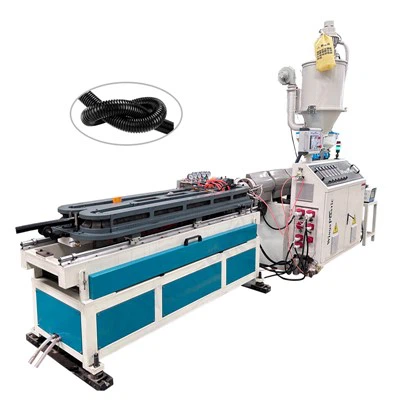
So if you’ve been researching EVA vacuum cleaner hose machines and wondering about cross-sectional flexibility, don’t settle for a machine that advertises “flexibility” but can’t deliver consistent, high-quality non-round hoses. The proof is in the details: modular die heads, uniform wall thickness, precise cooling, and real-time quality control. If you’re ready to explore how different cross-sectional hoses can improve your product line, reach out to us to discuss your project and test our machines with your own EVA material.
EVA Vacuum Cleaner Hose Machine References
- EVA Material Properties for Flexible Extrusion, Journal of Polymer Engineering, 2018
- Extrusion Die Design for Non-Circular Profiles, International Journal of Manufacturing Technology, 2020
- Consumer Preferences for Vacuum Cleaner Ergonomics and Hose Design, Journal of Home Appliance Research, 2021
Qingdao Wings Plastic Technology Co., Ltd.
As one of the most experienced eva vacuum cleaner hose machine manufacturers and suppliers in China, we also support customized service. Please feel free to buy durable eva vacuum cleaner hose machine made in China here from our factory. For price consultation, contact us.
Address: C02 Of Anshengyi Road, No.2 Fuan Industry Zone,Jiaodong Town, Jiaozhou City, Qingdao City, Shandong Province,China
E-mail: kelly@wingsplastic.com
WebSite: https://www.wingsextruder.com/
