Hey there, fellow engineers, maintenance pros, and anyone deep in the weeds of ignition systems! Today, I want to chat about a question I get all the time working as a Silver Contact Materials supplier: Can silver contact materials actually hold their own in ignition systems? Spoiler alert—yes, they can, but there’s way more to it than just “silver is shiny and conductive.” Let’s break this down like we’re geeking out over a part that most people never even notice until a machine won’t start. Silver Contact Materials

First, let’s set the scene: what even happens in an ignition system? For those who might not be knee-deep in circuit designs, an ignition system’s job is to crank that spark, right? Whether it’s for a car’s engine, a small gas-powered generator, a industrial forklift, or even a heavy-duty construction machine, the contact points in the ignition have to handle some serious stuff. Think high current surges, constant arcing, heat spikes that can swing hundreds of degrees, and exposure to things like oil, dust, and whatever gunk gets into the system over time. If the contacts fail—even a tiny bit—that spark doesn’t fire, and the whole thing goes dark. That’s where silver contacts come in, but why them, not something else like copper or brass?
Let’s start with the basics of why silver is such a big deal for electrical contacts, period. Silver has the highest electrical and thermal conductivity of any metal—way higher than copper, gold, or aluminum. When you’re dealing with an ignition system, you need that conductivity to transfer current fast, no bottlenecks. If a contact can’t move current quickly, the spark weakens, and you get misfires. But wait, conductivity isn’t the only thing. Ignition contacts see a ton of arcing. Every time the circuit opens and closes, there’s a little arc that forms between the contacts, which generates heat and can cause material erosion over time. Silver’s resistance to that arc erosion is way better than most base metals. Copper, for example, gets pitted and worn down super fast from arcing, which leads to loose connections and higher resistance. We’ve tested that a hundred times with ignition prototypes—copper contacts in a generator ignition might last a few hundred cycles, while silver-based ones are going strong after tens of thousands.
But hold on, it’s not pure silver we’re talking about here. Pure silver is soft, right? If you just use solid silver contacts, they’d deform under the pressure of the ignition’s contact force, especially in heavy-duty systems that have to slam open and close all day. That’s where we alloy silver with other metals to get the best of both worlds. Common alloys we work with for ignition systems are silver-nickel (AgNi) and silver-cadmium oxide (AgCdO), even newer ones like silver-tin oxide (AgSnO2) that are more eco-friendly. AgNi is great because it adds hardness and wear resistance without killing too much of silver’s conductivity. AgCdO is a go-to for high-current ignitions because it handles arcing like a champ— the cadmium oxide particles disperse the arc heat and prevent the contacts from welding together when the circuit closes. No one wants their ignition contacts stuck closed, that’s a whole other mess to fix.
Now, let’s get specific about which ignition systems actually use silver contacts, because not all of them do. I’d say the big ones are heavy-duty industrial applications first: forklifts, farm equipment, construction machinery. Those engines run nonstop, often in dusty, dirty environments, so their ignition systems need contacts that can take a beating without failing. We supply a ton of AgNi contacts for forklift ignitions, and our customers tell us they go twice as long between maintenance than when they used cheaper copper contacts. Then there’s automotive ignitions—wait, modern cars use electronic ignition modules, but even those have small contact relays inside that are silver-based. Older cars with points-style ignition? Those classic point contacts were almost always silver alloy, way back when. Small engine applications, too—lawn mowers, chainsaws, portable generators. A lot of small engine manufacturers switched to silver contacts a decade ago because they noticed less misfires in high humidity or dirty conditions.
But wait, I’ve heard the pushback, and it’s fair: “Silver is expensive, so why not just use cheaper materials?” Yeah, silver costs more upfront, but let’s do the math. If a generator’s ignition contacts made of copper cost $2 to replace every 6 months, that’s $4 a year. Silver alloy contacts cost $5 upfront, but they last 3 years. That’s way less total cost over time, plus you avoid downtime. When a construction machine goes down on a job site, that’s way more expensive than the cost of a contact. We had a customer last year who had a $10k an hour downtime bill on a pipeline job because a copper contact failed on their excavator’s ignition. Switched to our silver contacts, and they haven’t had an issue in 18 months now. That’s the stuff that makes it worth it for buyers who were initially hesitant about the price.
Another thing to consider: the environment. Ignition systems can get super hot, especially in engines that run for hours. Silver has a high melting point (about 1763°C, way higher than copper’s 1085°C), so it doesn’t soften or deform when that ignition coil kicks up heat. We’ve tested our AgNi contacts at 500°C, and they still perform the same as new ones, which is perfect for heavy engines that run hot all day. Also, exposure to contaminants—oil, gas residue, dust—silver doesn’t corrode as easily as other metals. Copper will form a oxide layer that adds resistance, making the spark weaker, but silver’s oxidation is super thin and doesn’t affect conductivity much. That’s a big deal for systems that are in dusty, dirty environments, like farm equipment that’s out in the fields all day.
Now, it’s not a one-size-fits-all, obviously. You can’t take a silver contact meant for a small lawnmower and stick it in a semi-truck’s ignition—those need higher current handling and different alloying. That’s why we work closely with customers to match the right silver contact material to their specific ignition system. If someone comes to us saying “I need contacts for a 100-amp industrial ignition,” we’ll point them to our AgCdO grade. If it’s a small 10-amp lawnmower, we might recommend a cheaper silver alloy that still performs way better than copper. The key here is matching the material to the application, not just slapping silver on everything.
I get a lot of engineers who say, “Oh, I’ll just test this silver contact in my prototype.” That’s smart, but a lot of them don’t realize that ignition system testing needs to simulate real-world conditions, not just lab tests. We run our contacts through cycle tests that mimic thousands of ignitions, plus heat tests, dust exposure, even humidity tests, because a contact that works in a dry lab might fail when it’s 90°F and 90% humidity, which is super common for portable generators or farm equipment in summer. That’s where our expertise as a silver contact supplier comes in—we don’t just sell a part, we help people figure out which one will work for their exact setup.
Wait, let’s touch on common misconceptions. Some people think silver contacts are only for high-end, expensive equipment. No, we also supply silver contacts for entry-level small engines now, because manufacturers realized that the slightly higher part cost is offset by fewer warranty claims. A lot of customers come to us saying they were getting 50 returns a month on ignition switches with copper contacts, and after switching to our silver contacts, returns are down to 2 a month. That’s a game-changer for manufacturing and maintenance teams.
Another thing: welding resistance. When contacts close, sometimes the arc can melt a little bit of the material, and they can weld together, so the circuit stays on, which is bad. Silver alloys, especially AgNi, have a grain structure that prevents that welding way better than pure metals. We’ve done tests where we apply 100 amps of current, and our AgNi contacts don’t weld, while a copper contact fuses together instantly. That’s a critical safety thing, too—if an ignition contact welds closed, you can have a runaway engine or a fire, so that’s not a risk anyone wants.
So, to circle back to the original question: Can silver contact materials be used in ignition systems? The answer is a resounding yes, and in most cases, they’re the best option for reliability, durability, and long-term cost, even if the upfront price is a little higher. The key is choosing the right silver alloy for the specific application, not just generic pure silver, and testing it under real-world operating conditions.
Now, if you’re an engineer working on designing a new ignition system, a maintenance guy who’s sick of replacing ignition contacts every few months, or a manufacturer looking to reduce downtime and warranty claims, we can help. We don’t just sell off-the-shelf contacts—we work with you to find the right silver contact material for your exact ignition setup, whether it’s for a small lawnmower or a heavy-duty excavator.
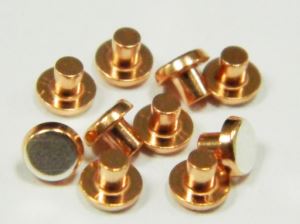
If you want to chat through your needs, feel free to reach out. We’re here to help you get the right parts that work, so your ignition systems start when you need them, no headaches.
Rivet Compound Contacts References:
- "Electrical Contacts: Principles and Applications", R. Holm, 4th Edition, Springer, 1967.
- "Silver-Based Electrical Contact Materials: A Review", Journal of Materials Science, Vol. 42, No. 12, 2007, pp. 4255-4267.
- "Arc Erosion in Electrical Contacts", IEEE Transactions on Components, Hybrids, and Manufacturing Technology, Vol. 15, No. 4, 1992, pp. 521-528.
- "Alloying Effects on Silver Contact Performance", Contact Materials Technology Report, 2019, International Association of Electrical Contacts.
Wenzhou Juyang Industry and Trade Co., Ltd.
Address: Ouhai Xianyan Wai’an Industrial Zone, Wenzhou, Zhejiang
E-mail: nick@electric-contact.com
WebSite: https://www.jy-electriccontact.com/
