What’s a Bell Furnace for Stress Relieving, Anyway? Bell Furnace
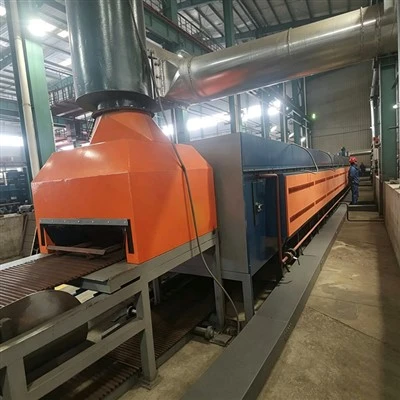
If you’ve ever dabbled in metal fabrication, machining, or even just worked with steel parts that warp or crack out of nowhere, you know stress is the silent villain here. Tons of manufacturers act like stress in metal is no big deal—until a fresh-off-the-mill part twists on your assembly line or a custom tool snaps before it even hits the job site. That’s where the bell furnace for stress relieving comes in, and honestly? It’s one of the unsung heroes of industrial metal work. Let’s break this down like I’d explain it to a new tech in our shop, no stuffy jargon required.
First, let’s cut to the chase: what exactly is stress relieving, not just with a bell furnace, but in general? When you work with metal—like cutting, bending, welding, or even casting it—you’re messing with its internal structure. Every time you heat a section super hot (welding) or yank it into a new shape (press braking), you create tiny, uneven tension points inside the metal. Those are residual stresses, and they’re not just “invisible” — they cause problems down the line. A steel plate you cut today might look fine, but a week later it’s bowed because those internal stresses are finally equalizing. A welded frame for a trailer might crack mid-delivery because the weld area had weird, unbalanced stress from the heating and cooling process. That’s where stress relieving fixes all that. It’s not hardening the metal, it’s just gently getting rid of those internal tensions so the part is stable, dimensionally accurate, and way less likely to fail later.
Now, a bell furnace isn’t the same as your run-of-the-mill oven or even a big box furnace you might see at a lab. Let’s talk about how it’s built, because that’s what makes it perfect for stress relieving. The name comes from its shape: it’s this big, cylindrical, bell-shaped top (the “bell”) that sits over a lower base or worktable that holds the parts you’re treating. Think of it like flipping a giant wok over a pile of metal parts—except this one is insulated, sealed tight, and hooked up to heating elements and temperature controls. The base has channels for a coolant (usually water, but sometimes air for smaller runs) too, depending on the metal you’re working with.
Wait, why does that bell design matter so much for stress relieving? For stress relieving, you need consistent, even heating across every part of the load, right? If some parts get way hotter than others, you’ll just create new stresses instead of fixing the old ones. The bell’s sealed design lets us control the atmosphere inside too—if you’re working with metals that oxidize easily (like stainless steel or aluminum), you can pump in an inert gas (nitrogen, argon) so the parts don’t get rusty or discolored while they’re heating. No one wants to finish stress relieving a custom stainless steel part and have it look like it was left out in the rain, so that atmosphere control is a big win.
Let’s walk through how stress relieving with a bell furnace actually works, step by step, because it’s not just “heat metal, done.” It’s a slow, careful process that’s the whole point of using a bell furnace instead of, say, just sticking parts in a regular oven. First, you load your parts onto the base—important not to pack them too tight, because air needs to circulate between them for even heating. Then you lower the bell over top, seal it up, and set the temperature. For most common metals (carbon steel, alloy steel, cast iron), stress relieving temps are between 1100°F and 1300°F (about 590°C to 700°C)—way lower than what you’d use for hardening or annealing. That’s key: you don’t want to turn the metal all red-hot and change its overall hardness, just soften the tiny internal stresses so they can relax.
Next, you hold that temperature for a set amount of time. How long? Depends on the part thickness. A 1-inch steel plate might need 2 to 4 hours at temp, while a 6-inch cast iron gear might need 8 or more. The rule is usually about an hour per inch of thickness, give or take, to make sure every last layer of the part reaches the stress-relieving temp. If you rush this and pull the part too early, some sections still have residual stress, and you’re right back to the same problem.
Then comes the slow cool-down, which is where a lot of people mess up stress relieving. You can’t just yank the bell off and blast the parts with cold air or water—that would create new uneven stresses. Instead, you turn off the heating elements and let the furnace cool down super slowly, over 12 to 24 hours or even longer for thick parts. Some bell furnaces have active cooling (the channels in the base I mentioned earlier) that help speed things up a little, but still at a controlled rate. That slow cool lets the metal’s structure relax evenly, so no new stresses form. At the end, you take the part out, and it’s stable—no more bowing, no more hidden tension waiting to cause problems later.
Now, why use a bell furnace specifically for this, not other types of furnaces? Let’s compare real quick, because this is where most guys in the fabrication world ask me. A batch furnace is similar, but bell furnaces are better for large, heavy parts that are hard to move. Because the bell is the top, you can build the base super sturdy (even with lifting points for big parts like turbine casings or construction gear frames), and the bell just sits on top. That means you don’t have to hoist a 10,000-pound part into a furnace chamber—you can load it on the ground, lower the bell, and go. That’s a huge time-saver for shops working with oversized parts that don’t fit in standard batch furnaces.
Also, bell furnaces are way more energy-efficient than you might think. The sealed bell insulation keeps heat from escaping, so you use less power than heating a big open chamber. For stress relieving, which is a long process, that efficiency adds up fast on your utility bill. And since the atmosphere is controlled, you don’t have to use special protective coatings on parts like you would if you were using a non-sealed furnace to prevent oxidation—more cost savings there too.
Who actually uses these bell furnaces for stress relieving, anyway? Let’s list the usual crew, because it’s not just one industry. First, heavy equipment manufacturers: they make bulldozer blades, crane arms, and tractor frames—parts that have to hold up under tons of stress, so they stress relieve every weld and machined section with a bell furnace. Then there’s the energy industry: oil and gas pipelines, wind turbine components, nuclear power parts—those have to be 100% stable, no room for hidden stress that could cause a failure. Automotive too, especially custom parts or heavy-duty trucks, but also the metal stamping shops that make car bodies—stress relieving keeps those stamped panels from warping when they’re painted or assembled. Even the aerospace industry uses them for small, high-performance metal parts that need to be perfect, no flaws.
Wait, I should mention a common myth I hear all the time: people think stress relieving is the same as annealing. Nope, not even close. Annealing is heating metal to a much higher temp (usually above its critical transformation temperature) to soften it completely for machining or forming. Stress relieving is lower temp, just to take the edge off residual stresses, without changing the metal’s overall hardness or ductility. That’s why bell furnaces are ideal for stress relieving—they let you hit that precise, moderate temp range consistently, whereas annealing needs higher heat that some furnaces can’t handle without altering the part’s intended properties.
Now, let’s talk about what to look for if you’re in the market for a bell furnace for your stress relieving needs, especially if you’re a smaller shop or a big fab plant. First, size matters—obviously, you need a bell that’s big enough for your largest part, with a little extra room for air circulation. If you’re doing small parts, you can use a smaller bell, but if you’re moving up to oversized parts, go for a heavy-duty bell with reinforced insulation and lifting hardware (you’ll need a crane to set big bells, fyi). Then there’s temperature control: you want a furnace with a programmable controller, so you can set the heat rate, hold time, and cool-down rate exactly right. No more guessing—set it and forget it, with alarms if something goes off (like a drop in temperature or a leak in the atmosphere). Also, think about your atmosphere needs: if you work with aluminum, stainless, or titanium, you’ll need a bell that can hook up to inert gas supplies. If you only work with carbon steel, you can go with an air-sealed bell, no extra gas needed.
I’ve seen shops make the mistake of buying a cheap bell furnace that cuts corners on insulation or temperature control, and guess what happens? They end up with parts that still have residual stress, or parts that rust during the process, or even parts that warp because the cool-down was too fast. That’s why it’s worth investing in a well-built bell furnace from a reliable supplier—like, uh, us (wait, that’s me, I’m the supplier, so I’m not gonna pretend I don’t have skin in this). Our bell furnaces are built with heavy-duty ceramic fiber insulation, precise PID temperature controllers that stay within ±5°F of your set temp, and we can customize the atmosphere system for whatever metal you work with. We’ve got small tabletop bells for machine shops making custom tooling, and massive industrial bells for energy companies treating multi-ton turbine parts.
Let’s throw in a real example to make this concrete. Last year, we worked with a steel fabrication shop that made custom trailer frames for a construction company. They were having a problem: after welding the frames, the frames would warp 1/4 to 1/2 inch when they hauled them down the road for delivery—enough that they had to fix them before they could be assembled. They tried doing “stress relieving” by heating the frames with torches, but that was super inconsistent, and parts of the frame still had stress. They bought one of our medium-sized bell furnaces, loaded the frames onto the base, lowered the bell, set the temp to 1200°F, held for 6 hours, then cooled over 18 hours. Now? No warping. The trailer frames arrive straight, no extra work needed, and they cut their delivery time by 2 days per trailer. That’s the difference a proper bell furnace makes.
Another thing I should mention: maintenance. Bell furnaces aren’t set-it-and-forget-it forever, but they’re low-maintenance. You just need to check the insulation on the bell periodically to make sure there are no gaps that let heat escape, calibrate the temperature controller once a year, and replace any seals around the bell if they start to wear out. A well-built bell furnace will last 20+ years, easy—way longer than cheaper batch furnaces I’ve seen that break down in 5.
Wait, one more point: environmental stuff, because a lot of shops care about that now. Bell furnaces for stress relieving don’t use any harmful chemicals, right? They run on electricity or natural gas, depending on your setup, and since they’re energy-efficient, they have a smaller carbon footprint than other stress relieving methods like thermal stress relief (using torches) or even some other furnace types. That’s a big plus for companies trying to green up their operations.
Let me wrap this up with what you should take away from all this. A bell furnace for stress relieving is a specialized, efficient, reliable tool that fixes the hidden metal stresses that cause parts to fail, warp, or need extra work later. It’s not a one-size-fits-all tool—you need to pick the right size, features, and build for your specific parts and metal types—but when you get it right, it saves you time, money, and headaches down the line.
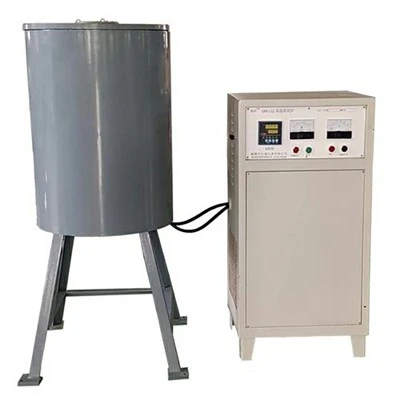
If you’re tired of dealing with warped parts, post-fab repairs, or inconsistent stress relieving results, you don’t have to guess. Whether you’re a small machine shop needing a tabletop bell or a big industrial plant needing a massive custom unit, we can help you find the right bell furnace for your stress relieving needs. Reach out to our team to chat through your requirements, get a quote, or ask any questions you have—we’re happy to break it down for you, no sales pitch, just real answers.
Electric Furnace References:
- ASM International. (2019). Stress Relieving of Metals. ASM Handbook, Volume 4: Thermal Processing.
- Groover, M. P. (2020). Fundamentals of Modern Manufacturing: Materials, Processes, and Systems. Wiley.
- American Foundry Society. (2018). Residual Stress in Castings and Weldments: Causes and Mitigation. AFS Transactions.
- Noria Corporation. (2021). Bell Furnaces: Design, Operation, and Applications in Industrial Heat Treatment. Industrial Heating Magazine.
Jiangsu Fangwei Furnace Industry Co., Ltd.
Jiangsu Fangwei Furnace Industry Co., Ltd. is one of the most professional bell furnace manufacturers and suppliers in China. With abundant experience, we are committed to providing high quality customized products with competitive price. Please feel free to buy advanced bell furnace made in China here from our factory.
Address: No.168, HuangNian Bridge, DaoShu Town, Danyang City, JiangSu Province, China
E-mail: fangwei@fwfurnaces.com
WebSite: https://www.fwfurnaces.com/
