Hey folks, let’s cut to the chase—if you’re here right now, you’re probably scrolling for a voltage transformer and stuck between single-phase and three-phase. As someone who’s been supplying AC voltage transformers for nearly a decade, I’ve fielded this exact question a hundred times from electricians, factory managers, small business owners, even DIYers with big projects. And no, it’s not just about “which is bigger.” It’s about your specific setup, your energy needs, and not wasting cash on something that’s overkill… or worse, underpowered. Let’s break this down like I would over a coffee, no boring jargon that makes your eyes glaze over. AC Voltage Transformer

First, let’s get the basics straight—no textbook definitions, promise. Single-phase transformers are the ones you see powering your home, a small workshop, or a corner café with a few fridges and a espresso machine. They run on that one “hot” wire and a neutral, right? The kind of AC you’ve got plugged into your wall right now. Three-phase is the workhorse for big stuff: factories with 10-horsepower motors, commercial buildings with entire floors of servers, heavy machinery that doesn’t slow down. But here’s the thing: it’s not just about size. I’ve had a guy come in last month asking for a three-phase transformer for his backyard woodshop—turns out he only uses a single table saw and a dust collector. Dude was about to drop twice as much cash as he needed. Oops.
Let’s start with when single-phase makes total sense. First, your total load size. If your max power use is under 5 kVA? Single-phase is almost always the way to go. Wait, kVA—let’s translate that real quick: that’s just the measure of how much power your gear needs. A standard home AC unit is like 1.5 kVA, a residential oven is 2-3 kVA, a small commercial cooler is around 4 kVA. If you’re running stuff like that, single-phase won’t let you down. Another big one: your existing power supply. If your building or workshop only has single-phase wiring coming from the utility company, you can’t just flip a switch and add three-phase. You’d have to do a whole electrical upgrade—pull new wires, upgrade your panel, maybe even get utility approval. That’s expensive. So if you’re stuck with single-phase input, single-phase transformer is your only option here.
Also, single-phase transformers are way more flexible for small, spotty setups. Let’s say you’re a mobile vendor, or you’re setting up a pop-up event with a generator. Single-phase units are lighter, easier to move, and way cheaper to install. I had a customer last year who ran a food truck out of a garage with single-phase power—he needed to run a fryer, a microwave, and a fridge. His single-phase 4 kVA transformer worked perfect, no issues. No need for a bulky three-phase setup he’d never use.
But don’t sleep on the downsides of single-phase, either. If you’re cranking up the load, that single wire has to carry all the power. So over long distances, like if you’re running power to a remote part of a warehouse, the voltage drop is way bigger with single-phase. What’s voltage drop? That’s the juice lost as power travels through wires. So if your transformer is too far from your gear, single-phase might leave your tools running weak—like a table saw that doesn’t cut straight because the motor’s underpowered. Three-phase fixes that because it splits the power across three wires, so each wire carries less, less power lost, better for long runs.
Now, when does three-phase make the call? Let’s hit the load size first. If your total power use is over 5 kVA? And especially if you’re running motors over 1 HP? Three-phase is the way to go. Motors on three-phase run smoother, use less power, last longer—way less wear and tear than single-phase. I see this all the time with factories: a 10 HP conveyor belt, industrial HVAC, multiple welding machines. All that stuff needs three-phase. Another big one: if you’re expanding. If you’re planning on adding more heavy equipment in the next year or two, three-phase is a future-proof bet. My advice? Don’t buy a single-phase transformer just to save a buck, then have to replace it when you add a new 15 HP machine. You’ll end up spending twice as much.
Then there’s efficiency. Three-phase is just plain more efficient for high loads. For the same amount of power, three-phase uses about 15% less electricity than single-phase. That adds up fast for factories running 12 hours a day. I had a customer at a metal stamping shop—they switched from single-phase to three-phase last year, and their electric bill dropped almost $800 a month. Crazy, right? That’s the kind of savings that pays for the transformer in just a few months.
Wait, but let’s not gloss over the tradeoffs for three-phase. First, upfront cost. Three-phase transformers are bigger, heavier, more expensive to buy and install. I can get you a good 5 kVA single-phase for under $200, but a 10 kVA three-phase? That’s $500 easy, plus installation costs are higher because you need three-phase wiring. Also, if you don’t have three-phase power coming in, you need a phase converter, which is another extra cost. I’ve had people come in thinking three-phase is a magic fix, only to realize they have to spend another grand just to convert their single-phase input. That’s a big hidden cost—don’t skip that part.
Another thing to check: utility compatibility. Some areas have strict rules about what type of transformer you can use, especially for commercial setups. Always double-check with your utility company before pulling the trigger. I once had a guy in a small town who bought a three-phase transformer without checking—his utility made him rip it out and replace it with a single-phase because their grid only supports single-phase for small commercial buildings. Total waste of time and money.
Let’s run through a quick real example to make this concrete. Last quarter, I had two customers: one was a small bakery that wanted to power 2 ovens, a dough mixer, and a display fridge. Total load: 6 kVA. His building only had single-phase input. We recommended a 6 kVA single-phase transformer—cost him $220, installed in an hour. Perfect, no issues. The other customer was a auto repair shop with 2 lifts, a spray booth, and a parts washer. Total load: 18 kVA. Their building had three-phase input. We recommended a 20 kVA three-phase transformer—cost him $480, plus a bit more for wiring, but his electric bill dropped over $1,000 a year. That’s a no-brainer.
Wait, another common mistake people make: sizing the transformer wrong. I can’t tell you how many times someone comes in and says “I need a transformer for my X machine” but doesn’t add up all their loads. If you’re running multiple machines, add all their kVA ratings together, then add 20% for surge. Motors have a starting surge that’s 2-3 times their running power—so if you have a 5 kVA motor, you need a transformer that can handle at least 6-7 kVA, otherwise it’ll trip. That’s a quick way to avoid downtime, which no one wants.
Let’s also touch on use cases for each, to make it even clearer. Single-phase is for: home workshops, small retail stores, food trucks, pop-up events, remote sites with small loads, residential use. Three-phase is for: factories, large commercial buildings, heavy machinery, servers and data centers, warehouses with multiple motors, any setup with loads over 5 kVA.
But wait, what if you’re in between? Like, you have a load of 6 kVA, but only single-phase input. Can you get a three-phase transformer? Yeah, but you’ll need a phase converter, which is an extra piece of gear. It works, but it adds cost and a bit of inefficiency. My advice: if you’re only going to have that 6 kVA load, stick with single-phase. If you think you’ll expand to 10 kVA soon, maybe invest in a phase converter now so you can go three-phase later.
Another point: maintenance. Single-phase transformers are simpler, so maintenance is cheaper and easier. If you’re a small business owner who doesn’t have a full-time electrician on staff, that’s a big plus. Three-phase has more wires and parts, so there’s more that can go wrong, and repairs tend to cost more. But for heavy use, that extra reliability is worth it.
At the end of the day, the choice boils down to three things: your total load, your existing power supply, and your future plans. If you’re still not sure, don’t guess—measure your power use first. Grab a power meter (most hardware stores have them for $20), plug in all your gear, run it for a day, add up the total kVA. That’s way more accurate than guessing. And if you’re stuck, just reach out. I’ve helped hundreds of folks navigate this—no hard sell, just straight talk. I’m here to make sure you get the right transformer, not the one that makes me the most money. That’s how we do things here.
Wait, let’s circle back to that bakery customer. He actually came back last month and told me his single-phase transformer is going strong, even after adding a second display fridge. No issues, no extra costs. The auto shop guy? He’s been with us for 5 years, bought three more transformers for new lifts. That’s the kind of relationship I want to build—people who know I’ll give them the right advice, even if it’s not the easiest sale.
So to wrap this up, don’t overcomplicate it. For loads under 5 kVA, single-phase is almost always the best bet. For loads over 5 kVA, three-phase is more efficient and future-proof. Always check your existing power supply, don’t forget about surge power, and size your transformer a bit bigger than you think you need. No one wants a transformer that trips every time you turn on the big machine.
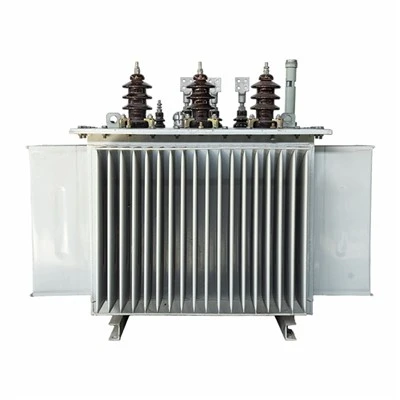
If you’re still on the fence, have questions about sizing, or need help figuring out which one fits your setup, hit me up. No jargon, no pressure, just straight answers. I’d be happy to walk you through your specific needs. Let’s get you set up with a transformer that works for you, not against you.
AC Voltage Transformer References:
- Electrical Technology. (2022). Single-Phase vs. Three-Phase Transformers: Applications and Selection Guide. Retrieved from relevant engineering resources
- Institute of Electrical and Electronics Engineers (IEEE). (2021). Power Distribution for Small Commercial and Industrial Loads. IEEE Standards Publication
- National Electrical Manufacturers Association (NEMA). (2020). Transformer Selection Guidelines for Low-Voltage Applications. NEMA Technical Bulletin
Jiangshan Da’an Electric Power Equipment Co., Ltd.
As one of the most professional ac voltage transformer manufacturers and suppliers in China, we have world-leading production equipment and strong manufacturing capabilities. Please feel free to buy high quality ac voltage transformer made in China here from our factory.
Address: No.7 Longfei Road, Shuangta Sub-district, Jiangshan City, Zhejiang Province, P.R. China
E-mail: 1614665601@qq.com
WebSite: https://www.daan-electrical.com/
