Hey everyone – if you’ve ever taken a car apart, or dug into a piece of industrial machinery, odds are you’ve stared at a mess of colorful wires tied up in a neat bundle: that’s a wire harness. As someone who’s been making these for over 12 years (I’m one of the guys on the shop floor, not just an office suit), I get so many questions from customers and even other tech folks: “Wait, why is this wire red and that one blue? Do these colors mean something, or is it just a random paint job?” Wire Harness
Short answer? It’s not random. Color-coding wire harnesses isn’t just a nice-to-have – it’s how we keep from wiring a car’s brake light to the radio, or a factory robot’s power line to a sensor that can’t handle 12 volts. Let’s break down the standards that keep all of us (manufacturers, installers, even hobbyists) on the same page.
First, let’s start with the basics: what even is a wire harness color code? It’s a system where each wire’s insulation color tells you what it does – power, ground, signal, etc. But here’s the thing: there’s no single global rule. That’s one of the most common mix-ups I see when a customer from, say, Germany, comes to us with a spec from Detroit, or someone from the US asks for a harness that fits a Japanese drill. We have to check the regional standard first, because they’re not interchangeable.
Let’s run through the big ones first. The one you’ll see most in North America is the SAE standard – Society of Automotive Engineers, which pretty much runs the US automotive space. For cars, light trucks, and most consumer industrial stuff here, SAE J319 is the go-to. Let’s get specific: power wires are usually red for 12V battery power, yellow for 24V (that’s for big rigs or heavy equipment), and brown for ground? Wait no – wait, no, hold on, let me get that right because mix-ups here are a big deal. Ground is almost always black in SAE, yeah. Signal wires (the ones that carry low-voltage data, like a door lock signal or a sensor reading) tend to be lighter: white, gray, or sometimes light blue. Oh, and a super common one: if a wire has a stripe, that’s a secondary function. Like a red wire with a black stripe? That’s usually switched power (only on when the key is on) vs solid red which is constant power (hot even when the car’s off). We mark those stripes on every wire we strip before crimping, so no one misses it.
Then across the pond, Europe uses DIN standards – Deutsches Institut für Normung, that’s the German national standard, adopted by most of the EU. DIN 47002 is their wire color spec, and it’s a little different. Power is often red too, but ground is green-yellow – that’s a safety ground, not the signal ground, so it’s easy to spot from a mile away. Signal wires in DIN are often blue or purple, and neutral wires for low-voltage AC are gray, which is a big difference from SAE where gray might be a different signal. I once had a European customer come in panicking because their US-made harness had a black wire for ground, not green-yellow – turns out their machinery would throw a fault if they didn’t use DIN safety ground, so we had to re-run a whole batch for them. That’s why we always ask for the region and application first.
Now, industrial stuff – not just cars. If you’re dealing with factory automation, robotics, or commercial buildings, there’s IEC standards, from the International Electrotechnical Commission, which is the global body for electrical standards. IEC 60446 covers wire colors for industrial and construction. Here, safety ground is still green-yellow, but low-voltage DC power for sensors is often brown, and negative DC is blue – that’s super different from car standards, so if you’re wiring a robot arm, you can’t just grab a red wire from a car harness. We have a whole chart taped up by our crimping stations with all the IEC codes, because it’s easy to mix up.
Wait, and what about specialty stuff? Like marine harnesses, or aerospace? Those have their own. For marine, ABYC (American Boat and Yacht Council) has their own – they use white for bilge pump power, orange for ignition circuits, which is to reduce fire risk on boats. Aerospace is even stricter: we’re talking MIL-STD-1687, military standard, where each color is for a specific system – like black for ground, white for control signals, red for fire suppression, and they even have color codes for shielded wires vs unshielded. That’s why when a defense contractor comes to us, we don’t mess around – we have a separate team that only handles aerospace harnesses, because one wrong color could delay a whole $10M project.
Now, let’s talk about common mistakes we see, because even with standards, people mess up. First, relying on “that’s how we did it last time” instead of checking the spec. I had a customer last month who ordered a 24V heavy equipment harness, and they told us to use “car standard” colors – so they got yellow for power, right? But their equipment runs on 48V, which DIN codes for red, not yellow. They tried to plug it in and blew a sensor, cost them a day on the job. That’s why we always double-check: we send a color confirmation before we start cutting wires, so no one has to fix a mistake later.
Another big one: color fading. Wait, the insulation color is what matters, right? But if the wire is exposed to UV or chemicals, the color can fade, so you can’t tell what it is. That’s why we use PVC insulation with UV-stabilized dyes for outdoor harnesses, and for industrial stuff that gets oil and grease, we use nylon coating – the color stays bright even after a few years. We also label every wire with a heat-shrink tag that says what it is: “12V switched power”, “door lock signal”, “safety ground” – so even if the color fades, you can trace it.
Oh, and shielded wires! Super important for signal wires that pick up interference, like in medical equipment or audio gear. The color of the shield itself is part of the code too. For example, in SAE, a shielded signal wire might have a gray insulation with a black shield, vs an unshielded gray wire. In IEC, shielded signal wires use a blue insulation with a foil shield, and the shield is grounded at one end only to prevent noise. That’s a detail a lot of new harness makers miss, but it’s the difference between a device that works and one that cuts out mid-test.
Wait, let’s also address a question I get a lot: why can’t we just use numbers instead of colors? Like, label every wire with “P1”, “S2”, etc. Colors are way faster, especially on a shop floor. When a tech is tracing a wire to fix a problem, they don’t want to read a tiny number on a wire that’s tucked behind a motor – they can glance at a red wire and know it’s power, no squinting. For installers on site, too: if you’re wiring a car in a garage, you don’t need a spec sheet to know that the red wire is the main power. Colors are intuitive, which is why they’ve stuck around for 70+ years.
But here’s the thing: standards aren’t one-size-fits-all. We just wrapped up a harness for a solar farm in Arizona – solar has its own code, right? NEC (National Electrical Code) in the US says solar panel power wires should be black for positive, red for negative, which is different from car power. So we follow that, because the NEC is required for all solar installations in the US. Another recent job: a drone manufacturer, which uses aerospace MIL-STD colors, plus their own custom codes for camera vs motor signals. We have a tooling team that can adjust to any custom color code, as long as we get the spec upfront.
As a supplier, that’s our whole job, right? It’s not just cutting wires and tying them up. It’s making sure the color code matches what you need, so you don’t have to rework your whole installation, or deal with downtime. I’ve seen too many small businesses try to cut corners by picking random wire colors, and end up with a harness that fails inspection, or doesn’t work at all. That’s why we always walk through your application with you: where will this harness be used? What voltage? What industry? So we can point to the right standard, confirm the colors, and make sure every wire is labeled correctly.
If you’re ordering a wire harness for your business, or if you’re a hobbyist putting together a project, don’t just tell us “make it colorful” – give us the spec. Tell us if it’s for a car, a factory robot, a boat, solar, whatever, and we’ll match the color code. We can do standard stuff, or custom colors if you need them for your own internal labeling. The key is clarity: color-coding works because everyone speaks the same language, but that only happens if you tell us which language you’re speaking.

So next time you’re staring at a bundle of colored wires, remember: that’s not just random paint. It’s a system built over decades to keep things safe, and to keep people from making expensive mistakes. And if you need a harness that fits your specific needs, we’re here to make it right. Reach out to us to talk through your project, no job too small or too big.
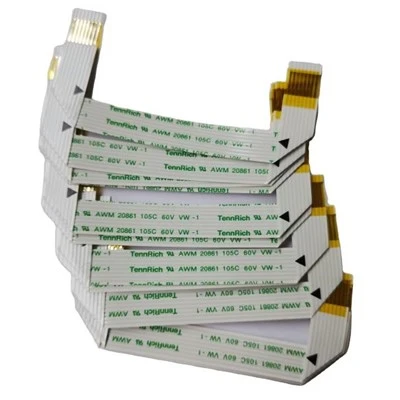
Display Flexible Flat Cable References:
- Society of Automotive Engineers. SAE J319: Standard Wire Color Coding for Automotive and Light-Duty Vehicle Applications. 2022.
- Deutsches Institut für Normung. DIN 47002: Electrical Wires and Cables – Color Coding for Insulation. 2019.
- International Electrotechnical Commission. IEC 60446: Basic and Safety Standards for Electrical Wires and Cables – Identification of Conductors by Color or Number. 2021.
- American Boat and Yacht Council. ABYC E-11: Electrical Systems Color Coding for Small Craft. 2020.
- U.S. National Electrical Code (NEC). Article 690: Solar Photovoltaic Systems. 2023.
Tennrich Electronics Technical Development (Kunshan) Co., Ltd.
As one of the most professional wire harness manufacturers and suppliers in China, we’re featured by quality products and low price. Please rest assured to buy cheap wire harness for sale here from our factory. We also accept customized orders.
Address: NO.159 South Wusongjiang Road ,Kunshan Economic Technical & Development zone,Suzhou city,Jiangsu province, China.
E-mail: foreigntrade@tennrich.net
WebSite: https://www.china-ffcs.com/
