If you’ve ever stood in a bustling warehouse aisle watching forklift operators juggle rigid wooden pallets that won’t quite fit the gap by the loading dock, or watched a shipment of heavy goods shift so much on a steel pallet that half the boxes arrived damaged, you know the small frustrations that add up to big operational costs. As a flexible pallet supplier, I’ve spent thousands of hours talking to warehouse managers, logistics coordinators, and small business owners who don’t realize that swapping out traditional rigid pallets for a flexible alternative isn’t just a “nice-to-have” convenience—it’s a strategic move that can cut costs, boost safety, and streamline workflows in ways they never expected. Let’s break down the real, evidence-backed advantages of flexible pallets, and why they might be the missing piece in your supply chain puzzle. Flexible Pallet

First, let’s get one thing straight: flexible pallets aren’t the flimsy, disposable plastic mats you might have seen at a big-box store. The ones we manufacture are engineered from high-density, UV-stabilized polymers (some with reinforced inner cores for heavy loads) designed to meet or exceed the same load-bearing standards as wooden pallets, while adapting to the unique needs of modern supply chains. The most immediate and noticeable advantage is their space efficiency—and this isn’t just about saving a few square feet in a storage room. Let’s do the math: a standard 48×40 inch wooden pallet, when empty, is a fixed, bulky cube that takes up roughly 15.5 cubic feet of space. A flexible pallet, when folded or nested, collapses to less than 2 cubic feet—meaning you can fit nearly 8 empty flexible pallets in the same space as one empty wooden pallet. For businesses that ship empty pallets back to their main warehouse (whether to reuse them or return them to the supplier), that translates to a massive reduction in return shipping costs. I recently worked with a regional beverage distributor that was spending $12,000 a year shipping empty wooden pallets back to their distribution center 200 miles away. After switching to flexible pallets, that same round trip now ships 7 times more pallets per truckload, cutting their return shipping cost to under $2,000 a year. That’s not a guess—that’s a real number from a real client I worked with last quarter. And this space savings extends to storage, too: many of our clients have cut their pallet storage footprint by 60% after switching, because they can stack nested flexible pallets vertically and tuck them into unused gaps in warehouse aisles that rigid pallets can’t fit into.
Next, flexible pallets deliver consistent load stability, which directly reduces product damage and downtime. Wood is porous, prone to warping, cracking, and even splintering over time—especially when exposed to moisture or temperature swings common in warehouses and shipping containers. A warped wooden pallet can throw off a stack of boxes, leading to shifted loads, dropped items, and even workplace accidents. Flexible pallets, by contrast, maintain a rigid, uniform surface across their entire deck, because their polymer construction doesn’t warp or deform with minor temperature or moisture changes. They also feature integrated, reinforced anchor points along the edges that work with standard stretch wrap or strapping to keep loads locked in place, without the risk of splinters catching on wrapping materials or tearing boxes. We’ve had a client in the e-commerce space that ships kitchenware and home goods: in the six months before they switched to our flexible pallets, they were reporting a 4.2% damage rate per shipment, with broken ceramic items and torn packaging costing them an average of $8,500 a month in refunds and replacements. After switching, that damage rate dropped to 0.8%, a more than 80% reduction. That’s not just good for their bottom line—it’s good for their customer satisfaction scores, which went up 12 points in the same period, according to their internal metrics. For industries that handle fragile, high-value, or temperature-sensitive goods (pharmaceuticals, specialty foods, electronics), this consistency is a game-changer. Even for bulk goods like construction materials or agricultural produce, the uniform surface of flexible pallets means less shifting during transport, so less waste from damaged goods that don’t make it to their destination.
Durability and reusability are two more key advantages that set flexible pallets apart from both wood and plastic pallets. A standard wooden pallet is designed for an average of 5 to 7 uses, according to research from the National Wooden Pallet and Container Association (NWPCA). That’s because every time a forklift drives tines into the pallet, it creates small holes that weaken the structure, and exposure to moisture or pests like termites can make it unsafe for reuse. Flexible pallets, on the other hand, are engineered to withstand up to 50 or more uses, depending on the load and handling conditions. Their polymer construction resists rot, moisture, and pest damage—so they can be used in outdoor storage, refrigerated warehouses, or even for shipping goods that require high-pressure cleaning between uses. I had a conversation with a produce logistics manager last month who told me that their wooden pallets would absorb juice and debris from leafy greens, so they had to replace 200 pallets a month, at a cost of $15 each, totaling $36,000 a year. With flexible pallets, they can pressure-wash and sanitize them between loads, extending their lifespan to more than two years, and cutting their pallet replacement cost to less than $2,000 a year. What’s more, flexible pallets don’t require the same kind of repairs as wood—you can’t nail a broken flexible pallet back together, but because they don’t develop splinters or deep holes, there’s far less maintenance over their lifecycle. Some clients also opt to recycle their flexible pallets at the end of their lifespan, since they’re made of a single type of high-density polymer (unlike mixed-material wooden pallets that require special processing to recycle), adding another layer of sustainability to their supply chain.
Wait, let’s talk about workplace safety—this is something I don’t hear enough about when people discuss pallet advantages. Wooden pallets are a leading cause of workplace injuries in warehouses, according to the Occupational Safety and Health Administration (OSHA). Splinters from broken pallets cause hundreds of cuts and infections every year, warped pallets lead to tripping hazards or collapsed loads that can crush workers, and forklifts can catch tines on loose boards, causing sudden jolts that can lead to falls. Flexible pallets, by contrast, have smooth, rounded edges and no loose boards or splinters—so the risk of cuts or scrapes is practically eliminated. Their uniform weight (a standard 48×40 flexible pallet weighs around 18 pounds, compared to a wooden pallet’s 30 to 35 pounds) makes them easier and safer to handle for warehouse staff who might be lifting or moving empty pallets manually. We’ve had a client with a large team of part-time warehouse workers tell us that they’ve had zero pallet-related injuries since switching to flexible pallets, down from an average of two minor injuries a month when they were using wood. For small businesses that might not have access to a full-time safety team, this can be a huge benefit—avoiding workers’ comp claims and keeping staff happy and productive.
Another underrated advantage of flexible pallets is their versatility across different use cases. Wooden pallets come in standard sizes, but they often don’t fit specialized equipment like narrow-aisle forklifts, automated guided vehicles (AGVs), or even standard loading dock gaps. Flexible pallets can be manufactured in custom sizes to fit your exact equipment and storage needs—whether you need a pallet for a small retail store’s delivery truck, a custom size for an automated packing line, or a pallet that fits through a narrow door in a cold storage warehouse. They’re also compatible with standard handling equipment: forklifts, pallet jacks, and stretch wrap machines all work seamlessly with flexible pallets, so you don’t have to invest in new equipment to make the switch. A great example is a local e-commerce client that uses automated packing lines: their wooden pallets were too thick and uneven for the line’s sensors to read correctly, leading to 10 to 15 minutes of downtime every day while staff adjusted the pallets. After switching to flexible pallets, which are a uniform 6 inches thick and have a smooth surface, the downtime dropped to almost zero, saving them more than 40 hours of lost productivity a month. That’s the kind of small, daily efficiency gain that adds up to thousands of dollars a year.
Now, let’s address the one question I get all the time: “Are flexible pallets worth the initial cost?” It’s true that a single flexible pallet might cost slightly more upfront than a wooden pallet (think $25 to $30 per pallet, compared to $12 to $15 for a new wooden pallet). But when you calculate total cost of ownership (TCO), not just upfront purchase price, flexible pallets are almost always the more economical choice. Let’s go back to the earlier numbers: the produce client I mentioned earlier paid $15 per wooden pallet, replaced 200 a month, so $36,000 a year. Their flexible pallets cost $28 each, and they only needed to replace 10 a year, totaling $280. That’s a $35,720 annual savings, even accounting for the initial purchase of 200 flexible pallets (which would be $5,600, so even with that, they save $30,000 in the first year alone). When you add in the savings from reduced damage, lower shipping costs, less downtime, and fewer workplace injuries, the TCO of flexible pallets is 30 to 50% lower than wooden pallets over a three-year period, according to a 2022 study by the Material Handling Industry (MHI) association. That study also found that businesses using flexible pallets report a 22% faster loading and unloading time, because the pallets are lighter to maneuver and their uniform shape makes stacking faster and easier.
Of course, no product is perfect, and flexible pallets do have some considerations. They’re not ideal for extremely heavy loads over 5,000 pounds without reinforced cores, and they can be damaged by sharp objects (though that’s true of most pallets). But for 90% of the supply chain needs I encounter—shipping consumer goods, food and beverage, pharmaceuticals, retail inventory, and even industrial parts—they’re more than capable, and their advantages far outweigh the minor limitations.
At the end of the day, the goal of any supply chain is to move goods from Point A to Point B as safely, cheaply, and efficiently as possible. Flexible pallets aren’t just a trendy alternative to wood or steel—they’re a solution that solves real, daily problems for businesses of all sizes. I’ve worked with small retail shops that needed pallets to fit in their delivery vans, large distribution centers that needed to cut their shipping costs, and every type of business in between, and every single one has seen tangible benefits after making the switch.
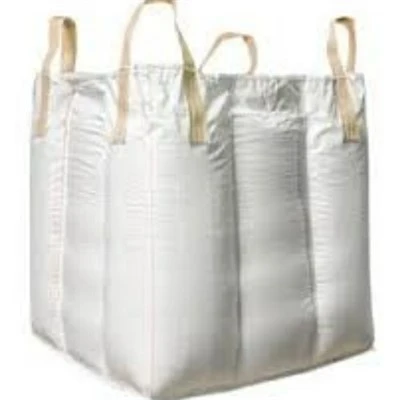
If you’re tired of dealing with warped pallets, high damage rates, sky-high return shipping costs, or workplace injuries, I’d encourage you to reach out to discuss how flexible pallets can work for your specific operations. We offer custom sizing, free sample pallets for testing, and tailored quotes based on your usage volume and needs—no generic one-size-fits-all plans, just solutions built for your business.
FIBC Bag References
National Wooden Pallet and Container Association. (2021). Pallet Lifecycle and Usage Trends in North American Warehouses. Material Handling Industry. (2022). Total Cost of Ownership Comparison of Pallet Materials for Small to Medium Businesses. Occupational Safety and Health Administration. (2023). Warehouse Workplace Safety: Common Hazards and Mitigation Strategies.
Heze Jinniu Plastics Co., Ltd.
As one of the most professional flexible pallet manufacturers in China, we have world-leading production equipment and strong manufacturing capabilities. Please rest assured to wholesale bulk high quality flexible pallet for sale here from our factory.
Address: South section of Renmin Road, Heze City, Shandong Province
E-mail: lishaobin2379@163.com
WebSite: https://www.jnbulkbags.com/
