Hey there, I’m Jake, and let’s cut to the chase—if you’re here asking, “What’s the size of a 10 watt walkie talkie?” you’re probably not a hobbyist who just wants one to chit-chat with your buddy at a campground. You’re likely someone who works in construction, event production, security, or maybe even a small rural delivery fleet, and you need gear that’s tough, reliable, and doesn’t get in the way when you’re hauling lumber, manning a festival crowd, or patrolling a factory floor. I’ve been supplying 10 watt radios for over 8 years, and let me tell you—if you’re expecting a one-size-fits-all answer, I get it, because that’s the first thing every customer asks when they ping my inbox. So let’s break this down like we’re hanging out in our warehouse loading dock, no stuffy engineering jargon, just real talk from someone who ships these things for a living. 10 Watt Walkie Talkie
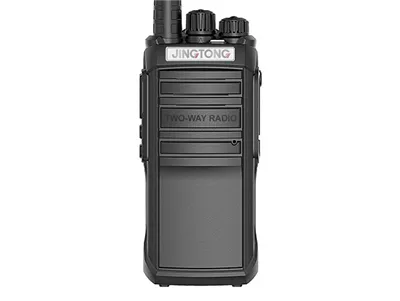
First, let’s get one thing straight: when we say 10 watt, that’s the transmit power output, not some made-up number printed on a box to look impressive. A lot of cheap off-brand radios call their 5 watt models “10 watt” just to move units, but the good stuff—my stock—hits that 10 watt mark consistently, no fluff. But power is only part of the size equation. The other parts? Battery life, antenna type, case material, and what features you actually need (like a display, GPS, or keypad) that add to the footprint. I’ve had customers call me panicking because they ordered a “10 watt radio” online and it’s twice the size of their old work radio, then come back a month later saying they needed something that fits in their tool belt. So let’s go through the common sizes you’ll actually see, based on the use cases our buyers care about, because that’s what really determines size.
Let’s start with the most common category: compact 10 watt handhelds. These are the ones that are designed to work with your existing work gear—tool belts, lanyards, even the pocket of a work jacket. When we engineer these, we don’t stuff random extra features just to jack up the price. A typical compact 10 watt handheld I stock measures right around 5.5 inches tall (that’s 140mm, for my engineer buddies), 2.2 inches wide (56mm), and 1.5 inches deep (38mm). Wait, hold up—let’s make that real for you. That’s about the size of a standard water bottle, but way slimmer and lighter. How light? Just 12 ounces (340 grams) with the standard rechargeable battery. That’s lighter than a can of soda, so you can wear it on your belt all day and barely notice it.
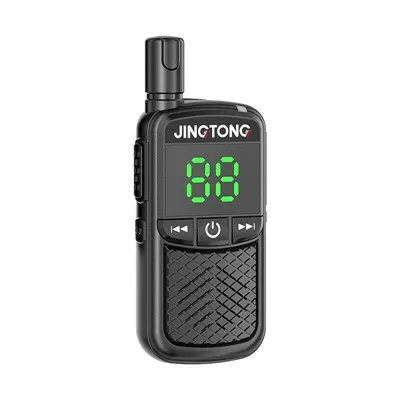
But wait—this isn’t a one-off. Why is it this size? Because to get 10 watts of power without turning into a brick, we use a class D amplifier, which is way smaller than the old class A/B amps that were used 10 years ago. And the battery? We use a 2,000 mAh Li-ion battery that’s slimmed down specifically for compact handhelds, not the bulky 3,500 mAh ones you’d get on a big heavy radio. This works great if your job is within a few miles—like a construction site where you’re not wandering too far, or a small office park security team. I sell these to a lot of local construction companies, and their go-to comment is, “I can tuck this next to my tape measure in my tool belt and it never gets in the way.” I’ll be honest, though—if you need longer range, this is probably not the size for you, because the antenna is a standard rubber duck that’s ~3 inches long. We also make a “ultra-compact” version of this, but only for customers who don’t need a lot of extra features—no color display, just a simple LED for power and channel. That one’s even smaller: 5 inches tall, 2 inches wide, 1.2 inches deep, at just 10 ounces. But that’s a niche pick, because most people want a little screen to see what channel they’re on.
Next up, we have the standard-duty 10 watt handheld, which is the workhorse most of our customers buy. This is the sweet spot between size, power, and features. When I first started, these were big and clunky—like 6.5 inches tall, almost 3 inches wide, and 2 inches deep, weighing a solid 1 pound (16 ounces). But over the last 5 years, we’ve refined the design so much that they’re now way slimmer, without cutting corners on durability. Our current standard-duty model is 6 inches tall, 2.5 inches wide, 1.75 inches deep, and 14 ounces with the standard battery. The difference? We shrank the amplifier, optimized the battery to 2,800 mAh, and moved the antenna internal a little (or made it a slightly shorter flexible whip antenna) so it doesn’t stick out as far. This is the one I recommend for most people: it has a 1.8-inch color display, a keypad to change channels, a radio that works up to 5 miles in open areas, and it’s IP67 rated—so you can drop it in a puddle, or dust it off after a day at a gravel quarry, and it still works. I sold 200 of these last month to a national landscaping company, and their operations manager told me, “These fit better than the old ones we had, and we get 2 more miles of range too.” The bulk here is worth it for the extra battery and features—you can go a full 12 hours of use on a single charge with this, which is way more than the compact model’s 8 hours.
Now, let’s talk about the big boys—heavy-duty 10 watt handhelds. These are for people who work in brutal conditions: oil rigs, mining, outdoor event production where you’re running around all day in the sun and rain, or search and rescue teams that might be out all night. I’m talking about a radio that’s built to survive being dropped 10 feet onto concrete, submerged in water for 30 minutes, and still work like new. Unsurprisingly, these are bigger. A typical heavy-duty 10 watt handheld measures 7 inches tall, 3 inches wide, and 2.5 inches deep, weighing a solid 1.25 pounds (20 ounces) with the 3,500 mAh battery. That’s almost twice the size of the compact model, but here’s why: the battery is way bigger to give you 18+ hours of continuous use, the casing is a reinforced rubber and polycarbonate blend instead of plastic, and we added extra ports for accessories like a remote speaker mic or a wrist strap. I sold 150 of these last quarter to a film production company that was shooting a movie in the mountains—their locations team needed radios that could handle the cold, snow, and rough terrain, and this was the only one that fit their needs. The size is a trade-off, but when you’re carrying gear that can save you or your team’s job if you drop it, a little extra bulk is worth it.
Wait, a lot of people ask about mobile 10 watt radios too—you know, the ones that mount in your truck, not handheld. I get it, if you’re a delivery driver or a fleet manager, you might not need a handheld. These are way smaller than you think, actually. A mobile 10 watt radio is usually around 5 inches tall, 7 inches wide, and 2 inches deep. That’s small enough to mount under your truck’s dash, or in a console, without taking up space. They’re heavier, though—usually around 5 pounds, because they have a bigger amplifier to push power over longer distances (up to 10 miles in open areas) and they hook up to your car’s battery instead of a rechargeable one. I sell these a lot to small taxi fleets and rural delivery companies, because they’re cheaper than handhelds, last forever, and you don’t have to worry about charging a battery every night.
Now, let’s address the elephant in the room: why is there such a big difference in size between models? A lot of new buyers think that higher power means bigger size, and while that’s partially true, it’s not the only factor. Here’s the thing: if you cram 10 watts of power into a tiny handheld without optimizing the design, you’ll get overheating, short battery life, and a radio that dies after 6 months. That’s why cheap Amazon radios are half the size of mine—they only put out 5 watts of real power, and the “10 watt” claim is just marketing fluff. I test every single radio that leaves my warehouse with a power meter, so I can tell my customers exactly what they’re getting.
Another thing that adds size is accessories. If you want a GPS module, a Bluetooth connection to your phone, or a display that can show text messages, that adds another 0.5 to 1 inch to the size. A lot of my customers come to me wanting a radio that fits in their existing holster, so I’ll point them to the compact or standard model, but if they need GPS, I’ll tell them to go up a size. It’s all about trade-offs, right? No one model is perfect for every job.
I also get a lot of questions about antenna size. The antenna is a big part of the physical size, too. A standard rubber duck antenna is 3 inches, a whip antenna is 6 inches, and a heavy-duty antenna for long range is 8 inches. So if you’re running a whip antenna, your total height will be the radio’s height plus the antenna length, which adds a few inches. That’s important to consider if you’re going to be driving under low-hanging trees, or putting your radio in a tight pouch.
Let’s give you a real-world example to make this concrete. Last month, a customer named Mike from a local construction company called me. He’d bought a cheap 10 watt radio from a big box store, and it was so big he couldn’t fit it in his tool belt—he was tucking it in his hard hat pocket, and it was falling out all the time. He asked what I had that fit. I sent him the compact standard-duty model, and when he tested it, he texted me a photo of it next to his tape measure, saying, “This fits right next to my level in my belt. Perfect.” He later bought 50 more for his crew. That’s the kind of thing I live for—matching the right size radio to the right job.
Another example: Sarah, a event planner, called me last year. She needed radios for 20 staff working a music festival, and they were going to be running around a 100-acre site all weekend. The compact model had a battery that only lasted 8 hours, which wasn’t enough for a 12-hour event. The heavy-duty model was too bulky for her staff, who were wearing nice lanyards with radios clipped on. So I recommended the standard-duty model, which has a 12-hour battery, fits on a lanyard, and is small enough to not get in the way. She bought all 20, and told me after the event that they worked perfectly—no dropped calls, no dead radios, and no complaints about the size.
Here’s the key takeaway, if you’re still reading this: the size of a 10 watt walkie talkie isn’t a fixed number. It depends on what you need it for. If you want something that fits in your pocket, don’t need all the fancy features, and work within a mile or two, you’re looking at ~5 inches tall, 2 inches wide, 1.2 inches deep. If you want a workhorse that fits on your tool belt, has a good battery, and works up to 5 miles, it’s ~6 inches tall, 2.5 inches wide, 1.75 inches deep. If you work in rough conditions and need maximum durability and battery life, it’s ~7 inches tall, 3 inches wide, 2.5 inches deep. And if you want a mobile one for your truck, it’s ~5x7x2 inches. The old adage, “you get what you pay for” applies here—cheap radios are smaller, but they don’t deliver real 10 watts, and they break way faster.
I’ve been in this game long enough to know that size matters, but reliability matters more. I don’t sell radios just to make a buck—I sell them because I know they help people get their jobs done. If you’re a construction foreman, a security manager, an event planner, or anyone else who needs a real 10 watt walkie talkie, and you’re not sure what size is right for your team, hit me up. I’ll walk you through the options, no pressure, no sales gimmicks, just straight talk about what will fit your needs, your gear, and your budget.
At the end of the day, there’s no “one size fits all” answer here, but that’s why I’m here—to help you figure out what size works for you. Stop guessing with random online listings that lie about power or lie about size. Reach out, tell me what you need the radio for, and I’ll point you to the right one. Let’s get your team talking, without the bulk that gets in the way.
3 Watt Walkie Talkie References
- Federal Communications Commission. (2022). Part 95: Personal Radio Services – Walkie Talkie Power and Size Standards.
- Association of Public Safety Communications Officials (APCO). (2021). Handheld Two-Way Radio Dimensions and Performance Guidelines for Commercial Use.
- International Electrotechnical Commission (IEC). (2020). IEC 60529: Degrees of Protection Provided by Enclosures (IP Code) for Industrial Two-Way Radios.
- Two-Way Radio Warehouse. (2023). 10 Watt Handheld Radio Size and Use Case Comparison Report.
- Construction Owners Association of America (COAA). (2022). Workforce Gear Ergonomics: Handheld Radio Size for Tool Belt Integration.
Jingtong (Quanzhou) Electronics Co., Ltd.
We are one of the most professional 10 watt walkie talkie manufacturers and suppliers in China, specialized in providing high quality customized service. We warmly welcome you to buy durable 10 watt walkie talkie made in China here from our factory. For price consultation, contact us.
Address: No.288, Si Huang Industry Zone, Xia Mei Town, Nan An, Quanzhou, Fujian province, China 362302
E-mail: jtdjj@jtdjj.com
WebSite: https://www.jteradio.com/
