If you’ve ever wondered how the tires on your car, truck, or even a big semi keep their shape, stay durable, and roll smooth for thousands of miles, one critical part is hiding in plain sight: the all-steel radial segmented mold. As a supplier of these molds, I’ve spent years walking through every step of building them, and let me tell you, it’s way more hands-on and precise than I thought before I got into this gig. No fancy AI-generated hacks here—just old-school craftsmanship mixed with modern tech, and zero room for shortcuts, because if you skip even one small step, a mold can ruin a whole batch of tires. Let’s break down how we build these bad boys, from raw metal to a finished part that goes straight to tire factories. All-Steel Radial Segmented Molds

First off, let’s get clear on what an all-steel radial segmented mold actually is, for anyone who’s not deep in tire tech. Unlike old-fashioned solid tire molds (or even radial molds with cheap, soft inserts), these are made entirely of steel, split into individual curved segments that snap together like a giant metal puzzle. They get heated up to super high temps to cure rubber into that perfect radial tire shape—no warping, no lopsided tread, and they hold up for hundreds of cure cycles, not just a handful. That’s why tire makers beg for them, and why we take so much care building them.
We start with the most basic, unglamorous part: raw steel. You might think steel is steel, but nope—for these molds, we use specific alloy steel, usually medium-carbon or low-alloy steel with a touch of chromium and molybdenum. Why? Because it needs to handle 300+ degrees Fahrenheit every single cure, plus the pressure of the rubber being pushed into it, and not rust or wear down fast. We don’t just buy random steel rods; we order it as large, solid billets, cut to size, and first run a quick material test to make sure it’s got the right hardness, tensile strength, and chemical makeup. If a billet is even a little off, we toss it right away—no exceptions. Wasting a week’s work on a bad billet is the worst, trust me.
Next step: cutting the steel into the individual segments. Each tire mold has between 12 and 24 segments, depending on tire size—small car tires need fewer, heavy truck tires need more to handle their size. To cut these segments, we use a combination of big CNC mills and wire EDM, which is that fancy machine that uses a thin, super-hot wire to cut metal with microscopic precision. First, we program the exact curve and dimensions of the segment into the CNC; that’s non-negotiable because a segment that’s even a hair too big or small will throw off the whole fit. Once the rough cuts are done, we move to semi-finishing, where we mill in the tread patterns, sidewall details, and any other little features tire makers want—like lettering for brand names or groves for traction. Here’s the thing: every single segment has to be identical. If one’s off by 0.001 inches, when you snap all the segments together, the whole mold will have a bump or a gap that ruins the tire. We do random checks with calipers and coordinate measuring machines (CMMs) every 10 segments to make sure nothing’s slipping. I’ve caught a bad cut once during a check, before we messed up 50 segments—saved us thousands in scrap.
Wait, important side note: segmented molds aren’t just cut flat. Each segment has to have a tapered edge where it meets the next one, right? That’s called a “mating flange,” and it’s what lets the segments snap tight without any wiggle. We spend extra time polishing these flanges, too—no sharp edges, no rough spots, because if there’s a gap, rubber will seep in and cause a “flash” on the tire (that extra tiny rubber nub you have to trim off, and tire makers hate flash because it slows them down). Polishing these flanges is tedious, but it’s make-or-break. We use a mix of sanding discs and ultrasonic polishers to get them smooth as glass.
Once all the individual segments are cut and semi-finished, it’s time for heat treatment. This is where the steel gets its hardness, because raw steel is soft as butter and would wear out after 5 cures. We load the segments into a big furnace, heat them up to like 1,700 degrees Fahrenheit, hold them there for several hours, then quench them in oil or water to cool them fast. Then we temper them—heat them again to a lower temp, like 1,000 degrees, to take some of the brittleness out. If we skip tempering, the steel would crack under pressure. We test a few segments from every batch to check their hardness with a Rockwell tester; it has to hit HRC 45 to 50, no more, no less. Too hard, and it cracks; too soft, and it wears. Easy rule to remember, but hard to get right every time.
After heat treatment, the segments go through surface treatment to make them last even longer. The inside of the mold (the part that touches the rubber) needs to be non-stick, basically—we don’t want rubber sticking to it during cure. So we do two main things here: first, shot peening, where we blast tiny steel balls at the inner surface to create a rough, micro-textured surface that helps the coating stick better. Then we apply a special coating—usually chrome or sometimes a ceramic-based coating, depending on what the tire maker wants. Chrome is cheaper and works for most standard tires, ceramic is better for high-performance or heavy-duty tires that need more cures. We bake the coating on to make sure it bonds, then do a final polish on the inner surface to get it perfectly smooth. No scratches, no uneven coating—even a tiny scratch will leave a mark on every tire cured in that mold.
Now comes one of the most satisfying parts: assembling the mold. All the segments are designed to fit together like a puzzle, so once they’re all ready, we lay them out on a big, round base plate. Each segment has a pin or a keyway that lines it up perfectly with the next one—we use alignment pins that are precision-ground to fit within 0.0005 inches, so there’s no play. Once all the segments are in place, we put the top ring on that holds them tight together, then add any other parts like core pins for the tire’s inner diameter or vent plugs that let air escape during cure (air in the mold causes bubbles in the tire, which is a safety hazard). We torque all the bolts holding the ring to the exact specification the customer gives—torque is key, too tight and you warp the segments, too loose and they shift during cure. I’ve had a mold come loose once during a test run, and it scared the crap out of me—segments were grinding against each other, we had to take it apart and fix everything. Never again do I skip double-checking torque.
Wait, we’re not done yet—we have to test the mold before it goes to the customer. No way we send a mold that’s not been tried out. We do two main tests: first, a pressure test where we pump air into the assembled mold to make sure there are no leaks. If there’s a leak, that means gaps in the segments, and rubber will seep out during cure. Then we do a test cure with a small batch of rubber—usually a test tire that we pull apart to check for flash, bubbles, lopsided tread, or any other defects. We measure the tire’s dimensions with a CMM to make sure everything is within tolerance. If there’s even a tiny issue—like a 0.002 inch off tread—we take the mold apart, fix the segment, and test again. This step alone adds a few days to the process, but it’s worth it. The last thing I want is a customer calling me up saying their new mold is bad, and we look like idiots.
Then, once it passes all tests, we do a final clean, wrap it in thick plastic to keep it from getting scratched during shipping, and add all the documentation the customer needs—material test reports, heat treatment records, torque specs, everything. We also send a little cheat sheet for how to care for the mold: how to clean it after every use, what temperature to store it at, how often to re-coat it. Taking care of the mold makes it last longer for the customer, which means they’ll come back to us for more molds down the line.
I know to people outside the tire industry, this all sounds like a lot of work for a big metal ring with segments. But trust me, every step is there for a reason. If we cut a corner on heat treatment, the mold dies in 50 cures instead of 500. If we skip polishing the mating flanges, every tire has flash that the customer has to trim, slowing their whole production line. We’ve had so many customers switch to us from other suppliers because their old molds kept wearing out fast or causing defects, and we’ve built a name for ourselves by not cutting any corners.
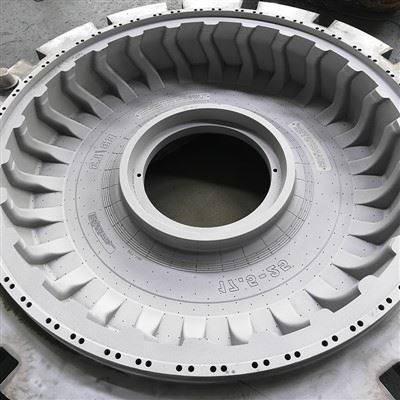
If you’re a tire manufacturer looking for reliable, long-lasting all-steel radial segmented molds, or if you’re just curious about how this stuff works, reach out to us to talk through your needs. We can build molds for any tire size, from small passenger cars to big semi-trucks, and we customize every single one to your exact specs. Don’t settle for flimsy, low-quality molds that cause headaches—let’s chat about what you need, and we’ll build you something that works for years.
Two Piece Mold References
- “Tire Manufacturing: A Comprehensive Guide to Radial Tire Production.” Rubber and Plastics News, 2022.
- Steel Materials for Mold and Die Applications. American Iron and Steel Institute, 2021.
- “Surface Treatment for Tire Molds: Performance and Durability Considerations.” Journal of Tire Science and Technology, vol. 49, no. 3, 2020, pp. 187-212.
- Precision Machining for Industrial Molds. Society of Manufacturing Engineers, 2019.
- “Heat Treatment Processes for High-Wear Steel Components.” International Journal of Material Forming, vol. 12, no. 2, 2018, pp. 299-311.
Anhui Varon Mould Co., Ltd.
We are one of the most professional all-steel radial segmented molds manufacturers and suppliers in China, also support customized service. We warmly welcome you to wholesale premium all-steel radial segmented molds made in China here from our factory. If you have any enquiry about cooperation, please feel free to email us.
Address: Anhui Province, Ningguo City, Economic and Technological Development Zone, Heli Industrial Park, Dongcheng Avenue
E-mail: admin@varonmould.com.cn
WebSite: https://www.wanlongmold.com/
