Hey there, I’m Jake, and I’ve spent the last 12 years working hands-on with industrial reactors—selling ’em, troubleshooting ’em, and geeking out over why some eat way more energy than they should. If you’re a plant manager, process engineer, or anyone who’s ever stared at a utility bill and wondered, “Why is our reactor sucking so much power?” this one’s for you. I’ve talked to hundreds of teams across pharma, chemical manufacturing, and food processing, and let’s be real—most folks don’t get how reactor energy use isn’t just a random number on a spreadsheet. It has super specific, predictable characteristics that can make or break your operational costs. Let’s break this down like we’re grabbing a coffee (no stuffy textbooks, promise). Industrial Reactor

First off, let’s get one thing straight: industrial reactors aren’t all cookie-cutter. A small batch bioreactor making vaccine ingredients? Totally different energy profile from a 50,000-gallon continuous reactor churning out paint thinner. But there are core energy consumption traits that pop up across every single type I’ve ever worked with. Let’s start with load dependency, because that’s the big one that trips so many people up. You’d think a reactor uses the same amount of energy every hour, right? Nope. It’s all over the place, tied directly to what’s happening inside that vessel at any given minute.
Take a typical exothermic chemical reactor—you know, the ones that generate heat instead of needing it added. When you first load in your raw materials, you’ve got to get the mix up to your target reaction temp, that’s a big energy spike. But once the reaction kicks off, all that heat it produces means you actually need to pull energy out of the system (via cooling jackets, internal coils, or external heat exchangers) to keep the temp steady. Mess up that cooling, and you get a runaway reaction—bad news, both for safety and your energy balance. On the flip side, endothermic reactors (like those used to crack natural gas into hydrogen) need constant, huge energy inputs just to keep the reaction going in the first place. I once worked with a team at a fertilizer plant that was running their ammonia reactor at 80% load all month, then cranked it to 100% for a big order—their energy bill jumped 32% overnight. That’s not a surprise to anyone who knows load dependency, but it blindsided them because they’d never tracked real-time load vs. energy use.
Next up: thermal inertia. This is the reactor’s “memory” when it comes to heat. Think about a cast-iron skillet on a stove—once it’s hot, it stays hot long after you turn the burner off. Industrial reactors are basically big, heavy versions of that. A 20,000-gallon stainless steel reactor has a ton of mass, so it takes way more energy to heat it up from room temp to reaction temp than it does to keep it there. And when you shut it down for maintenance, it doesn’t cool off instantly—all that stored heat slowly bleeds out, which means you’re losing energy every minute it’s idle. I’ve seen plants waste 20-25% of their reactor energy just because they’re heating or cooling the vessel itself, not the stuff inside it. The worst part? A lot of operators don’t account for thermal inertia when scheduling batches. They’ll heat the reactor 2 hours before the raw materials arrive, only to wait another hour—all that extra energy is just sitting there, wasted. It’s like preheating your oven for a pizza, then leaving it on while you grab a beer and scroll your phone. No shade, we’ve all done it, but reactors don’t care about your snack break.
Then there’s the sneaky stuff: auxiliary systems. Most people look at the reactor itself and only think about heating or cooling, but the energy hogs are the supporting gear. Agitators (the mixers inside) are a huge one. If your mixing speed is too high, you’re wasting energy churning stuff that doesn’t need it. Too low, and the reaction is uneven, so you have to run it longer—also wasteful. I had a customer in the food and beverage sector making specialty syrups; their agitator was running at full speed 24/7, even when the batch was just sitting waiting for the next step. We dialed it down to 40% during idle periods and cut their agitator energy use by 58% in a month. Other auxiliaries: pumps for circulation, compressors for gas-phase reactions, control systems, and even the lighting around the reactor area (I’ve seen that add 5-10% too, though that’s a smaller slice). But the big one here is agitation—don’t sleep on it.
Now, let’s talk about the difference between batch vs. continuous reactors, because their energy characteristics are night and day. Batch reactors are the small, flexible ones—great for low-volume, high-mix products like custom pharma or specialty chemicals. Their energy use is super intermittent: spike to heat up, cool during reaction, another spike to discharge and clean, then prep for the next batch. That means their energy costs are volatile, hard to predict, and prone to waste from idle time. Continuous reactors, on the other hand, run 24/7, 365 days a year (minus planned shutdowns for maintenance). Their energy use is way steadier, but it’s higher overall because you’re running at full capacity constantly. The catch? If there’s any downtime in a continuous line (like a pump failing upstream), you’ve got to shut down the whole reactor, which means losing all that stored thermal inertia heat and having to reheat the whole system when you restart. I once helped a chemical manufacturer switch from a batch reactor to a continuous one for a cleaning solvent, and their monthly energy bill dropped 18%—but only after they fixed a recurring pipe leak that was shutting down the line 2-3 times a week. That’s the thing with continuous reactors: consistency is everything, and even small hiccups can cost big energy.
Another key trait: heat integration. This is basically reusing the waste heat your reactor produces for other processes, and it’s a game-changer. If your reactor gives off excess heat during an exothermic reaction, you can pipe that heat to preheat the raw materials going into the reactor, or to warm up another vessel downstream. A lot of older reactors don’t have this built in, which is like leaving money on the table. I worked with a refinery that had an old hydrocracker reactor—they were venting all its waste heat up the stack for years. We retrofitted a heat exchanger to preheat their crude oil feed, and they cut their reactor-related energy use by 22% in 6 months. The cool part? It wasn’t even that expensive to do—just adding a few pipes and a control valve. Most facilities already have other processes that can use that waste heat; they just don’t connect the dots.
Wait, let’s not forget about efficiency degradation over time. Industrial reactors aren’t new forever. Seals wear out, insulation gets cracked or compressed, agitator blades get eroded from harsh chemicals, and control valves start leaking. All of that makes the reactor work harder to do the same job. For example, if the insulation on the reactor jacket is old and falling apart, you’re losing heat to the surrounding air instead of keeping it where it needs to be. A client of mine had a reactor that was 15 years old—they thought it was using “normal” energy, but when we tested it, we found the insulation was only 60% as effective as it should be. Replacing the insulation cut their energy use by 14%. Same thing with agitator blades—if they’re bent or covered in residue, you need more power to spin them, so the reactor uses more energy to mix. It’s like driving your car with the parking brake on; you don’t notice it at first, but over time it kills your gas mileage (or in this case, your energy bill).
Now, I know what you’re thinking: “Okay, Jake, that’s all interesting, but how do I use this to save money?” Let’s keep it real—no fancy jargon. First, track real-time load vs. energy use. Don’t just look at monthly bills; check hourly data. You’ll see the spikes when you heat or cool the reactor, and the dips when it’s idling. Then, adjust your schedule to minimize those spikes—like heating the reactor right when raw materials arrive, not 2 hours early. Second, don’t overlook the auxiliaries. Tune your agitator speed to exactly what the reaction needs, not full blast. Make sure pumps and compressors are sized right for your load (way too many plants use oversized equipment that’s wasting energy). Third, check your insulation. Every few years, do a thermal scan of your reactor and jackets—you’d be shocked how much heat is escaping through small gaps. Fourth, if you can, look at switching between batch and continuous depending on your production volume. If you’re doing small, frequent batches, batch might be better. If you’re running a steady high volume, continuous is usually more efficient.
At the end of the day, the energy characteristics of industrial reactors aren’t some mysterious black box. They’re a combination of how the reactor is built, how you operate it, and how well you maintain it. I’ve seen facilities cut their reactor energy costs by 20-30% just by tweaking a few small things—no new multi-million-dollar reactor needed, just better understanding of how that big steel vessel uses power.
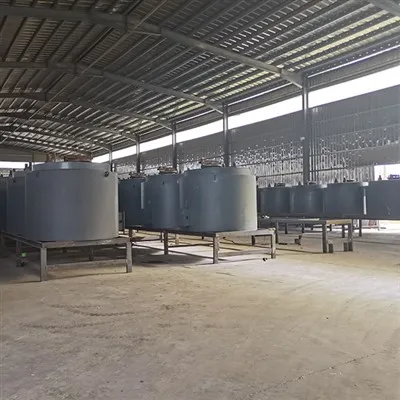
If you’re tired of guessing on your reactor energy use, or you’re looking to upgrade or tune up your existing system, I’m here to help. We’ve worked with all kinds of facilities to audit their reactors, spot waste, and find solutions that fit their specific needs. No one-size-fits-all nonsense, just practical stuff that saves you money without sacrificing safety or product quality. Hit us up to chat through what’s going on with your operation—let’s figure out how to make your reactor work for you, not against your energy bill.
PMMA Exhaust Gas Treatment Equipment References
- Guidelines for Energy Management in Industrial Reactors, U.S. Department of Energy, 2021
- Thermal Inertia and Energy Efficiency in Batch Processing, Journal of Industrial Chemistry, 2019
- Auxiliary Energy Loads in Continuous Reactor Systems, Process Engineering Journal, 2020
- Heat Integration Strategies for Exothermic Chemical Reactors, International Journal of Energy Research, 2022
- Retrofitting Older Reactors for Improved Energy Performance, Industrial Plant & Equipment Magazine, 2021
Wuxi Quansheng Industrial Equipment Co., Ltd.
As one of the most professional industrial reactor manufacturers and suppliers in China, we have world-leading production equipment and strong manufacturing capabilities. Welcome to buy high quality industrial reactor for sale here from our factory. For price consultation, contact us.
Address: No.10, Fulaiqiao Road, Hudai Town, Binhu District, Wuxi City, Jiangsu Province, China
E-mail: 397293586@qq.com
WebSite: https://www.pmmatech.com/
