Hey everyone, if you’re deep in the livestock game—whether you run a family farm, a mid-sized feedlot, or a custom forage operation—you’ve definitely heard the chatter about silage cutters. One question I get literally every single week, usually from guys who just upgraded their cutter or are eyeing their first one, is: “What’s the right cutting speed for these things?” Let me be real with you for a sec—this isn’t a one-size-fits-all number, and if you get it wrong, you’re either wasting time, ruining your silage, or breaking a part. I’ve been selling silage cutters for almost 12 years now, and I’ve messed up my share of setups with customers who either ran too fast and got mushy silage or too slow and ended up with bales that fell apart before they even hit the feed bunk. Today, I’m breaking this down like I do with every call—no jargon, no fluff, just the real deal that actually works. Silage Cutters

First off, let’s get one thing straight: when people talk about cutting speed for silage cutters, they’re not talking about the engine RPM or how fast the tractor’s moving across the field. Wait, actually, sometimes they are—but most of the time, they mean the “knife tip speed” of the cutting rotor. That’s the magic number. Why? Because the knife’s tip is the part actually chopping the corn, grass, or whatever forage you’re working with. If that tip’s moving too slow, it’s not cutting clean—it’s crushing, tearing, and leaving big chunks that take way longer to ferment. Run it too fast, and you get silage so fine it gets dusty, loses precious nutrients, and compacts too hard in the bunker, letting air get in and causing mold. I’ve seen guys crank their rotor to 3,000 RPM because a buddy told them “faster is better,” and they ended up with silage that was so fine it wouldn’t flow right through the feed mixer. Total waste of a whole field of corn.
Now, let’s get into the actual numbers, but before you lock these in, remember: there’s a range, and it depends on what you’re chopping, the type of cutter, and even the weather that day. Let’s start with the most common cutter type first—rotary disc cutters, which are by far the most popular these days. For rotary disc silage cutters, the sweet spot for knife tip speed is usually between 1,800 and 2,800 feet per minute (FPM). Yeah, FPM is the unit we use here—stick with me, it’s easier than trying to convert every little thing.
Wait, let’s test that with real examples. If you’re chopping fresh, high-moisture corn—think that prime stage where the kernels are glazed and not fully hard, usually right around dent stage—you can lean more towards the lower end of that range, like 1,800 to 2,200 FPM. Why? Because corn at that stage is soft, a little wet, and if you run the tip too fast, you’ll over-chop it into tiny bits that don’t ferment right. I had a customer in Iowa last year who tried 2,700 FPM on his corn, and his silage had a pH of 4.8 when it should’ve been 4.2—turned out the extra fine bits created too much lactic acid too fast, and it got sticky and spoiled in the corner of the bunker. He dropped his rotor speed 300 RPM, and his next load fermented perfectly.
Now, if you’re chopping something tougher—like dry grass hay, sorghum, or even wheat straw for bedding (yes, some farmers use silage cutters for that) —you need to bump that up to the higher end, like 2,400 to 2,800 FPM. Why? Those forages are fibrous, tougher, and harder to cut clean. Running the tip at too slow a speed here just means the knives are tearing through the stems instead of slicing them, which leads to more long fibers that livestock won’t eat—they’ll sort through the silage and leave half of it in the bunk. I had a guy in Kansas last season who was using his cutter to make straw for his dairy heifers, and he was complaining the heifers were leaving half the straw. He had his tip speed at 1,900 FPM—way too low for dry grass. We cranked it up to 2,500, and a week later he texts me saying the heifers are cleaning up every last bit. Game changer.
Wait, what about the older style of cutter—those big horizontal drum cutters, the ones that were popular before discs took over a few decades back? Their numbers are a little different. For drum cutters, the typical tip speed is 1,500 to 2,200 FPM. Drums are heavier, have fewer knives, so they need a little more oomph to get a clean cut, but you still don’t want to overdo it. I still service a lot of the old drum cutters out on small family farms that can’t afford to upgrade, and I always remind them not to crank the throttle too high. Last year, a farmer in Ohio with a 25-year-old drum cutter burned out two knives because he ran it at 3,000 FPM—said he thought faster meant better, same as the Iowa corn guy. Oops.
Now, here’s the part most guys miss—cutting speed isn’t just rotor speed. It’s also how fast you’re moving across the field, and how many knives are on your cutter. Wait, let’s break that down because this is where a lot of math guys get lost, but we don’t need to do complex equations, just a quick hack. If your cutter has 6 knives on the rotor, that’s different than 12 knives, right? More knives mean each knife is taking a smaller cut of forage at a time, so you can run the tip speed a little lower. Fewer knives mean each knife is taking a bigger bite, so you need a higher tip speed to make sure it cuts clean. That makes sense, right? If you’re trying to cut a log with a saw, a sharp knife (or saw blade) moving faster cuts better than a slow one. Same idea here.
Also, forage maturity is a huge factor. If you’re chopping early-cut alfalfa, which is soft, leafy, and high in moisture, you can drop the tip speed a little—1,900 to 2,300 FPM. But if you’re chopping mature, stemmy alfalfa that’s ready to be baled, you need to bump it up to 2,300 to 2,700 FPM. Mature alfalfa has thick, woody stems that don’t cut well slow. I always tell customers: “If the forage feels tough when you snap a stem, crank the speed up a notch.”
Wait, let’s talk about what happens when you get this wrong, because I’ve seen both sides. Too slow, as I mentioned before: long fibers, tear instead of cut, nutrient loss, livestock sorting, bales that fall apart. Too fast: over-chopping, excessive fines, nutrient degradation, higher wear on knives and rotors, compaction issues in bunkers. Last year, a customer in Texas ran his cutter at 3,000 FPM on whole-plant corn, and his silage fines were over 40%—that’s way too high, the ideal is 25-35%. His fermentation tank had air pockets because he couldn’t compact it right, and by winter, he had to throw away 100 tons of silage that got moldy. That’s a huge loss, just because of a wrong speed setting.
Now, let’s get to the practical stuff—how do you actually check your knife tip speed? You don’t need a fancy laser gun (though some farmers buy those, but they’re overkill for most). Here’s the cheap, easy way I teach every customer: take the diameter of your rotor (measure from the center of the rotor to the tip of a knife, then double it to get the circumference), then calculate the circumference times the rotor RPM, divide that by 5,280 to get FPM. Let’s do a quick example: if your rotor is 3 feet in diameter, circumference is 9.42 feet. If your rotor is turning at 2,500 RPM, that’s 9.42 x 2,500 = 23,550 feet per minute. That’s right in the sweet spot. If you don’t know your rotor diameter, most cutter manuals have that info—keep a copy of your manual in the tractor cab, I swear by that.
Wait, also, newer silage cutters have built-in speed gauges, right? Most of the ones we sell have digital readouts that show you tip speed in FPM or even MPH, so you don’t have to do the math. But a lot of older cutters don’t, so that quick formula works every time. Pro tip: when you first set up your cutter for the season, do a test run in the edge of the field, chop a small pile, then check the chop length. If you’re seeing chunks bigger than 1 inch, you’re running too slow. If you’re seeing tiny dust-like particles, you’re running too fast. Adjust until you get that perfect mix—most farmers aim for ½ to ¾ inch average chop length for corn, a little longer for grass, a little shorter for alfalfa.
Now, let’s talk about variables that change this number, because it’s not set in stone. What about altitude? If you’re farming at 5,000 feet above sea level, air is thinner, so your engine has less power, so you might need to adjust rotor speed a little. Most cutters lose 3-5% power for every 1,000 feet of altitude, so if you’re at 5,000 feet, drop your tip speed by about 100 FPM to make up for that. I had a customer in Colorado last year who was running his cutter at 2,700 FPM at 6,200 feet, and his rotor was stalling every other pass. He dropped it to 2,550, and it ran like a dream. That’s a quick fix most guys forget about.
What about weather? If you’re chopping forage in dry, hot conditions, it’s drier and tougher, so bump up the speed a little. If you’re chopping right after rain, when the forage is saturated and soft, you can drop it. Last summer, we had a stretch of 100-degree days in Nebraska, and a customer was chopping dry corn stover—he bumped his speed up 200 FPM, and the chop was perfect, no long stems.
Wait, here’s a myth I need to bust: a lot of guys think faster cutting speed means higher quality silage. No, that’s not true. Quality depends on the chop length uniformity, not just speed. Uniformity is way more important than being super fine. If every piece is ½ inch, that’s way better than half being ¼ inch and half being 2 inches, no matter the speed. I see guys chasing faster speeds to get “better” silage, and they end up with messy, uneven chop.
Now, as someone who sells silage cutters, let me tell you what I recommend to every customer, no matter their setup. First, get your cutter’s manual, write down the ideal tip speed range for the most common forage you chop. Second, do test runs every time you change forage type, maturity, or altitude—don’t just set it and forget it. Third, check your knives regularly: dull knives can’t cut at the right speed, so if your knives are more than 50% worn, you might need to bump the speed 100-200 FPM to compensate, but really, just replace the knives. Dull knives cause more wear on your rotor, more fuel use, and worse silage—total no-brainer.
Wait, let’s circle back to the question everyone asked at the start. So the short answer is: for most rotary disc silage cutters, 1,800 to 2,800 FPM, depending on what you’re chopping. For drum cutters, 1,500 to 2,200 FPM. But the real answer is it depends on so many factors, which is why I always tell guys to call me if they’re not sure. I’ve worked with cutters from every major brand, every size, every application, so I can walk you through what works for your specific setup.
Here’s the thing: if you get this cutting speed right, you’ll save money on feed, reduce spoilage, wear your cutter less, and make livestock way happier. I’ve seen farmers increase their milk production by 5-7% just by getting their silage chop right—no new feed additives, no new cattle, just adjusting their cutter speed. That’s the kind of win that makes this job worth it, honestly.
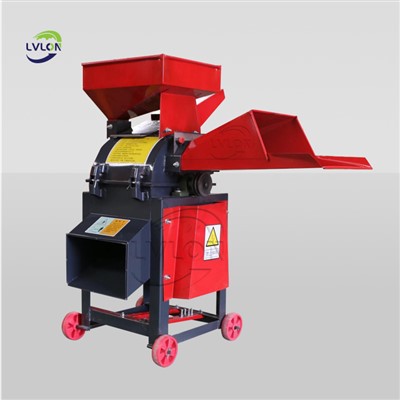
If you’re shopping for a new silage cutter, or you’re having issues with your current one’s cutting speed, reach out. I don’t do sales calls that feel like a hard sell— I’ll ask you a few simple questions: what do you chop? What size is your operation? Do you have altitude or dry conditions to deal with? And I’ll tell you exactly what will work for you, no hidden fees, no fluff. I’m not here to push a cutter that’s too big or too small for you—just to help you get the job done right, same as I’ve been doing for over a decade. We’ve helped hundreds of farmers dial in their cutting speed, cut down on waste, and boost their bottom line, and we’d be stoked to help you too.
Chaff Cutter References:
- USDA Agricultural Research Service. (2021). Silage Chop Quality: Effects of Cutting Speed and Forage Type on Fermentation and Animal Performance.
- ASABE Standard S368.4. (2022). Agricultural Machinery – Silage Harvesters – Terminology and Performance Criteria.
- University of Extension and Outreach. (2023). Forage Chopping Best Practices for Small and Mid-Sized Farms.
Henan Lvlon Industrial Co., Ltd.
We’re well-known as one of the leading chaff cutter suppliers in China, featured by quality products and good price. Please rest assured to buy high-grade chaff cutter for sale here from our factory. Welcome to view our website for more information.
Address: Unit 5, 5th Floor, Building 11, No. 18 Dongfeng Road, Jinshui District, Zhengzhou City, Henan Province.
E-mail: lvlonxu@gmail.com
WebSite: https://www.lvlonmachinery.com/
