Hey there! I’m a rep from a healthcare service robots supplier, and today I wanna chat about how our nifty healthcare service robots communicate with medical equipment. It’s a super important topic, ’cause it can really up the game in healthcare settings. Healthcare Service Robots

First off, let’s talk about why this communication is such a big deal. In a hospital or a healthcare facility, there’s tons of medical equipment – things like monitors, infusion pumps, and imaging devices. These machines collect a whole bunch of data about patients. If our healthcare service robots can talk to this equipment, they can get firsthand info about patients’ vital signs, treatment progress, and more. This means they can do things like assist doctors and nurses by giving timely updates, moving patients’ records around, or even adjusting treatment based on the data they gather.
So, how do they actually communicate? Well, one of the most common ways is through wired connections. Ethernet cables are like the old – reliable workhorses in this field. Just like your computer connects to a network using an Ethernet cable, our robots can link up to medical equipment in a similar way. It’s a stable connection that can transfer large amounts of data quickly and accurately. For example, when a robot needs to get detailed imaging data from an MRI machine, an Ethernet connection can handle the high – speed transfer without a hitch.
But, let’s face it, wires can be a pain. They can get in the way, limit the movement of robots, and they’re just not as flexible. That’s where wireless communication comes in. Wi – Fi is a popular option. It’s everywhere in healthcare facilities these days, and it allows our robots to move freely around the building while still staying connected to medical devices. Our robots can use Wi – Fi to send and receive data in real – time. For instance, a robot can be patrolling the corridors, and it can check the status of patients’ monitors via Wi – Fi. If it sees that a patient’s heart rate is abnormal, it can immediately alert the medical staff.
Another type of wireless communication we use is Bluetooth. It’s great for short – range communication. When our robots are in close proximity to a medical device, like a wearable health monitor, Bluetooth can be used to quickly transfer data. It’s energy – efficient too, which is important for our robots’ battery life. With Bluetooth, the robot can pair with the device and exchange necessary information, like a patient’s blood glucose levels, without any hassle.
Then there’s ZigBee. It’s a low – power wireless technology that’s often used in sensor networks. Many medical devices are now equipped with ZigBee sensors. Our robots can communicate with these devices over ZigBee to gather data about patients’ conditions. It’s ideal for collecting data from a large number of sensors spread out in a healthcare facility. And since it consumes very little power, it won’t drain the robots’ batteries too quickly.
Now, let’s talk about standards. The healthcare industry has some strict standards for data communication. For example, the DICOM (Digital Imaging and Communications in Medicine) standard is used for sharing medical images. Our robots are designed to be compatible with these standards. This ensures that the data they receive from medical equipment is in a format that can be easily understood and processed. When a robot gets an X – ray image from a machine, it can use the DICOM standard to view and transfer the image correctly to the right people, like radiologists or doctors.
One of the challenges in getting our robots to communicate with medical equipment is security. Healthcare data is super sensitive. We don’t want any unauthorized access or data breaches. That’s why we’ve built in multiple layers of security. For wired connections, we use secure protocols to encrypt the data as it travels between the robot and the medical device. For wireless communication, we use things like WPA3 encryption for Wi – Fi, and we make sure our robots and devices are authenticated before they can start exchanging data. This way, we can protect patients’ privacy and keep the data safe.
Another challenge is interoperability. There are so many different types and brands of medical equipment out there. Each one might have its own way of communicating and its own data format. Our team of engineers has been working hard to make our robots as interoperable as possible. We’ve developed software that can translate different data formats into a common one that our robots can understand. This means that no matter what kind of medical equipment our robots are dealing with, they can still communicate effectively.
Let me give you an example of how all this communication stuff plays out in real – life situations. Imagine a busy hospital ward. Our healthcare service robot is constantly on the move. It uses Wi – Fi to connect to the central monitoring system. This system is connected to all the patients’ bedside monitors. The robot can access the data from these monitors, like blood pressure, temperature, and oxygen levels. If it notices that a patient’s oxygen level is dropping, it can quickly alert the nursing station. At the same time, it can use Bluetooth to connect to a nearby portable infusion pump to check if the patient’s medication delivery is on track.
Also, in an operating room, our robots can be a huge help. They can use Ethernet connections to link up with surgical imaging equipment, like laparoscopes or endoscopes. The robot can then make sure that the images are being sent in the right format to the displays for the surgeons to see clearly. It can also communicate with other surgical tools via ZigBee to coordinate the different steps of the operation.
In conclusion, the ability of our healthcare service robots to communicate with medical equipment is a game – changer in healthcare. It improves patient care, makes healthcare staff more efficient, and helps in better management of healthcare resources. We’re constantly working on improving this communication technology to make it even more seamless and effective.
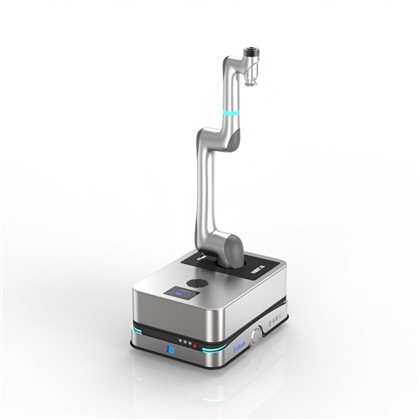
If you’re in the healthcare industry and you’re looking for ways to enhance your facility’s efficiency and patient care, our healthcare service robots could be the answer. We’d love to have a chat with you about how our robots can fit into your setup. Whether you’re running a small clinic or a large hospital, we’ve got solutions that can work for you. So, don’t hesitate to reach out for a procurement discussion. We’re here to help you take your healthcare services to the next level.
Healthcare Service Robots References:
- Medical Device Connectivity: Standards and Best Practices. Published by industry – leading healthcare technology research group.
- Wireless Communication Technologies in Healthcare: Advantages and Challenges. A research paper from a well – known academic institution.
- Data Security in Healthcare Communication Systems. A report from a healthcare security think – tank.
Shenzhen Ezhan Technology Co., Ltd.
We’re known as one of the most reliable healthcare service robots manufacturers and suppliers in China. With abundant experience, we warmly welcome you to buy bulk customized healthcare service robots from our factory. If you have any enquiry about cooperation, please feel free to email us.
Address: Room 1808, 1809, 1810, Building 2, Aipark, Baolong 4th Road, Longgang District, Shenzhen City
E-mail: sales01@ezhankeji.com
WebSite: https://www.ezhanrobot.com/
