When I first started answering calls from small-scale equipment manufacturers and plumbing contractors three years ago, one question popped up more often than any other: “Can I get a valve core that’s not exactly what’s listed in your catalog?” Back then, I’d fumble through a prepared line about standard sizes being the only available option, but over time, that line shifted—because the answer, more often than not, was yes. As a valve core supplier, I’ve learned that custom isn’t a buzzword here; it’s what most buyers actually need, even if they don’t know how to ask for it. Valve Core
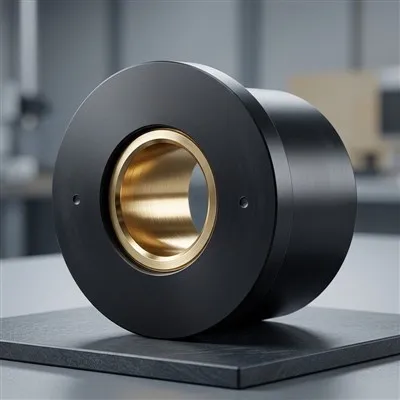
Let’s start with the basics, because that’s where most confusion lives. A valve core is the tiny, replaceable heart of just about every flow-control part you use: the faucet in your bathroom, the irrigation system on a farm, the compressed air line that runs a factory’s assembly robots. Standard valve cores are made for common sizes—10mm stems, 1/4-inch ports, universal seal materials that work for mild water flow. But the real world doesn’t run on “common.” A plumber might be fixing a vintage 1950s sink whose original valve core wore out and no standard part fits. A food processing plant might need a core that doesn’t shed plastic particles into maple syrup. A mining operation needs cores that can handle highly corrosive slurry, not just plain water. Those are the requests that don’t show up on order forms, and that’s where customization gets interesting.
The first thing I tell every new caller is: there’s no such thing as a “too small” or “too weird” custom request. A few months back, a guy from a small aerospace components shop emailed us saying he needed a valve core for a prototype fuel line. The standard cores we carried had a 3mm outer diameter, but he needed a 2.7mm one, and the seal material had to handle jet fuel at 180 degrees Fahrenheit. I’ll admit, I pulled my engineering team in for that one. We don’t have a machine for exactly that diameter off our production floor, but we do have the tools and partnerships to adapt quickly. We adjusted the core’s stem diameter, tested three different seal compounds until we found one that didn’t break down in jet fuel, and turned the part around in 10 days. That prototype’s now on a rocket that’s launching next year—so yeah, the weird requests count.
But let’s be honest: customization isn’t just “making a smaller part.” It’s solving a specific problem, and that starts with understanding what a buyer actually needs, not just what they say they want. I once had a customer who insisted he needed a custom valve core with a brass body. When we asked why, he explained he was installing a water softener system for a community center, and the local water had high levels of sulfur. Standard EPDM seals, which most cores use, get eaten by sulfur over time—they crack in six months, and the whole faucet leaks. He thought brass was the only way to fix it, but when we ran tests, we found a modified Viton seal that was resistant to sulfur, lasted two years, and cost half what a brass core would. That’s the part we shipped, and a year later, he called to say it still hadn’t leaked once. That’s the secret I wish more buyers knew: customization doesn’t mean overspending. It means finding the solution that fits your actual use case, not just your list of “unique” parts.
Not all custom valve core work is for tiny prototype parts or industrial equipment. We do a lot of small-scale custom work for residential and light commercial repairs, too. Last month, a local plumber brought in a broken valve core from a 1968 kitchen faucet—he’d tried three standard replacements, but each one leaked because the seat in the faucet body was worn unevenly. Instead of sending him away, we took measurements of his original core, machined a new stem to match the uneven seat, and used a soft rubber seal that would conform to the slight curve. It cost him $12, which was less than buying a whole new faucet, and he texted me a picture of the working sink three days later. That’s the kind of work that feels personal, not just business—and it’s the reason I still pick up the phone when a customer has a story about a old part that won’t fit.
Now, I need to be clear about what we can and can’t do. Custom valve cores aren’t something we crank out 10,000 of in a day. Every custom order starts with a conversation: do you have a sample part to measure? What fluid will this core handle—water, fuel, chemicals, air? What’s the pressure and temperature it needs to survive? How many parts do you need, and when do you need them? We can’t do impossible things—like a core that can run on liquid hydrogen for 10 years without sealing, or one that’s smaller than 1mm and still can control flow—but if your request is tied to a real-world problem, we can almost always find a way.
We also work with existing product lines, if that’s what a customer needs. A few months back, a company that makes portable air compressors wanted to switch their valve core supplier because their current parts kept failing in cold weather. Their standard cores worked fine at room temperature, but when the compressor was used in a construction site in Minnesota, the seal hardened and leaked. Instead of building a whole new core from scratch, we modified the compound of the existing EPDM seal to stay flexible down to -20 degrees, and that’s what we’ve been supplying them with ever since. That’s another form of customization: adapting a proven part to fit a specific edge case, no retooling required.
A lot of people ask me if custom valve cores are more expensive. The short answer is: sometimes, but not always. For small batches, like less than 50 parts, custom work can cost a bit more per unit because we have to set up tooling, but if you’re ordering 500 or more, the per-unit cost drops quickly, often matching or even beating the price of some overpriced standard parts. The real cost is what you’ll pay if you buy the wrong part. I’ve had customers tell me they ordered cheap standard cores online, and within a month, their irrigation system was leaking, or their food processing line had to shut down because a core broke and contaminated a batch of product. The cost of that downtime? Way more than the small extra you’d pay for a custom part that’s built to last.
I think the biggest misconception people have is that valve cores are just a commodity part—something you can pick up at any hardware store, no questions asked. But if you’ve ever had a faucet leak because the wrong core was installed, or a machine shut down because a part failed, you know that’s not true. A valve core is a precision part, even the standard ones, and when your application has specific needs, off-the-shelf won’t cut it.
At the end of the day, my job isn’t just selling valve cores. It’s solving problems. That might mean making a custom core for a vintage sink, modifying a standard seal for a cold-climate air compressor, or machining a tiny part for a aerospace prototype. Every customer’s need is different, and I take pride in sitting down with them, walking through the options, and making sure they get a part that works for their specific situation, not just what’s easiest for us to ship.
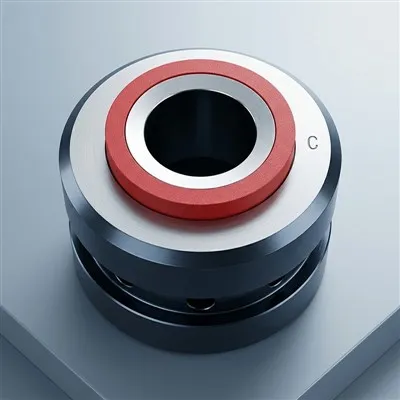
If you’re tired of searching for a valve core that fits, or you have a project that needs something a little out of the ordinary, I’d love to hear from you. We can take a look at your sample, talk through the requirements, and figure out a solution that works for your timeline and budget. No pushy sales pitches, no confusing jargon, just people who know valve cores and want to help.
Rubber-metal Composite Valve Core References
- Engineering Toolbox. "Plumbing Valves and Valve Components." Engineering Toolbox, 2024.
- ASME B16.15: Cast Copper Alloy Pipe Fittings, Threaded, for General Service. American Society of Mechanical Engineers, 2021.
- Rubber and Plastics News. "Custom Elastomer Components for Industrial Flow Control." RubWorld, 15 Mar. 2023.
- Aerospace Materials & Processes Association. "Materials Selection for Fluid System Components in Extreme Environments." AMPA Journal, vol. 89, no. 4, 2022, pp. 22-27.
- Food and Drug Administration. "Guidance for Industry: Materials Used in Food Equipment and Packaging." U.S. Food and Drug Administration, 2020.
Tianjin TGE BIAM Graphene Technology Co., Ltd.
Tianjin TGE BIAM Graphene Technology Co., Ltd. is one of the most professional valve core manufacturers and suppliers in China, also supports customized service. Please feel free to buy bulk advanced valve core in stock here from our factory. For quotation, contact us now.
Address: No. 24 Sanjing Road, Dongli Development Zone, Tianjin City, China.
E-mail: sales@tge-tj.com
WebSite: https://www.tge-valve.com/
