Hey everyone, if you’ve ever wandered through an old, creaky church on a quiet Sunday morning, you might’ve noticed some weird mix of the old and new: stained glass next to a Bluetooth speaker, a vintage organ paired with a modern sound system, even LED string lights strung across the pews. But here’s a question I get all the time as a circuit breaker box supplier—one that’s popped up at least once a month from church facilities managers, electricians, even small congregation leaders: “Wait, can we actually use a regular circuit breaker box in a church?” Circuit Breaker Box
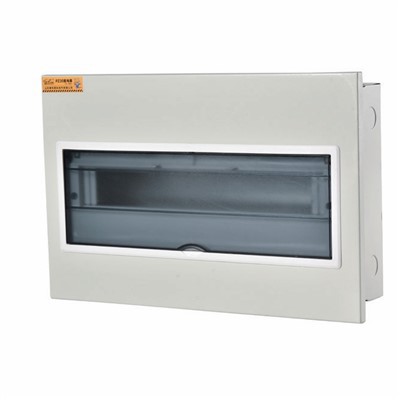
The short answer? Yes, totally—but it’s not just grabbing any box off the shelf and slapping it on the wall. Let me break this down like I would to a guy who’s never touched a wire but runs the facilities team at his local church, because that’s who most of my calls are from. First, let’s get the basics: a circuit breaker box (sometimes called a load center, for the nerds) is basically the nerve center of a building’s electricity. It splits the main power coming into your space into smaller, dedicated circuits for every outlet, light, appliance, and system you use, and it trips if there’s an overload or short circuit to prevent fires. That’s non-negotiable for any space, right? But churches have specific needs that aren’t like a coffee shop, an apartment, or a warehouse.
First, let’s talk about what makes churches different from other buildings you’d normally see a breaker box in. Let’s start with size: a small neighborhood church might have a 50-person congregation, a sanctuary, a Sunday school wing, a kitchen, and a small office. A big, historic cathedral? They’ve got a main sanctuary, multiple chapels, a sound booth, HVAC that keeps the stone walls at a comfy temp (super important for winter, let me tell you—old stone holds cold like nothing else), a kitchen that feeds 100 people after potlucks, maybe even a gym or event space for youth groups. That means way more circuits than your average 1,500 sq ft home. A typical home breaker box might have 15 or 20 slots; a small church needs at least 30, a medium one 50+, and big cathedrals often need two or three separate boxes to handle all that.
Then there’s the “special” stuff churches have that other buildings don’t need to stress about. Sound systems are huge—you can’t have a good service without mics, amps, speakers, maybe a live stream setup for people who can’t make it in person. Those need their own dedicated circuits, no sharing with the coffee maker or the HVAC, because if the sound cuts out mid-sermon, that’s a disaster. Then there’s historic stuff: old churches have stained glass windows with built-in lights, maybe vintage bells that run on electricity, even organ consoles that are super sensitive to power surges. If a power surge fries a $10k organ, that’s way worse than burning out a toaster. Also, fire safety—churches are often packed with people, especially during holidays like Christmas or Easter, so having a breaker box that trips before a fire starts is non-negotiable. And let’s not forget parking lot lights and security systems—those need power 24/7, not just during service.
Now, I know what some of you are thinking: “But church buildings are old! The wiring is from the 1800s! Can a modern breaker box handle that?” The honest answer is, only if you get the right one, and hire a licensed electrician who knows both old building code and modern safety rules. Old churches often have knob-and-tube wiring, or old rubber-insulated wires that can crack over time. A good breaker box isn’t just about fitting the wires—it’s about protecting them. Modern breakers have arc-fault circuit interrupter (AFCI) and ground-fault circuit interrupter (GFCI) features that older breakers didn’t. AFCI trips when it detects a dangerous electrical arc, which is a top cause of house fires, and GFCI trips if there’s a ground fault, which is why you see them in bathrooms and kitchens. Those features are actually better for old church wiring, because it’s less reliable than new wiring, so it’s more likely to have small arcs or faults.
Wait, but there’s a catch here. I’ve had a few electricians tell me they tried putting a cheap, no-name breaker box in a small church, and it caused nothing but headaches. Why? Because cheap boxes cut corners on the materials. The bus bars (the metal strips that carry power to each breaker) are thinner, so they can overheat if you’re running a lot of circuits at once. The breakers themselves are lower quality, so they might not trip when they should, or trip randomly for no reason. For a church, that’s not just an inconvenience—that could be a safety hazard. Last year, I worked with a guy whose small church had a cheap box: when the Sunday school was using space heaters on a cold day, the breaker didn’t trip, the wire overheated, and they had a small smoke issue before the fire department got there. Scary stuff. So if you’re using a breaker box in a church, you don’t want the bottom-of-the-barrel one. You want one that’s rated for commercial use, not just residential. Commercial breaker boxes are built to handle more circuits, heavier loads, and last longer than residential ones. That’s the sweet spot for churches.
Another thing: backup power. A lot of churches have generators for when the main power goes out—super important for services, especially live streams, and for security systems. The breaker box is the middleman between the main power and the generator. If your breaker box can’t handle switching between main power and generator power safely, you could have power backfeeding into the main line, which is dangerous for linemen working on the lines. That’s a big no-no. So you need a breaker box that’s compatible with automatic transfer switches, which let you switch between power sources without turning everything off manually. I’ve installed a ton of those for churches, and they’re a game-changer—no more fumbling with switches at 7 a.m. on a Sunday when the power cuts out.
Let’s talk about a real example, because numbers make this concrete. Last year, I worked with a medium-sized church in Ohio—about 200 people, sanctuary, two Sunday school wings, a kitchen, a gym, and a youth lounge. They were using a 20-slot residential breaker box that was full—they had added so many circuits over the years (sound system, gym lights, kitchen appliances) that they were using every single slot. Their electrician told them they needed to upgrade, so they called me. We went with a 60-slot commercial breaker box, plus a sub-panel for the gym, because the gym needed its own dedicated power for weight machines and court lights. We also added AFCI and GFCI breakers for every circuit, and a transfer switch for their 20kW generator. Total cost? They were nervous at first, but six months later, they told me it paid for itself when they didn’t have to replace a fried sound system or a broken generator switch after a power outage. No random tripping, no overheating, way safer.
Wait, what about historic churches? Let’s say you’ve got a 100-year-old cathedral with stone walls, vaulted ceilings, and you can’t drill a dozen holes in the walls for a big breaker box. Can you still use one? Absolutely. You don’t need a huge, bulky box if you don’t have the space. Modern commercial breaker boxes come in slim, surface-mount models that can go in a closet, a back hallway, even a utility room without taking up too much space. Some are even made to look like old metal boxes if you want to hide them a little, though most facilities managers just care about function over aesthetics these days. Also, historic churches often have specific preservation rules—you can’t modify the walls too much. So we’ve installed under-cabinet breakers, or even recessed ones in existing utility spaces that don’t require major construction. Just make sure your electrician checks with the local historic preservation board before you start drilling.
Now, let’s get to the myths, because there are a few. First myth: “Churches are religious spaces, so electricity needs to be ‘special’ or not use standard parts.” No, that’s not a thing. The National Electrical Code (NEC) applies to all commercial spaces, including churches, regardless of their name or purpose. The only difference is you have to meet the code, which we already talked about (commercial grade breakers, AFCI/GFCI, proper transfer switches). Second myth: “A regular home breaker box works for a church.” Nope, like I said—residential boxes are built for smaller loads, fewer circuits, and homes usually have one major appliance at a time, while churches have multiple systems running at once. Third myth: “Old wiring means you can’t use a breaker box.” You just need a breaker box that has reliable breakers to protect that old wiring, not one that’s flimsy enough to make the problem worse.
What are the key things to look for when you’re shopping for a breaker box for a church? Let’s list them out, simple: 1. Commercial grade, not residential. 2. Enough slots for all your current circuits plus at least 10% extra for future additions (you’ll add more over time, trust me). 3. Built-in AFCI and GFCI protection for every circuit. 4. Compatibility with a transfer switch for generators. 5. Durable materials that won’t overheat, even if you’re running multiple circuits during a big event (like Christmas Eve service, where all the lights, sound system, and kitchen are running at once).
As someone who’s been in this business for 10 years, I’ve seen what happens when you cut corners on a breaker box for a church. I’ve seen a small congregation lose their whole sound system because a cheap breaker tripped too slowly during a power surge. I’ve seen a church’s kitchen circuit overheat because the bus bar was too thin, leading to a small fire that could’ve been prevented with a commercial box. And I’ve seen the flip side: a church that upgraded to the right box, saved money on long-term repairs, had fewer service interruptions, and even passed their electrical inspection with no issues on the first try.
So to circle back to the original question: Can a circuit breaker box be used in a church? The answer is a resounding yes—but only if you pick the right one. It’s not about the brand, it’s about the rating, the features, and matching it to your church’s specific size and needs. You don’t need anything fancy or “church-specific” (that’s just marketing fluff, by the way—there’s no such thing as a “church breaker box”). You just need a reliable, commercial-grade box that follows NEC codes, and a licensed electrician who knows how to install it correctly for old buildings, if that’s what you’ve got.

Now, if you’re a church facilities manager, an electrician who works on churches, or someone who’s just got questions about upgrading your breaker box, hit me up. I’ve helped everything from tiny neighborhood churches to big historic cathedrals pick the right breaker boxes, sub-panels, and transfer switches, and I can walk you through what you need without the sales jargon. No pressure, no hidden fees, just straight talk about what works for your space.
Metal Control Box References:
- National Electrical Code (NEC) Handbook, 2023 Edition, National Fire Protection Association
- Electrical Safety Foundation International (ESFI), Commercial Electrical Safety for Places of Worship, 2022
- U.S. Department of Energy, Commercial Lighting and Power Systems for Religious Buildings, 2021
Shandong Qinghua Yike Electric Co., Ltd.
As one of the most experienced circuit breaker box manufacturers in China, we also support customized service. We warmly welcome you to buy durable circuit breaker box for sale here from our factory. If you have any enquiry about cooperation, please feel free to email us.
Address: No. 378 Taozhuang Village, Zaoyuan Town, Lanshan District, Linyi City, Shandong Province
E-mail: admin@sd-qhyk.com
WebSite: https://www.qhecobox.com/
