If you’ve ever driven through a small town in northern Canada, Scandinavia, or even rural Alaska in the middle of winter, you might have noticed something that surprises first-time visitors: solar street lights lining the main road, glowing steadily even when temperatures drop to -30°C (-22°F) or lower. For years, I fielded skeptical calls from municipal planners and rural development managers in these cold regions, asking the same question: “Can solar street lights actually work here, when half the year is dark and snow covers every surface?” As a solar street light supplier with 12 years of experience designing and installing systems for extreme climates, I’m here to tell you the answer isn’t just “yes” — it’s “they’re often the most reliable, cost-effective option for cold regions.” Solar Street Light
Let’s start with the science that debunks the biggest myth: cold weather kills solar performance. It’s a common misconception that lower temperatures reduce solar panel efficiency, but the opposite is actually true. Crystalline silicon panels — the type we use for 98% of our solar street light systems — operate more efficiently in cold conditions because high heat creates resistance in the panel’s semiconductors, cutting output. A 2021 study from the International Energy Agency’s Photovoltaic Power Systems Programme found that panel efficiency increases by 0.3 to 0.5% for every degree Celsius drop in temperature between 0°C and 25°C. That means a panel producing 100 watts at 25°C will put out roughly 107 watts when the temperature drops to -15°C. That’s a huge boost for regions where sunlight is scarce in winter.
Of course, cold regions don’t just have cold — they have winter-specific challenges, and designing a solar street light that works in Yellowknife isn’t the same as designing one for Phoenix. The biggest hurdles we address in our custom systems are snow accumulation on panels, shorter daylight hours, and the need for consistent light output during long polar nights (which can last up to 30 days in the farthest northern communities). Let’s break down how we solve each of these, because this isn’t one-size-fits-all engineering — it’s tailored for the cold.
First, snow. Even a thin layer of snow on a solar panel can block 90% of sunlight, and heavy, wet snow in regions like New England or southern Canada can weigh down panels and stay for weeks. Early solar street light models installed in cold regions 10 years ago often failed here because their panels were flat, mounted too low, or made of fragile glass that cracked under snow load. At our company, we resolved that by two key design choices: angled panels and anti-snow coating. We set panels at a 45-degree angle — steeper than the standard 30-degree angle for temperate regions — which lets gravity and wind sweep most light, powdery snow off within 24 to 48 hours. For wet, heavy snow that clings, we apply a nano-ceramic hydrophobic coating that creates a self-cleaning surface; snow slides off instead of sticking, even when temperatures hover just below freezing. We also reinforce panel frames with heavy-gauge aluminum that’s rated to withstand snow loads of up to 200 kg per square meter — that’s enough to hold a full winter of accumulated snow from a 2-meter panel without bending or cracking.
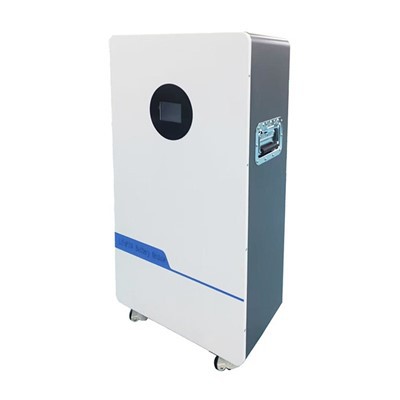
Next, battery storage. This is the other make-or-break component for cold regions. A typical lead-acid battery will freeze solid and die in temperatures below -10°C, and even lithium-ion batteries — the standard for modern solar street lights — lose 20 to 30% of their capacity when exposed to -20°C if unprotected. That’s why we don’t use standard off-the-shelf batteries for our cold-climate systems. We spec lithium iron phosphate (LiFePO4) batteries, which are far more stable and have a wider operating temperature range than other lithium chemistries. LiFePO4 batteries can function at full capacity down to -20°C and retain 70% of their capacity even at -40°C — and we pair them with insulated, heated battery enclosures, not just basic plastic boxes. These enclosures are lined with closed-cell foam insulation rated for extreme cold, and they have a low-power heating element that only turns on when temperatures drop below -15°C. The heating element runs on a tiny portion of the battery’s stored energy, but we size the battery bank to account for that small draw, so it doesn’t impact performance during weeks of low sunlight. For example, a 10W solar street light for a small Alaskan village has a 100Ah LiFePO4 battery bank, which is enough to power the light at full brightness for 7 straight days of overcast winter days without recharging.
Then there’s the light itself. Municipal planners in cold regions often worry about bright street lights wasting energy when no one is on the road at 2 a.m., especially during winter when people stay indoors more. Our cold-climate systems use dimmable LED lights with motion sensors, so they run at 20% brightness during low-traffic hours and jump to 100% brightness when a car or pedestrian is detected. That cuts energy use by 60 to 70% in off-peak times, which is critical for making the battery last through long dark periods. We also use LEDs that are rated for low temperatures, because standard LEDs can have flickering issues or fail prematurely in extreme cold. Our LEDs are tested to operate reliably between -40°C and 60°C, so they don’t burn out halfway through a harsh winter.
I’ve seen firsthand how these design choices make a difference. Last year, we installed 120 solar street lights for a rural municipality in northern Manitoba, where temperatures drop to -35°C in January and there are only 7 hours of daylight at the peak of winter. Before our system, the town relied on grid-powered street lights that cost $80,000 a year in electricity and maintenance, and 20% of the lights were out at any given time because frozen wiring and regular line damage from ice storms were constant issues. In the first 6 months after we installed our custom solar systems, the town’s street light maintenance costs dropped to less than $5,000, and all 120 lights were operational 99.7% of the time — even during a 10-day stretch of thick, gray overcast that would have left old solar models dead. The town manager told us recently that they’re already planning to add another 80 lights this year because they’re saving more than enough to cover the cost of the new system in just 3 years.
Of course, no technology is perfect, and solar street lights in cold regions have limitations that we’re transparent about. They’re not the best fit for areas with multiple weeks of continuous overcast and no sunlight at all — though even in these cases, modern systems can handle up to 14 days of cloud cover with a properly sized battery bank. They also require minimal, but regular, maintenance: we recommend a panel cleaning once a month during heavy snow season to remove any stubborn ice or slush that the coating can’t shed. And while upfront costs are slightly higher than standard street lights, the long-term savings are impossible to ignore: no grid connection fees, no monthly electricity bills, and almost no maintenance over the 10-year lifespan of the system.
What’s exciting is that this technology is evolving fast, and we’re constantly updating our systems to work in even harsher conditions. Last year, we tested a new high-efficiency solar panel variant that can capture even the weak, low-angle sunlight of winter, which boosts output by an extra 10% in regions with short daylight hours. We’re also working with a team of Canadian engineers to develop ice-repellent panel surfaces that prevent ice buildup without needing heating elements, which would cut energy use even more.
For too long, small towns and remote communities in cold regions relied on expensive, unreliable grid-powered street lights that left roads dark and budgets stretched thin. Solar street lights aren’t just a viable option here — they’re the future. They don’t require digging expensive trenches to lay power lines through frozen ground, they don’t get knocked out by ice storms or downed power lines, and they pay for themselves in just a few years with the money they save on electricity and maintenance.
If you’re a municipal planner, rural development manager, or property owner in a cold region — whether you’re in North America, Europe, or any other place where winter temperatures drop below freezing — and you’re tired of high utility bills and unreliable lighting, I’d encourage you to stop writing off solar street lights. Our team has designed and installed hundreds of systems across extreme cold climates, and we can build a custom solution tailored to your region’s specific weather, daylight patterns, and lighting needs. We don’t use one-size-fits-all panels or batteries; every system we install is engineered to perform when it matters most, in the harshest conditions.

To learn more about how our solar street light systems can work for your cold-region project, feel free to reach out for a consultation. We’ll walk you through performance data, cost projections, and customized design options that fit your needs.
Inverters References
International Energy Agency Photovoltaic Power Systems Programme. (2021). Temperature Dependence of Photovoltaic Module Performance in Cold Climates. IEA PVPS Task 13, Subtask 2.
National Renewable Energy Laboratory. (2020). Lithium-Ion Battery Performance in Extreme Cold Temperatures for Off-Grid Applications. NREL Report No. TP-5400-75682.
Transportation Association of Canada. (2022). Solar Street Lighting for Rural and Northern Canadian Communities: Best Practices and Case Studies. TAC Technical Report 827.
Shandong Yaoqian Energy Storage International Trade Co., Ltd.
Address: Lithium Battery Industrial Park, Xingcheng Street, Zaozhuang High-tech Zone, Shandong Province, China
E-mail: boss@yaoqiansmart.com
WebSite: https://www.yaoqiansmart.com/
