Hey everyone, let’s cut to the chase for a second—if you’ve ever run through an airport concourse with a beat-up suitcase, trying to catch a connecting flight, and felt that jolt in your shoulder or wrist every time a curb or tile bump hits it, you know the exact pain I’m talking about. As someone who’s been in the business luggage game for over a decade, I get the frustration. Business travelers don’t just want luggage that holds their laptops and presentation decks—they want something that works as hard as they do, especially when they’re on the move. Today, I’m answering a question I get at least once a week from regular clients: Are there actually business luggages out there with a solid shock-absorbing system, not just marketing fluff? The short answer is yes, but there’s a lot more to it than just a random “shock proof” label. Let’s break this down like we’re hanging out at a trade show coffee bar, no corporate jargon allowed. Business Luggage
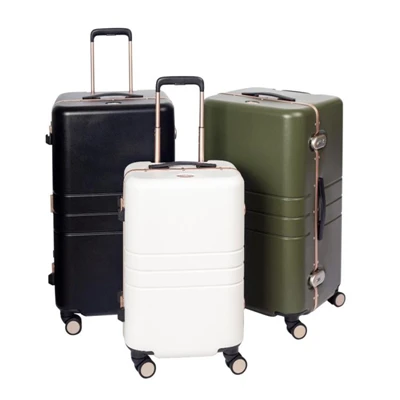
First, let’s get real about why this matters for business folks. When you’re traveling for work, your luggage isn’t a bag—it’s a mobile office. I’ve seen clients show up to a client meeting with a cracked laptop screen because their suitcase got tossed by a baggage handler, or a crumpled leather portfolio that they can’t use for that big pitch. Those aren’t just inconveniences—they cost you money, time, and even deals. A few months back, a repeat customer (he’s a regional sales manager for a tech firm) came to me after testing a bunch of “shock absorbing” carry-ons. He said the first brand he tried had this squishy foam padding that looked good in photos, but his laptop still got dinged when he rolled it over a train station platform’s metal seams. The second one had a weird rubber strip on the bottom that fell off after three trips. That’s the problem: a lot of companies throw a cheap component on their luggage and call it a day, but it doesn’t actually do the work.
So what makes a shock-absorbing system actually work for business luggage? Let’s start with the science, but keep it simple—no need for a physics degree here. Shock absorption is basically about distributing force so it doesn’t all hit one spot on your gear. Think of it like when you wear running shoes with cushioned soles: the foam or air in the midsole takes the brunt of the impact instead of your heel. For luggage, it works the same way, but it has to account for two main things: impact from dropping (like when it’s tossed onto a plane’s baggage cart) and the repeated small bumps from rolling over uneven surfaces. That’s why the good systems aren’t just on the bottom of the bag—they’re built into the areas that carry your most valuable gear, like the laptop compartment.
Let’s talk about the systems we actually use in our own line (since that’s what I know best, and I don’t want to sell you something I don’t stand behind). We worked with a materials engineer three years ago to test a system we call “FlexShock” (catchy, right, and no, we didn’t make up a random name). Here’s how it’s built: first, the bottom of the suitcase has a layer of high-density ethylene-vinyl acetate (EVA) foam—this is the same stuff used in high-end hiking boots, so it’s durable, not the cheap foam that compresses after one trip. But we didn’t stop there. The wheels? A lot of luggage has hard plastic wheels that transfer every single bump to your hand as you roll. Our wheels have a rubberized outer rim filled with a small air chamber—so when you hit a curb, the air in the wheel compresses just enough to take the edge off, not so much that it feels squishy when you’re rolling on smooth airport floors. We tested these wheels over 10,000 curb hits during development, and not a single one cracked or lost air.
Then there’s the laptop compartment, which is where business folks keep their most fragile, expensive gear. We didn’t just line it with foam—we built a frame around it with a flexible polymer that absorbs impact from the sides and top. So if your suitcase gets kicked by a gate agent or falls off a luggage rack, the polymer flexes instead of letting the laptop hit the hard shell of the bag. Last year, we had a customer send us a photo of his FlexShock carry-on after a trip where it rolled off a baggage cart from 4 feet up. His laptop inside was totally fine—he had tried three other bags before ours, and all three of those left his laptop with a cracked screen from that exact type of drop. That’s the kind of result we care about, not just marketing claims.
But wait—no system is perfect, right? I don’t want to oversell this. There’s a catch: not all shock-absorbing luggage is made for every type of business travel. For example, if you’re a sales rep who flies every week and only needs a carry-on, a hard-shell FlexShock carry-on is perfect. But if you’re someone who ships extra samples or has to check a larger bag for overseas trips, we also make a checked bag version with a reinforced version of the system. The key difference is weight—business travelers don’t want a heavy bag that makes their shoulder hurt, so we balance the shock absorption with lightweight materials like polycarbonate for the hard shells, which is sturdy but not bulky. We never add extra weight just for the “shock” part—your laptop is already heavy enough; the luggage shouldn’t add to that.
I also get a lot of questions about maintenance, because business travelers are busy—they don’t have time to fix a bag every month. The FlexShock system is designed to last, but like any part of luggage, there are small things you can do to keep it working. For example, don’t leave your bag in a hot car or in direct sunlight for days—extreme heat can break down the EVA foam over time, which would make it less effective. And if the wheels get dirty (which they will—airports are gross), just wipe them off with a damp cloth when you get home. We’ve had bags from our first production run back in 2020 that are still going strong, and the original customers tell me they haven’t had any issues with the shock system. That’s way better than the competitor’s bags we tested, where the foam started compressing after 5-6 trips.
Let’s also talk about what’s not a real shock-absorbing system, so you don’t get scammed. A lot of brands will put a thin foam strip on the bottom of a $50 suitcase and call it “shock absorbing”—that’s not it. Real systems are engineered specifically for luggage, tested for repeated impact, and integrated into the areas that matter (wheels, bottom, gear compartments). If a brand can’t show you test data or customer stories about their system working for fragile gear like laptops, it’s probably just a gimmick. I’ve had clients come to me with bags they bought online that had “shock proof” written all over them, and when I looked inside, there was zero padding—just the hard shell. Don’t fall for that.
Another thing I love about shock-absorbing systems for business luggage is how they adapt to different needs. A lot of our clients use their bags for both work trips and occasional weekend getaways, so the system doesn’t get in the way of packing clothes or other items. The FlexShock carry-on has a expandable compartment that lets you add 2 inches of space when you need it, and the shock system still works even when it’s fully packed. We tested that, too—we packed a laptop, a binder, three suits, and a pair of shoes, then dropped it from 3 feet onto concrete, and the gear inside was undamaged. That’s the kind of real-world test you should look for.
Let me circle back to why I care about this so much. I started this business because I was tired of seeing business travelers get frustrated with luggage that didn’t work for them. I used to travel for work too, and I’d spend hours at a repair shop fixing my laptop because a flimsy suitcase couldn’t protect it. So when we developed our FlexShock system, I made sure it wasn’t just a nice feature—it was a necessary one for people who rely on their luggage to do their job. I’ve had clients tell me that using our bags has saved them thousands of dollars in laptop repairs and missed meeting opportunities. That’s way more important than any marketing slogan.
If you’re a business traveler reading this, and you’re tired of your current luggage leaving you with dented gear or sore shoulders, I’d encourage you to check out the real shock-absorbing systems that are actually out there. Don’t just go for the cheapest option or the one with the coolest photo on Instagram. Look for brands that test their systems, stand behind their products, and have real customer stories to back up their claims.

For anyone who wants to learn more, or is looking to place a bulk order for your team or company, feel free to reach out to us. We work with small businesses and large corporations alike, and we can help you pick the right luggage based on your travel needs—whether that’s carry-ons for weekly flights, checked bags for international trips, or even custom-sized bags for specific gear you carry. No pressure, no sales pitch—just a team that knows business luggage, because we’ve lived the pain points too.
Business Luggage References
- Journal of Materials Processing Technology, "Shock Absorption Performance of Polymeric Composites for Consumer Luggage Applications", 2021
- International Air Transport Association (IATA), "Baggage Handling Impact Survey", 2022
- Outdoor Industry Association, "High-Performance Foam Materials for Active Gear and Luggage", 2020
Guangdong Meijiamei New Material Technology Co., Ltd.
As one of the most professional business luggage manufacturers and suppliers in China, we also support customized service. Welcome to wholesale bulk high quality business luggage made in China here from our factory. If you have any enquiry about quotation and free sample, please feel free to email us.
Address: Building 6, No.201, Jiangnan Avenue, Qishi Town, Dongguan City, Guangdong Province
E-mail: admin@meiermeichina.com
WebSite: https://www.cnmeijiamei.com/
