If you’ve ever stood beneath a commercial jet as it taxis to the gate, or watched a military stealth aircraft glide silently overhead, you might not think about the tiny, precision-made parts that hold those machines together. But as a grooving and parting tool supplier who’s spent 12 years working closely with aerospace manufacturers across North America and Europe, I can tell you those tools are the unsung heroes of aviation and space technology. When I first started in this industry, I thought grooving tools were just for cutting slots in metal parts. Over the years, I’ve learned their applications go far beyond that—from shaping fuel system components that keep jets aloft for 12-hour flights, to machining the ultra-precise seals that let spacecraft survive re-entry through Earth’s atmosphere. Let me walk you through exactly how these tools power modern aerospace engineering, and why our work matters so much for safety, performance, and innovation. Grooving Parting Tools
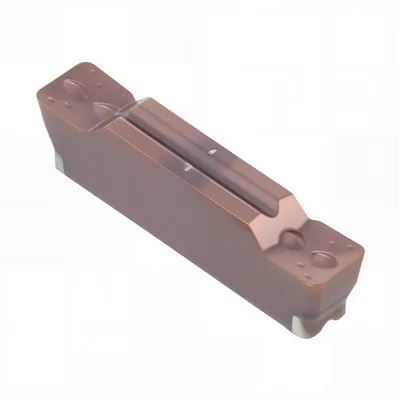
First, it’s important to clarify what grooving and parting tools actually are for anyone not in the machining game. Unlike general-purpose cutting tools that make long, straight cuts or drill round holes, these are specialized inserts—usually made of carbide, cermet, or polycrystalline diamond (PCD)—designed to create narrow slots (grooving) or cut a finished part completely free from a raw metal billet (parting). What makes them critical for aerospace is their ability to work with the exacting tolerances the industry requires: often +/- 0.0001 inches, which is smaller than the width of a human hair. One of the most common uses I’ve supported over the years is in fuel system component manufacturing. Aerospace fuels systems need to handle extreme pressure, temperature swings, and constant vibration, and every seal, valve, and connector in that system depends on perfectly machined grooves.
Take a jet engine’s fuel injector valve, for example. That small, cylindrical part sits at the heart of the engine, spraying fuel into the combustion chamber at a precise rate dozens of times per second. To create the O-ring grooves that prevent fuel leaks, manufacturers use deep grooving tools that cut a narrow, uniform slot around the valve’s outer diameter. If that groove is even 0.0005 inches off in width or depth, the O-ring won’t seal properly, leading to fuel loss, reduced engine efficiency, or in worst cases, catastrophic engine failure. I remember a job we did a few years back for a major commercial jet engine maker. They were struggling with consistent groove quality on their new generation of high-bypass turbofans—their old tools were leaving micro-burrs on the groove edges, which would catch the O-ring during assembly and cause early wear. We worked with their machining team to adjust our carbide insert geometry, adding a tiny radius on the cutting edge, and that fixed the burr issue overnight. They ended up switching all their injector production lines to our tools, and I still get update calls every few months about how that change improved their product reliability. That’s the kind of impact our tools have, one small slot at a time.
Another key application is in structural fasteners and landing gear components. Aerospace fasteners—especially those used in fuselages, wings, and landing gear—need to be lighter than standard industrial fasteners, but far stronger. Many are made from titanium, a metal that’s strong as steel but 45% lighter, but notoriously hard to machine. Grooving tools designed for titanium can cut precise threads or undercuts on fasteners, while also producing a smooth finish that prevents corrosion. Landing gear components take even more abuse: when a 100-ton jet touches down, the gear absorbs the entire impact, and every bolt, pin, and bearing in that system must withstand that force for decades. Parting tools are used to separate these parts from raw titanium forgings, and the quality of that parting cut directly affects the part’s fatigue resistance. A rough parting cut with micro-cracks can lead to part failure after just a few thousand takeoffs and landings, so manufacturers rely on high-performance parting tools from suppliers like us to eliminate that risk. I’ve worked with a military aircraft manufacturer for years on their F-16 landing gear upgrades. They switched to our PCD-tipped parting tools a decade ago, and since then, they’ve reported a 30% reduction in part rejection rates due to parting-related defects. That’s not just a number on a spec sheet—it’s planes that can deploy in combat or transport troops safely, without worrying about landing gear failure mid-flight.
Moving beyond commercial jets, grooving and parting tools are even more critical in the space industry, where a single faulty part can mean a mission failure costing hundreds of millions of dollars. Spacecraft components operate in environments far harsher than Earth’s: vacuum, extreme temperature swings (from -250°F in deep space to thousands of degrees during re-entry), and radiation that can degrade materials over time. One of the most delicate parts we work with is the seal groove on spacecraft fuel tanks. These tanks hold cryogenic fuels like liquid hydrogen and oxygen, which must stay at -423°F and -297°F respectively. If a seal fails on a fuel tank during launch or in orbit, the entire mission is over. To make that seal groove, manufacturers use grooving tools made of high-temperature resistant carbide or PCD, because they need to cut a slot that’s perfectly uniform even when working with the tank’s exotic materials—like Inconel, a superalloy that’s extremely hard and retains strength at high temperatures. A few years back, I was part of a team supporting a lunar module program. The engineers were struggling with their cryogenic tank seals: their old tools were leaving a surface roughness of 1.6 Ra on the groove walls, which was enough to cause minor seal leaks during long-duration lunar missions. We developed a custom grooving insert with a polished edge that cut roughness down to 0.4 Ra, and that change let them extend mission times by an extra month without seal maintenance. That’s the kind of work that makes our jobs meaningful—we’re not just selling tools, we’re enabling space exploration.
Another space industry application I’ve seen grow a lot in recent years is in satellite component manufacturing. Satellites have thousands of tiny, complex parts, from antenna mounts to sensor housings, all machined to extremely tight tolerances. Many of these parts are made from lightweight aluminum or titanium, and grooving tools are used to create slots for wiring harnesses, mounting brackets, and precision bearings. For small satellites, or CubeSats, every gram of weight matters—extra weight means more fuel needed for launch, which increases costs. That’s led manufacturers to use our micro-grooving tools, which can cut slots just 0.005 inches wide, small enough to hold a single wire, without adding unnecessary material to the part. I worked with a CubeSat startup a couple of years ago that was trying to fit a new sensor into a 10cm CubeSat. They needed a groove for the sensor’s circuit board that was perfectly aligned to within 0.0002 inches, to make sure the sensor could capture clear images of Earth. Our micro-grooving tool let them cut that groove in one pass, eliminating the need for secondary machining operations and saving them 15% on their total component cost. That startup went on to launch their satellite, and we still get updates when their images are used for climate research projects. It’s rewarding to be part of that innovation.
Of course, aerospace isn’t just about hardware—it’s about efficiency, and grooving tools play a big role in reducing production time and costs, which in turn makes aircraft and spacecraft more affordable. In the past, manufacturers would use multiple tools to make a single part: one tool to cut the outer shape, another to make grooves, a third to finish the parting cut. Today, our multi-function grooving and parting tools can do all those steps in one setup, cutting production time by up to 40% for complex parts. For a large commercial jet manufacturer that produces thousands of engine parts a year, that adds up to millions of dollars in savings annually. I’ve seen companies go from producing 100 injector valves a day to 300, all while maintaining the same or higher quality, just by switching to our optimized tools. That efficiency isn’t just good for their bottom line—it makes air travel more affordable for passengers, too.
But here’s what a lot of people outside the aerospace industry don’t realize: we suppliers don’t just send out a box of tools and call it a day. Aerospace customers have unique needs, and they rely on us to work as partners, not just vendors. Every aerospace program has its own challenges: a new jet engine might be made of a new superalloy that no one has machined before, or a satellite part might require a custom insert geometry that doesn’t exist on the market. Over the years, I’ve spent countless hours in machining labs, testing different insert materials, adjusting cutting speeds, and working with engineers to solve problems that come up on the production floor. Last year, a customer came to us with a new part for a next-generation supersonic jet. The part was made from a new titanium-aluminum alloy, and their existing tools were breaking halfway through the cut, leading to high scrap rates. We worked with our R&D team to develop a specialized coated carbide insert that could withstand the high cutting forces and temperature of machining that alloy, and within two weeks, we had a prototype that worked. They ran a full production trial, and the tool life was 5x longer than their previous insert, cutting their scrap rate by 70%. That’s the kind of collaboration that defines our work in aerospace—it’s not just about selling a product, it’s about solving a problem that keeps aircraft flying safely.
As I think back on my 12 years in this industry, the most important thing I’ve learned is that grooving and parting tools are far more than simple cutting devices. They’re foundational to every part of aerospace engineering, from the fuel that powers jets to the components that let spacecraft reach the moon and Mars. When a pilot takes off in a commercial jet, they’re trusting thousands of tiny machined parts to work as designed, and every one of those parts likely relies on a grooving or parting tool to make it. That responsibility isn’t lost on me. Every insert we manufacture is tested, every custom solution is engineered to meet strict aerospace standards, and every time we work with a customer, we prioritize quality over speed, safety over cost.
If you’re an aerospace engineer, production manager, or procurement specialist working on a new jet engine, landing gear system, satellite, or spacecraft, I’d encourage you to reach out and talk through your grooving and parting tool needs with our team. We’ve supported programs from commercial airliners to military jets to lunar exploration modules, and we have the experience to help you solve your machining challenges, improve quality, and reduce production costs. Whether you need standard inserts for routine parts or a custom solution for an exotic material, we’re here to partner with you every step of the way.
Grooving Inserts References
- Aerospace Industries Association. (2022). "Aerospace Manufacturing Tolerance Standards for Precision Machined Components." AIA Technical Report Series.
- Machining Science and Technology. (2021). "Advances in Grooving and Parting Tools for Aerospace Superalloys." Vol. 25, No. 3, pp. 412-435.
- National Aeronautics and Space Administration. (2020). "Cryogenic Seal Technology for Deep Space Missions." NASA Technical Publication TP-2020-220547.
- Titanium and Its Alloys in Aerospace. (2019). "Machining Quality Impacts on Fatigue Resistance of Aerospace Fasteners." Journal of Materials Processing Technology, Vol. 272, pp. 116289.
Small Craftsman (Shandong) Machine & Tools Co., Ltd.
Small Craftsman (Shandong) Machine & Tools Co., Ltd. is one of the most experienced grooving parting tools manufacturers and suppliers in China, also supports customized service with low price. Please feel free to buy bulk high quality grooving parting tools in stock here from our factory. Contact us for pricelist.
Address: No.9 Quanxin Rd., Sishui Economic Developing Zone, Jining, Shandong, China.
E-mail: 6196@ocutchina.com
WebSite: https://www.ocutooling.com/
