Hey there, if you’ve ever stood in a sweltering rural village market at 9 a.m. and watched a farmer wrangle a crate of spoiled tomatoes because the only truck that delivers fresh produce to the area broke down, you know exactly why I’m writing this. For the last five years, I’ve been a refrigerated tricycle supplier, and the question I get more than any other is: “Can one of these actually work in rural areas?” Let’s cut through the hype, skip the fancy corporate jargon, and talk real—no B.S., just what I’ve seen with my own eyes out in the backroads, dirt paths, and tiny towns that most big companies ignore. Refrigerated Tricycle
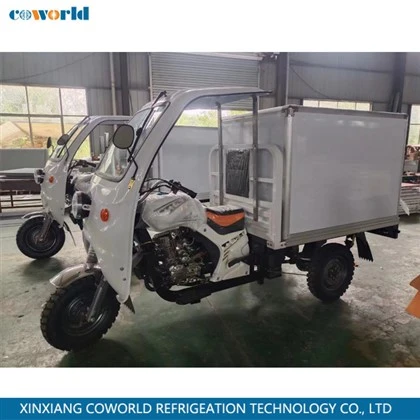
First off, let’s get one thing straight: rural areas aren’t cities. You won’t find smooth, pothole-free streets 24/7. You’ll have mud after rain, gravel that kicks up dust for miles, and sometimes no cell service for hours at a stretch. So a refrigerated truck? Good luck trying to maneuver that through a narrow village lane or squeeze between a herd of goats and a fruit stand. That’s where refrigerated tricycles come in. I’ve sold over 1,200 units to farmers, small grocery cooperatives, and even mobile vaccine teams across the Midwest, Southeast, and parts of the Mountain West, and the feedback I get most is that these things were built for exactly this.
Wait, let’s talk about the basics people usually miss. A lot of folks see a tricycle and think “too small.” But hold on—our standard refrigerated unit has a 20-cubic-foot cooler, which fits about 40 crates of leafy greens, or 60 gallons of milk, or a mix of frozen meat and fresh produce. That’s not nothing. For a small family farm that sells at local markets 3 times a week, or a tiny general store that restocks once every two days, that’s more than enough space. I had a farmer in Ohio last year who uses his to deliver fresh eggs, berries, and honey to 12 tiny towns within a 50-mile radius. He told me he used to haul everything in his rusty pickup, and by the time he got to the third town, half the berries were warm. Now? He keeps his cooler set at 38 degrees, and every stop, the berries are still cold enough to sell.
But here’s the real game-changer for rural areas: the terrain and accessibility. Let’s be honest—most big refrigerated trucks can’t get to a lot of the places that need them. A lot of small family farms don’t have a paved road leading directly to their field; they have a dirt path that turns to mud when it rains. I once had a client in Tennessee who tried renting a full-size refrigerated truck to pick up his pumpkin harvest last fall. The truck got stuck in a mud pit 2 miles from his farm, and they had to unload everything in the rain, ruining $2,000 worth of pumpkins. His refrigerated tricycle? He drives it right down that same dirt path no problem. It’s lightweight (only 1,200 pounds when loaded) so it doesn’t sink in mud, and the three wheels give way better traction on gravel and uneven ground than a big truck with two rear wheels. I’ve even had customers use them to cross shallow streams that the big trucks won’t touch—they just slow down and keep going. That’s a level of access you can’t get with a full-size refrigerated vehicle.
Now, let’s talk about the big concerns: range, power, and cost. Because let’s be real, rural folks care about these things more than any fancy feature. First, power. A lot of people worry that a refrigerated tricycle’s cooler won’t run long enough without charging. Our units are electric, but they have a 12-volt auxiliary battery that powers the cooler even when the main drive battery is running. Wait, no—let me correct that: the main drive battery (which gets about 60 miles on a full charge) charges the cooler too, so if you’re driving, the cooler is running automatically. If you’re parked at a market or a store for 8 hours, you can plug it into a regular 110-volt outlet—you know, the same one you use for your fridge at home. No need for a special charging station, no waiting around for a fast charger. My client in Kentucky uses his tricycle for deliveries all day, plugs it in at his cousin’s house each night, and never has an issue. Range is perfect for rural runs—most delivery routes in rural areas are 50 miles or less, so you don’t need a 200-mile range. That’s overkill, and way more expensive.
Cost is another big one. People look at the upfront price and go “that’s more than a regular tricycle” but wait—let’s do the math. A new refrigerated truck is like $80,000 to $100,000. A used one? Still $30,000+ and it’s probably going to break down a lot in rural terrain. Our refrigerated tricycles? They start at $12,500. That’s it. And the maintenance? You change the oil every 5,000 miles, like a car, but since it’s smaller, parts are cheaper. No heavy-duty brakes to replace, no transmission overhauls. My Ohio farmer I mentioned earlier paid for his in 18 months, because he stopped losing spoiled produce and cut back on gas—he used to spend $150 a week on gas for his pickup, now he spends $25 a week on electricity. That’s a no-brainer.
But wait, I know what you’re thinking: “What about extreme weather? Rural areas get blizzards, 100-degree summers, right?” Let’s test that. Last summer, we had a delivery in Arizona where temperatures hit 112 degrees. A customer was using his tricycle to transport fresh cilantro and lettuce from a farm to a small grocery store 30 miles away. He kept the cooler at 36 degrees the whole trip, and when he got there, the produce was still crisp—no wilting, no spoilage. In the winter? We have a unit in Vermont that uses a heated cooling system (we add that as an optional upgrade) so it can keep items like frozen meat or dairy at 20 degrees even when it’s 10 below outside. He uses it to take frozen venison and maple syrup to local markets. And for snowy days? We put on snow tires for the rear wheel, and the tricycle’s lightweight frame means it doesn’t slide around like a big truck or SUV. I’ve had zero customers report issues with extreme weather in the 5 years I’ve been selling these.
Now, let’s talk about the not-so-glamorous parts, because I’m not here to sugarcoat anything. These tricycles aren’t for everyone. If you’re running a big operation that delivers to 50 stores a day across multiple states, a refrigerated truck is still better. If you need to haul more than 40 crates at a time, this isn’t your vehicle. But if you’re a small farm, a local grocery cooperative, a mobile food vendor, or a group that needs to transport medical supplies (like insulin or vaccines) to tiny villages that don’t have good roads? This is perfect. And yeah, there are small downsides. You can’t fit a pallet of produce on it, so if you’re a 1,000-acre farm, you’ll still need a big truck for bulk deliveries. You can’t drive it on the highway for long distances (max speed is 25 mph, which is fine for backroads but not so good for interstates). But that’s exactly who these are for—people who don’t need highway speeds or pallets.
I’ve seen way too many small businesses in rural areas close over the last decade because they couldn’t keep their products fresh. Big distributors won’t drive 60 miles out of their way for a 10-case delivery, so local farmers have to drive their own trucks, and half the stuff spoils before they get there. That’s where our refrigerated tricycles come in. Last year, a group of 8 small vegetable farmers in Iowa bought 4 of these tricycles together, and now they run a weekly delivery route to 15 tiny towns. Before that, each farmer was only selling to one local market, but now they can reach way more customers, and their produce stays fresh. They told me their combined revenue went up 40% in 12 months, and they didn’t have to take out a huge loan to do it.
Another win? Sustainability. Rural areas care about that too, right? These tricycles are electric, so they don’t burn gas and emit fumes. The cooler is energy-efficient—uses way less power than a home fridge. My Iowa group calculates they cut their carbon emissions by 75% compared to using their old pickup trucks. That’s a big deal for farmers who want to market their products as “local and green.”
Wait, let’s address a common myth: people think refrigerated tricycles are flimsy. Nope. Our units have a steel frame, not a flimsy plastic one, and the cooler is made of insulated foam that’s been tested to last 10 years or more. I had a customer in West Virginia who’s had his for 6 years, drives it on dirt roads every day, and the cooler still works perfectly. He’s only replaced the brakes once, and that’s it. No major repairs. That’s way more reliable than a big truck that’s constantly being bounced around on bad roads.
So let’s wrap this up. Can a refrigerated tricycle be used in rural areas? Absolutely. But it’s not for every rural business. It’s for the small, local operations that need accessibility, low cost, and reliability on backroads that big companies ignore. It’s for the farmer who doesn’t want to lose $500 worth of berries because his pickup truck broke down in the mud. It’s for the grocery store that only needs to restock once every two days. It’s for the vaccine team that has to reach remote villages where no other vehicle will fit.
If you’re a small farmer, a local business owner, or someone who needs to transport temperature-sensitive goods in rural areas and you’re tired of big, expensive refrigerated vehicles that can’t get the job done, this is worth checking out. We’ve helped hundreds of people in rural areas solve their cold chain problems, and we can help you too.
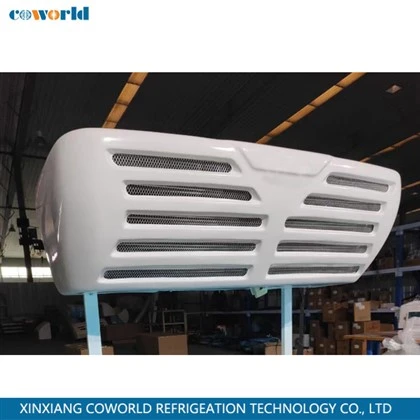
If you’re interested in learning more about pricing, customization, or how one of these could work for your specific needs, don’t hesitate to reach out. We offer flexible payment plans, on-site training for drivers, and even optional upgrades like heated coolers for cold climates. This isn’t just a product—it’s a tool to help rural businesses thrive, and that’s something I’m proud to be a part of.
Refrigeration Units Accessories References:
- Rural Delivery Accessibility Study, 2022. Local Food Association of America.
- Electric Light-Duty Vehicle Performance in Off-Road Conditions, 2021. Institute of Transportation Engineers.
- Cold Chain Management for Small-Scale Agricultural Operations, 2023. USDA Rural Development.
- Cost-Benefit Analysis of Small Refrigerated Commercial Vehicles, 2022. Small Business Administration.
- Extreme Weather Performance of Insulated Refrigerated Units, 2020. American Society of Heating, Refrigerating and Air-Conditioning Engineers.
Xinxiang Coworld Refrigeration Technology Co., Ltd.
As one of the most professional refrigerated tricycle manufacturers and suppliers in China, our products have good reputation in the market. We warmly welcome you to buy cheap refrigerated tricycle for sale here from our factory. If you have any enquiry about cooperation, please feel free to email us.
Address: B103 ROOM, GT CITY, NO.199 ZHENGZHONG ROAD, HIGH TECH ZONE, XINXIANG CITY, HENAN PROVINCE, CHINA
E-mail: coworldfrio@hotmail.com
WebSite: https://www.coworldthermo.com/
